Scholars › Historian

Zuo Qiuming

Lu figure of the Spring and Autumn period whom Han historians credited with the Zuo Commentary and the Discourses of the States

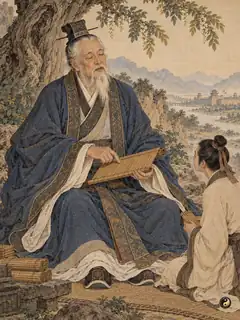
Zuo Qiuming was a man of Lu in the Spring and Autumn period about whom very little is known. The Analects quotes Confucius saying that Zuo Qiuming was ashamed of glib words and fawning manners, as he himself was, which suggests the two were roughly contemporary. The Records of the Grand Historian (Shiji) states that the gentleman Zuo Qiuming of Lu used the records Confucius had drawn on to compose the Zuo Annals, Sima Qian's letter to Ren An links his blindness to the Discourses of the States (Guoyu), and the bibliography of the History of the Han calls him a court historian of Lu. From the Tang scholars Dan Zhu and Zhao Kuang onward, many have doubted that he wrote either the year-by-year Zuo Commentary (Zuozhuan) or the state-by-state Guoyu. In 647 he was one of twenty-two scholars, with Bu Zixia, given a place beside Confucius in the Confucian temple.

Life and times

  1. UnknownBornZhoulate Spring and Autumn period, roughly a contemporary of Confucius
  2. UnknownDied

Works

  1. Literature · Prose49
    1. Zuo TraditionZhouChronicle ascribed to Zuo Qiuming, narrating 250 years of the Spring and Autumn states
    2. Discourses of the StatesZhouChina's earliest history arranged by state: speeches from eight states, ascribed to Zuo Qiuming
    3. Zuo Tradition: Cao Gui on WarfareZhou
    4. Zuo Tradition: Zhu Zhiwu Persuades Qin to WithdrawZhou
    5. Zuo Tradition: Earl of Zheng Overcomes Duan at YanZhou
    6. +25 more
      1. Discourses of the States: Duke of Shao Admonishes King Li Against Suppressing CriticismZhou
      2. Zuo Tradition: Duke Yin (r. 722–712 BCE)Zhou
      3. Zuo Tradition: Duke Huan (r. 711–694 BCE)Zhou
      4. Zuo Tradition: Duke Zhuang (r. 693–662 BCE)Zhou
      5. Zuo Tradition: Duke Min (r. 661–660 BCE)Zhou
      6. Zuo Tradition: Duke Xi (r. 659–627 BCE)Zhou
      7. Zuo Tradition: Duke Wen (r. 626–609 BCE)Zhou
      8. Zuo Tradition: Duke Xuan (r. 608–591 BCE)Zhou
      9. Zuo Tradition: Duke Cheng (r. 590–573 BCE)Zhou
      10. Zuo Tradition: Duke Xiang (r. 572–542 BCE)Zhou
      11. Zuo Tradition: Duke Zhao (r. 541–510 BCE)Zhou
      12. Zuo Tradition: Duke Ding (r. 509–495 BCE)Zhou
      13. Zuo Tradition: Duke Ai (r. 494–468 BCE)Zhou
      14. Discourses of the States: Discourses of ZhouZhou
      15. Discourses of the States: Discourses of Zhou IZhou
      16. Discourses of the States: Discourses of Zhou IIZhou
      17. Discourses of the States: Discourses of Zhou IIIZhou
      18. Discourses of the States: Discourses of LuZhou
      19. Discourses of the States: Discourses of Lu IZhou
      20. Discourses of the States: Discourses of Lu IIZhou
      21. Discourses of the States: Discourses of QiZhou
      22. Discourses of the States: Discourses of QiZhou
      23. Discourses of the States: Discourses of JinZhou
      24. Discourses of the States: Discourses of Jin IZhou
      25. Discourses of the States: Discourses of Jin IIZhou
    7. Open all works→
  2. Literature · Sayings30
    1. Like Fire, Like Reed FlowersZhouIdiom from the Discourses of the States: first an army's array, now fervent intensity
    2. The Law of Heaven and EarthZhouIdiom from the Zuo Tradition: as natural and unalterable as heaven and earth
    3. Driven to Desperate RiskZhouIdiom from the Zuo Tradition: driven by desperation to take risks
    4. United Wills Form a FortressZhouIdiom from the Discourses of the States: united wills form a fortress
    5. Guests Feel at HomeZhouIdiom from the Zuo Tradition: guests feeling right at home
    6. +25 more
      1. Overrating OneselfZhouIdiom from the Zuo Tradition: overrating one's own strength
      2. Flowers Without FruitZhouIdiom from the Zuo Tradition: showy without substance
      3. Mutual Deceit and DistrustZhouIdiom from the Zuo Tradition: mutual deceit and distrust
      4. Holding the Chess Piece UndecidedZhouIdiom from the Zuo Tradition: hovering over the chess piece, unable to decide
      5. Preparedness Averts PerilZhouIdiom from the Zuo Tradition: preparedness averts disaster
      6. The More One Hides, the More It ShowsZhouIdiom from the Zuo Tradition: the more one hides, the more it shows
      7. At the First DrumrollZhouIdiom from Cao Gui's discourse in the Zuo Tradition: finishing in one burst of spirit
      8. The Meat-Eaters Are ShortsightedZhouIdiom from Cao Gui's discourse in the Zuo Tradition: mocking short-sighted rulers
      9. Much Wrongdoing Brings Self-DestructionZhouIdiom from the Zuo Tradition: much wrongdoing brings self-destruction
      10. Speaking Only with the Eyes in the StreetZhouIdiom from the Discourses of the States: people under tyranny speaking only with their eyes
      11. Silencing the People Is Worse Than Damming a RiverZhouFamous line from the Discourses of the States: gagging the people is worse than damming a river
      12. The Reckless Courage of a Lone ManZhouIdiom from the Discourses of the States: Goujian wants disciplined troops, not lone heroes
      13. Ten Years of Building Up the PeopleZhouIdiom from the Zuo Commentary: Wu Zixu foresees Yue's long revenge
      14. Harmony Gives Birth to All ThingsZhouFamous line from the Discourses of the States: harmony creates, sameness stagnates
      15. A Single Note Makes No Music: Shi Bo on HarmonyZhouFamous line from the Discourses of the States: Shi Bo on harmony versus sameness
      16. Lowered by Rope at Night: Zhu Zhiwu Turns Back QinZhouFamous line from the Zuo Commentary: Zhu Zhiwu slips out at night to persuade Qin
      17. Their Spirit Spent, Ours at FullZhouIdiom from Cao Gui on Warfare in the Zuo Tradition: strike when their spirit is spent
      18. Advancing and Retreating in Step With the RanksZhouIdiom from the Discourses of the States, Yue I: an army that advances and retreats as one
      19. Ten Years to Grow, Ten Years to Train: Wu Zixu's WarningZhouIdiom from the Zuo Tradition: Wu Zixu foresees Yue's patient rebuilding
      20. Senior by a Single Meal: Fuchai's Last Plea to GoujianZhouIdiom from the Discourses of the States: Fuchai's plea as Wu falls to Yue
      21. A Disease in the Belly and Heart: Wu Zixu Warns Against YueZhouIdiom from the Discourses of Wu: Wu Zixu calls Yue a disease in Wu's belly and heart
      22. Distant Peoples Come and Neighbours Live in PeaceZhouIdiom from the Zuo Tradition: Wei Jiang's case for peace with the Rong tribes
      23. The Host on the Eastern RoadZhouIdiom from the Zuo Commentary: Zheng offers to host Qin's envoys on the eastern road
      24. Silencing the People's CriticismZhouLine from the Discourses of the States: King Li boasts he has silenced his critics
      25. Take People, Not Water, as Your Mirror: Wu Zixu's Warning to FuchaiZhouLine from the Discourses of the States: use others' fates, not water, as a mirror
  3. Literature · Fables3
    1. You Deceive Me, I Cheat YouZhouEpisode in the Zuo Tradition: Song's envoy Hua Yuan admits its plight, and Chu makes a pact
    2. Holding the Chess Piece UndecidedZhouEpisode in the Zuo Tradition: Taishu Wenzi mocks Ning Xi of Wei for wavering over his lord
    3. The More One Hides, the More It ShowsZhouPhrase from the Zuo Tradition, told through the Qi historians who recorded Cui Zhu's regicide

Records

Arranged the events into a commentary

Late Spring and Autumn

The closing appraisal in the Book of Han's biography of Sima Qian says Zuo Qiuming collected and arranged the original events and made a commentary on them. In his letter to Ren An, listing earlier men who wrote in adversity, Sima Qian says that Zuoqiu lost his sight and thereupon produced the Discourses of the States, tying that work to the blind Zuoqiu.

References (1)