

MUZI · FLAVOR
Flavor
Regional cuisines, grains and produce, stir-frying, steaming and stewing, snacks and pastries, drinks and tea, and festival and banquet customs.
149groups
504entries
12categories
Mural guide
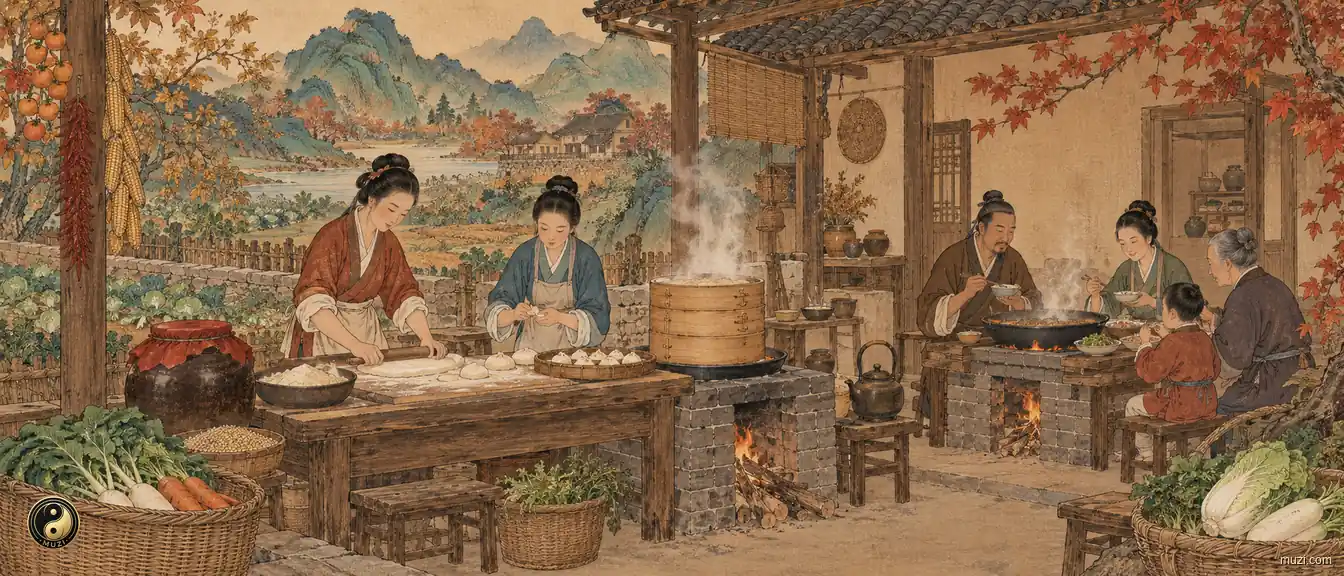
Cooks roll dough and fold dumplings beside a steaming bamboo basket, as a family gathers around a hearth-warmed cauldron.

Aspergillus brewing umami, cauldrons gathered around the hearth: distilling the distinct flavors and culinary philosophy of Huaxia through the passage of seasonal bounties.
Cuisines
24 groupsEach regional cuisine has its signature dishes, such as Shandong scallion-braised sea cucumber, Sichuan mapo tofu and Cantonese white-cut chicken.
Tofu
5 groupsSoybeans ground into soy milk and set into tofu, the source of yuba, dried tofu, vegetarian dishes and other soy foods.
Flour
18 groupsMillstones turned wheat from whole grain into flour; leavening, steaming, wrapping and griddling made it into buns, dumplings and flatbreads.
Condiments
7 groupsSoy sauce, bean paste, vinegar, fermented tofu, fermented black beans and pickles, mostly made by fermentation, alongside oil, salt, sugar, honey and spices.
Techniques
11 groupsKnife work at the board, heat at the stove, and the craft of stir-frying, steaming, boiling, stewing, pan-frying, deep-frying, tossing, roasting and braising.
Snacks
4 groupsPastries, sweets and candied fruit, rice snacks, morning-tea dim sum and street-stall bites, eaten between proper meals.
Traditions
37 groupsNew Year dumplings and rice cakes, Dragon Boat zongzi, Mid-Autumn mooncakes, and how weddings, birthdays and ordinary meals have their own ways of eating.
Drinks
12 groupsBaijiu, yellow wine, rice wine, fruit wines, kumis, infused liquors and beer, plus alcohol-free sour-plum drink and sweet soups.
Tea
10 groupsGreen, white, yellow, oolong, black and dark teas, with scented and compressed teas and non-tea infusions, and how they are brewed and drunk.