Also known as Zi Zizheng · Liu Zi Zheng
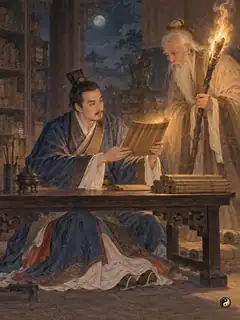
Liu Xiang, born Liu Gengsheng with the courtesy name Zizheng, came from Pei and descended from Liu Jiao, Prince Yuan of Chu and younger brother of the Han founder. Under Emperor Xuan he served as a remonstrating counsellor, and early in Emperor Yuan's reign, as Director of the Imperial Clan, he joined Xiao Wangzhi in opposing the eunuchs Hong Gong and Shi Xian, was jailed and spent more than ten years as a commoner. Emperor Cheng restored him, he took the name Xiang, and in 26 BC he was ordered to collate the palace library, writing a summary for each work that together formed the Bielu. He edited the Intrigues of the Warring States (Zhanguo ce) and the Songs of Chu (Chuci), compiled the Xinxu, Shuoyuan and Lienu zhuan, and used portents in memorials against the Wang consort clan. He ended his career as Colonel of the Central Fortifications. His son Liu Xin built on the Bielu to produce the classified catalogue Qilue.
Life and times Works Family tree Connections Life and times c. 77 BCE Born Han 6 BCE Died Works Literature · Sayings 53 The Fox Borrows the Tiger's Might Zhou Idiom from the Strategies of the Warring States: borrowing another's power to bully others Hair Tied to the Beam, Awl to the Thigh Zhou Idiom from the tales of Sun Jing and Su Qin: studying with fierce, sleepless diligence Drawing Legs on a Snake Zhou Idiom from a fable in the Strategies of the Warring States: overdoing it and spoiling it A Hundred Shots, a Hundred Hits Zhou Idiom from the archer Yang Youji in the Strategies of the Warring States: never missing Supporting the Old, Leading the Young Zhou Idiom from the Strategies of the Warring States: whole families out together, old and young +25 more Driving North to Reach the South Zhou Idiom from a fable in the Strategies of the Warring States: acting against one's own aim Snipe and Clam Locked in Struggle Zhou Idiom from a fable in the Strategies of the Warring States: two fight and a third profits Mending the Pen after Losing Sheep Zhou Idiom from the Strategies of the Warring States: mending the pen after the sheep are lost Lord Ye Loves Dragons Han Idiom from Lord Ye's story in the Xinxu: professing a love one does not really have Three Men Make a Tiger Zhou Idiom from the Strategies of the Warring States: a rumor repeated often enough is believed Nothing Can Be Done Zhou Idiom from the Strategies of the Warring States: helpless, with nothing to be done Hesitant and Undecided Zhou Idiom from the Strategies of the Warring States: hesitant and unable to decide Sparing No Effort Zhou Idiom from the Strategies of the Warring States: sparing no effort Misfortunes Never Come Singly Han Idiom from the Shuoyuan: misfortunes never come singly A Bird Startled by the Bow Zhou Idiom from the Strategies of the Warring States: once bitten, jumping at every sound The Mantis Stalks the Cicada, Unaware of the Oriole Behind Han Saying from the Shuoyuan: eyeing a prize, blind to the danger behind A Foot Can Fall Short, an Inch Can Suffice Zhou Famous line from the Songs of Chu: everything has its strengths and weaknesses A Courtyard Like a Marketplace Zhou Idiom from Zou Ji's story in the Strategies of the Warring States: a court thronged by callers Though I Die Nine Times, I Shall Not Regret Zhou Idiom from Qu Yuan's Encountering Sorrow: no regret though one die nine times Haughty Before, Humble After: Su Qin's Sister-in-Law Zhou Idiom from the Strategies of the Warring States: Su Qin's family changes its tune Humble Words and Lavish Gifts Zhou Idiom from the Strategies of the Warring States: Fan Ju's plan to bring Qi to heel True to Its Nature, the Orange Tree Will Not Move Zhou Famous line from Qu Yuan's Ode to the Orange Tree: rooted in the south, it will not be moved An Auspicious Day and a Lucky Hour Zhou Idiom from the Nine Songs: a lucky day chosen to honour the Lord of the East When the Lips Are Gone, the Teeth Feel the Cold Zhou Idiom from the Strategies of the Warring States: Zhang Mengtan splits Zhi Bo's alliance All the Realm in Mourning White: Tang Ju Defies the King of Qin Zhou Famous line from Tang Ju's defiance of Qin: a true man's wrath puts the realm in white The Wrath of a Man in Plain Cloth: Tang Ju Answers the King of Qin Zhou Famous line from the Intrigues of the Warring States: a commoner's wrath against a king Stabbing One's Thigh with an Awl to Stay Awake Zhou Idiom from the Stratagems of the Warring States: Su Qin's awl against sleep Every Inch Gained Is an Inch Kept Zhou Idiom from the Stratagems of the Warring States: Fan Ju's case for steady, solid gains Clapping Hands in Lively Talk Zhou Idiom from the Stratagems of the Warring States: Su Qin wins over the King of Zhao Removing Troubles and Easing Hardships for Others Zhou Aphorism from the Stratagems of the Warring States: Lu Zhonglian's creed of help without reward Open all works →Literature · Prose 47 Strategies of the Warring States Zhou Liu Xiang's Western Han compilation of Warring States persuasions and stratagems, in 33 books Preface to the Strategies of the Warring States Han Liu Xiang on editing the Warring States book, and on why its age of schemers came to be Strategies of the Warring States: Zou Ji Admonishes King of Qi Zhou Strategies of the Warring States: Tang Ju Fulfills His Mission Zhou Strategies of the Warring States: Feng Xuan as Guest of Lord Mengchang Zhou +25 more Strategies of the Warring States: Lu Zhonglian Refuses to Honor Qin as Emperor Zhou Strategies of the Warring States: Strategies of Chu IV Zhou Strategies of the Warring States: Strategies of Eastern Zhou Zhou Strategies of the Warring States: Strategies of Western Zhou Zhou Strategies of the Warring States: Strategies of Qin Zhou Strategies of the Warring States: Strategies of Qin I Zhou Strategies of the Warring States: Strategies of Qin II Zhou Strategies of the Warring States: Strategies of Qin III Zhou Strategies of the Warring States: Strategies of Qin IV Zhou Strategies of the Warring States: Strategies of Qin V Zhou Strategies of the Warring States: Strategies of Qi Zhou Strategies of the Warring States: Strategies of Qi I Zhou Strategies of the Warring States: Strategies of Qi II Zhou Strategies of the Warring States: Strategies of Qi III Zhou Strategies of the Warring States: Strategies of Qi IV Zhou Strategies of the Warring States: Strategies of Qi V Zhou Strategies of the Warring States: Strategies of Qi VI Zhou Strategies of the Warring States: Strategies of Chu Zhou Strategies of the Warring States: Strategies of Chu I Zhou Strategies of the Warring States: Strategies of Chu II Zhou Strategies of the Warring States: Strategies of Chu III Zhou Strategies of the Warring States: Strategies of Zhao Zhou Strategies of the Warring States: Strategies of Zhao I Zhou Strategies of the Warring States: Strategies of Zhao II Zhou Strategies of the Warring States: Strategies of Zhao III Zhou Literature · Poetry 13 Songs of Chu Zhou Liu Xiang's Han anthology of Chu-style verse by Qu Yuan, Song Yu and their Han imitators Songs of Chu: Nine Pieces Zhou Songs of Chu: Nine Songs Zhou Songs of Chu: Far Roaming Zhou Songs of Chu: Nine Changes Zhou +8 more Songs of Chu: The Great Summons Zhou Songs of Chu: Regret for Lost Faith Zhou Songs of Chu: Summons to a Recluse Zhou Songs of Chu: Seven Remonstrances Zhou Songs of Chu: Lament That My Time Was Ill-Fated Zhou Songs of Chu: Nine Regrets Zhou Songs of Chu: Nine Laments Zhou Songs of Chu: Nine Longings Zhou Literature · Fables 9 The Fox Borrows the Tiger's Might Zhou Fable from the Zhanguo Ce: a fox walks ahead of a tiger and claims the beasts fear him Drawing Legs on a Snake Zhou Chen Zhen's fable in the Zhanguo Ce: the first to finish drawing a snake adds legs and loses Heading North to Reach the South Zhou Ji Liang's parable in the Zhanguo Ce: a man bound south for Chu drives his fine team north The Snipe and the Clam Zhou Su Dai's fable in the Zhanguo Ce, told to stop Zhao attacking Yan: snipe, clam and fisherman Mending the Pen After Losing a Sheep Zhou Zhuang Xin's counsel to King Xiang of Chu in the Zhanguo Ce: mend the pen after a sheep is lost +4 more Lord She Loves Dragons Han Fable from Liu Xiang's Xinxu: Lord She adores dragon pictures but flees from a real dragon Three Men Make a Tiger Zhou Pang Cong's warning to the King of Wei in the Zhanguo Ce: three voices make a market tiger The Bird Startled by the Bowstring Zhou Story of the archer Geng Lei in the Zhanguo Ce, who downs a wounded goose with an empty string The Mantis Stalks the Cicada, the Oriole Waits Behind Zhou Story in Liu Xiang's Shuoyuan: a youth stops the King of Wu attacking Chu with a mantis tale Family tree Direct kin Liu Xiang Records Directed the editing of imperial books and arranged the Biographies of Women Western Han The Han History says Liu Xiang, courtesy name Zizheng, originally named Gengsheng, was ordered to direct the collation of the classics in the palace library. Seeing extravagance spreading, he drew on the Odes and Documents for worthy consorts and chaste wives whose conduct built up states and houses, and for favorites who brought ruin, and arranged them as the Biographies of Women in eight chapters, to warn the emperor.
References (1) The New Preface and Garden of Persuasions, and thirty-three fu Western Han The Han History says Liu Xiang wrote the New Preface and the Garden of Persuasions, fifty chapters in all, and presented them to the throne. Its bibliography also lists thirty-three fu by him among the poetry and fu works, so his writing went beyond prose to verse.
References (2) 
 Han
 Literature · Sayings


