Also known as Zi Weizong
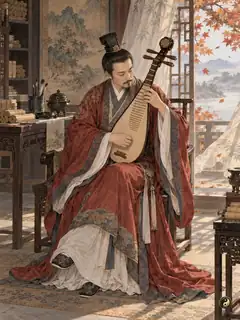
Fan Ye, courtesy name Weizong, was the youngest son of the general Fan Tai and came from Shunyang, in present-day Henan. He served on the staff of Liu Yikang, Prince of Pengcheng, and as a director in the Ministry of Personnel. In 432 he drank and listened to dirges on the night before the burial of the prince's mother, and was demoted to governor of Xuancheng. According to his biography in the *Book of Song* (*Songshu*), he spent that period of disfavor condensing the many earlier accounts of the Eastern Han into one work, the *History of the Later Han* (*Hou Hanshu*), with ten annals and eighty biographies; the planned treatises were never finished. He later rose to general of the Left Guard, but in 445 he was executed for joining Kong Xixian's plot to put Liu Yikang on the throne. In the Northern Song his book was printed with the eight treatises of Sima Biao, and it is counted among the Four Early Histories.
Life and times Works Works Literature · Prose 129 Book of the Later Han Northern and Southern Fan Ye's Liu Song history of the Eastern Han, first to group lives of eunuchs and women Book of the Later Han: Biography of Ma Yuan Northern and Southern Book of the Later Han: Basic Annals Northern and Southern Book of the Later Han: Annals of Emperor Guangwu Northern and Southern Book of the Later Han: Annals of Emperor Ming Northern and Southern +25 more Book of the Later Han: Annals of Emperor Zhang Northern and Southern Book of the Later Han: Annals of Emperors He and Shang Northern and Southern Book of the Later Han: Annals of Emperor An Northern and Southern Book of the Later Han: Annals of Emperors Shun, Chong and Zhi Northern and Southern Book of the Later Han: Annals of Emperor Huan Northern and Southern Book of the Later Han: Annals of Emperor Ling Northern and Southern Book of the Later Han: Annals of Emperor Xian Northern and Southern Book of the Later Han: Annals of the Empresses Northern and Southern Book of the Later Han: Treatises (by Sima Biao) Northern and Southern Book of the Later Han: Treatise on Pitch-Pipes and the Calendar, Part I Northern and Southern Book of the Later Han: Treatise on Pitch-Pipes and the Calendar, Part II Northern and Southern Book of the Later Han: Treatise on Pitch-Pipes and the Calendar, Part III Northern and Southern Book of the Later Han: Treatise on Rites and Ceremonies, Part I Northern and Southern Book of the Later Han: Treatise on Rites and Ceremonies, Part II Northern and Southern Book of the Later Han: Treatise on Rites and Ceremonies, Part III Northern and Southern Book of the Later Han: Treatise on Sacrifices, Part I Northern and Southern Book of the Later Han: Treatise on Sacrifices, Part II Northern and Southern Book of the Later Han: Treatise on Sacrifices, Part III Northern and Southern Book of the Later Han: Treatise on Astronomy, Part I Northern and Southern Book of the Later Han: Treatise on Astronomy, Part II Northern and Southern Book of the Later Han: Treatise on Astronomy, Part III Northern and Southern Book of the Later Han: Treatise on the Five Phases, Part I Northern and Southern Book of the Later Han: Treatise on the Five Phases, Part II Northern and Southern Book of the Later Han: Treatise on the Five Phases, Part III Northern and Southern Book of the Later Han: Treatise on the Five Phases, Part IV Northern and Southern Open all works →Literature · Sayings 31 Raising the Tray to Eyebrow Level Northern and Southern Idiom from Meng Guang's story in the Book of the Later Han: mutual respect between spouses Unconcerned with Trifles Northern and Southern Idiom from the Book of the Later Han: easygoing, unconcerned with trifles Barely Satisfactory Northern and Southern Idiom from the Book of the Later Han: once heartening, now just about satisfactory Spilled Water Cannot Be Gathered Northern and Southern Idiom from the Book of the Later Han: what is done cannot be undone Old but Ever More Vigorous Northern and Southern Idiom from Ma Yuan's biography in the Book of the Later Han: growing bolder with age +25 more Strength Fails the Will Northern and Southern Idiom from Ban Chao's biography: willing in spirit but lacking the strength Ten Thousand People, One Heart Northern and Southern Idiom from the Book of the Later Han: multitudes united as one Putting It Out of Mind Northern and Southern Idiom from the Book of the Later Han: putting personal safety out of mind Nipping Evil in the Bud Northern and Southern Idiom from the Book of the Later Han: nipping trouble in the bud Drawing a Tiger That Looks Like a Dog Northern and Southern Idiom from Ma Yuan's letter in the Book of the Later Han: aiming too high and ending absurd Each Soldier Worth a Hundred at Kunyang Northern and Southern Idiom rooted in the Hou Hanshu's Battle of Kunyang: one fighter worth a hundred Spoils Beyond Counting at Kunyang Northern and Southern Idiom in the Hou Hanshu's annals of Guangwu: spoils of Kunyang too many to count Entrusted with a Young Orphan Ruler Northern and Southern Famous phrase from the History of the Later Han: Emperor Ming appoints his guardians Crumbling and Splitting Apart Northern and Southern Idiom from the History of the Later Han: Deng Yu tells Liu Xiu the empire is falling apart A Name Recorded on Bamboo and Silk Northern and Southern Idiom from the History of the Later Han: Deng Yu's wish to be written into history Rich in Springs and Autumns: Yuan Shao Defends the Young Emperor Northern and Southern Idiom from the Book of the Later Han: young, with many years ahead Ladling Boiling Water to Stop the Boil Northern and Southern Idiom in the Book of Later Han's life of Dong Zhuo: to stop the boil, remove the firewood Throwing Down the Brush to Take Up Arms Northern and Southern Idiom from the Book of Later Han: Ban Chao trades his brush for a soldier's life Laying Open One's Heart and Soul Northern and Southern Idiom from the Book of Later Han: Ban Zhao speaks her whole heart to the Empress Dowager Staff in Hand, Crossing North to Follow Liu Xiu Northern and Southern Line from the History of the Later Han: Deng Yu crosses north to join Liu Xiu Not Turning on One's Heel Even Before Death Northern and Southern Idiom from the Later Han History's life of Li Ying: facing death without flinching Swallow's Chin and Tiger's Neck: Ban Chao's Fortune Northern and Southern Idiom from the Book of Later Han: the physiognomy that promised Ban Chao a fief Repaying Every Angry Glare: Fan Ju's Revenge Northern and Southern Idiom from the Records of the Grand Historian: Fan Ju repays even a glare Arrows Rain Down on Kunyang Northern and Southern Famous line from the Book of Later Han: Wang Mang's army pours arrows on Kunyang Disaster Before a Heel Can Turn: Chen Fan's Memorial Northern and Southern Idiom in the Book of Later Han: Chen Fan knows candour may bring swift ruin Former Students and Old Subordinates Northern and Southern Idiom from the Book of the Later Han: the Yuan clan's protégés across the realm Bowing Low and Holding One's Breath Northern and Southern Idiom in the Book of the Later Han: palace eunuchs cowed by the upright Li Ying Leaping City Walls and Clearing Moats: Lü Bu's Red Hare Northern and Southern Famous line from the Book of the Later Han: Lü Bu's horse Red Hare leaps walls and moats Without Entering the Tiger's Den, How Can One Catch the Cub Northern and Southern Idiom from the Book of the Later Han: Ban Chao's night raid on the Xiongnu envoys Ascending the Dragon Gate: An Audience with Li Ying Northern and Southern Line from the Book of the Later Han: to be received by Li Ying was to leap the Dragon Gate Literature · Fables 3 A Great Talent Put to Petty Use Northern and Southern Saying rooted in the Book of Later Han, used by Lu You to lament Xin Qiji's petty posts Guarding Against the First Small Signs Northern and Southern Episode in the Hou Hanshu: Ding Hong uses an eclipse to urge Emperor He to curb the Dou clan Drawing a Tiger That Looks Like a Dog Northern and Southern Ma Yuan's letter in the Hou Hanshu urging his nephews to copy Long Bogao, not Du Jiliang Records Demoted to Xuancheng, he condensed many Later Han histories into one From 432, Liu Song The Book of Song says Fan Ye, courtesy name Weizong, came from Shunyang and was the youngest son of the General of Chariots and Cavalry, Fan Tai. In the winter of 432 the Dowager Consort of Pengcheng died; Fan Ye drank deep at night and opened the north window to enjoy the funeral songs, and Yikang, Prince of Pengcheng, was enraged and demoted him to Governor of Xuancheng. Frustrated, he cut the Later Han histories of many authors down into a single work of his own, and later became Left Guard General and Supervisor of the Crown Prince's Household.
References (1) 
 Jin
 Northern and Southern
 Literature · Prose