
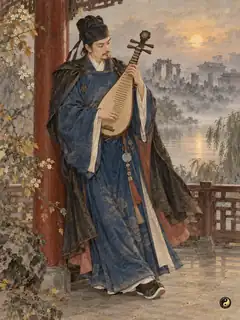
Writers › Writer / Poet
Wu Weiye
Late Ming and early Qing poet from Taicang who placed first in the 1631 metropolitan examination and wrote long narrative ballads such as the Song of Yuanyuan
Mural of the event “The Beauty that Shook the Dynasties”, which this person took part in.
Around 1641, Chen Yuanyuan became celebrated in Jiangnan for her Kunqu artistry and was counted among the Qinhuai Eight Beauties; she was later taken to Beijing by Tian Hongyu, entering the later memory of the 1644 dynastic crisis.
Also known as Zi Jungong · Hao Meicun
- Roles
- Writer / Poet
Wu Weiye, courtesy name Jungong, styled Meicun, came from Taicang in modern Jiangsu. In 1631 he came first in the metropolitan examination and second in the palace examination and joined the Hanlin Academy; at the Southern Ming Hongguang court he served in the heir apparent's household but resigned after two months. Summoned north in 1653, he reluctantly took office under the Qing as chancellor of the Imperial Academy, then went home in 1656 to mourn his mother and spent his remaining years regretting that he had served two dynasties. He excelled at long seven-syllable ballads: the Song of Yuanyuan uses the courtesan Chen Yuanyuan to tell how Wu Sangui let the Qing armies through the passes, and later critics called this narrative manner the Meicun style. He died in January 1672, asking to be buried in a monk's robe under a round stone marked as the tomb of the poet Wu Meicun. With Qian Qianyi and Gong Dingzi he was counted among the Three Masters east of the Yangzi.
Life and times
Dates 1609 CE–1672 CE
- 1641The Beauty that Shook the DynastiesTook partage 32
- 1651Wu Weiye Composes Yuanyuan Quage 42