Scholars › Historian

Sima Qian

Western Han court historian who, castrated for defending the general Li Ling, went on to finish the Records of the Grand Historian in 130 chapters

Also known as Zi Zizhang · Taishi Gong · Si Ma Zi Zhang

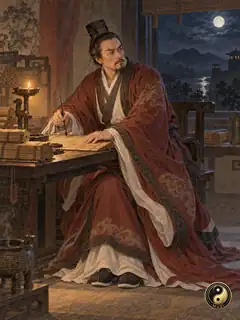
Sima Qian, courtesy name Zichang, came from Xiayang (modern Hancheng, Shaanxi) and was the son of the court historian Sima Tan. At twenty he travelled through the Yangzi and Huai regions, and in 108 BC he succeeded his father as Grand Historian, joining the team that drew up the Taichu calendar in 104 BC. When the general Li Ling surrendered to the Xiongnu in 99 BC, Sima Qian spoke up for him before Emperor Wu and was jailed and castrated; after his release he served as Palace Secretary. Carrying out his father's plan, he completed the Records of the Grand Historian (Shiji), 130 chapters reaching from the Yellow Emperor to his own reign. The year of his death is not recorded. Ban Gu's History of the Han judged its writing direct and its facts sound, and Lu Xun called it the swan song of the historians.

Life and times

  1. c. 145 BCEBornHanbirth by another account 135 BCE
  2. 104 BCECompiling the ShijiTook partSima Qian organized the Shiji into annals, tables, treatises, houses, and biographies spanning legendary antiquity through the Han.
    1. Sima Qian Continues His Father's HistoryFulfilling his dying father's mandate, Sima Qian took office as Grand Astrologer and reformed China's canonical calendar.
    2. Li Ling Surrenders; Sima Qian Punishedc. 99 BCELi Ling surrendered to the Xiongnu after his defeat at Mount Junji, and Sima Qian, who spoke in his defence, was imprisoned and sentenced to castration.
  3. c. 90 BCEDied

Works

  1. Literature · Sayings165
    1. Sleeping on Brushwood and Tasting GallHanIdiom from King Goujian's story in the Shiji: enduring hardship to steel oneself for a comeback
    2. Bearing Brambles to Beg ForgivenessHanIdiom from the Shiji story of Lian Po and Lin Xiangru: owning up and sincerely apologizing
    3. Returning the Jade Intact to ZhaoHanIdiom from Lin Xiangru's story in the Shiji: returning something to its owner intact
    4. Calling a Deer a HorseHanIdiom from Zhao Gao's story in the Shiji: deliberately confusing right and wrong
    5. Songs of Chu on All SidesHanIdiom from Xiang Yu's siege at Gaixia in the Shiji: beset on all sides, without allies
    6. +25 more
      1. Fighting with One's Back to the RiverHanIdiom from Han Xin's battle in the Shiji: a last stand with no way back
      2. Mao Sui Recommends HimselfHanIdiom from Mao Sui's story in the Shiji: volunteering oneself for a weighty task
      3. Breaking the Cauldrons and Sinking the BoatsHanIdiom from Xiang Yu's story in the Shiji: burning one's bridges, committed to the end
      4. Waging War on PaperHanIdiom from Zhao Kuo's story in the Shiji: armchair theory that fails in practice
      5. A Promise Worth a Thousand GoldHanIdiom from Ji Bu's biography in the Shiji: a promise kept as if worth a fortune
      6. One Word Weighs as Much as Nine TripodsHanIdiom from the Records of the Grand Historian: words that carry decisive weight
      7. Shivering Without ColdHanIdiom from the Shiji's Biographies of Harsh Officials: trembling with dread
      8. Agreeing Without Prior ArrangementHanIdiom from the Records of the Grand Historian: acting alike without prior arrangement
      9. Brimming with Self-SatisfactionHanIdiom from the Shiji: smugly pleased with oneself
      10. The Swift-Footed Arrive FirstHanIdiom from the Records of the Grand Historian: the quickest get there first
      11. One Hair from Nine OxenHanIdiom from Sima Qian's Letter in Reply to Ren An: a negligible part of a vast whole
      12. Seen So Often It Is Nothing NewHanIdiom from the Shiji: seen so often it is nothing new
      13. All Previous Effort WastedHanIdiom from the Records of the Grand Historian: all previous effort wasted
      14. Not Worth MentioningHanIdiom from the Shiji: not worth mentioning, often said in modesty
      15. Honest Advice Grates on the EarHanIdiom from the Shiji: honest advice grates on the ear but does good
      16. Weightier than Mount TaiHanIdiom from Sima Qian's letter to Ren An: weightier than Mount Tai, of supreme worth
      17. Holding One Front AloneHanIdiom from the Records of the Grand Historian: holding one front alone
      18. Mending One's WaysHanIdiom from Tiying's plea in the Shiji: correcting one's faults and starting anew
      19. Nothing but Four Bare WallsHanIdiom from Sima Xiangru's biography in the Shiji: nothing but four bare walls
      20. Birds Gone, the Bow Is Put AwayHanIdiom from the Shiji: the bow put away once the birds are gone, loyal servants discarded
      21. The Spent Arrow of a Strong CrossbowHanIdiom from the Shiji: a spent force, like an arrow at the end of its flight
      22. A Rat Peering Both WaysHanIdiom from the Shiji: wavering like a rat peering both ways
      23. Dead Ashes Flare Up AgainHanIdiom from the Records of the Grand Historian: dead ashes flaring up again
      24. The Hare Dead, the Hound Is CookedHanIdiom from the Shiji: the hound cooked once the hare is dead
      25. Precarious as Stacked EggsHanIdiom from the Shiji: as precarious as stacked eggs
    7. Open all works→
  2. Literature · Prose150
    1. Letter in Reply to Ren AnHanSima Qian's letter to Ren An explaining why he endured castration to finish his history
    2. Records of the Grand HistorianHanSima Qian's history from the Yellow Emperor to Han Emperor Wu, model for all dynastic histories
    3. Preface to the Table of the Twelve Feudal LordsHanSima Qian's preface to his table of the twelve lords, on Confucius's annals and their heirs
    4. Preface to the Table of the Six StatesHanSima Qian on how a harsh Qin still won the realm, and on scholars who mock it by hearsay
    5. Preface to the Monthly Table of the Years Between Qin and ChuHanSima Qian on power changing hands three times in five years, and Heaven's hand in Han's rise
    6. +25 more
      1. Preface to the Table of the Feudal Lords Since the Rise of HanHanSima Qian traces Han from great fiefs for its kin to the carving-up that left the kings weak
      2. Preface to the Table of Gaozu's Meritorious MinistersHanSima Qian on why nearly all of Han's founding marquisates were lost within a century
      3. Preface to the Table of Marquises Created Since the Jianyuan EraHanSima Qian on why Emperor Wu's frontier wars made marquises to rival those of the founding
      4. Records of the Grand Historian: Basic Annals of Xiang YuHan
      5. Records of the Grand Historian: Biographies of the AssassinsHan
      6. Records of the Grand Historian: Biographies of Lian Po and Lin XiangruHan
      7. Records of the Grand Historian: Biography of the Marquis of HuaiyinHan
      8. Records of the Grand Historian: Biographies of Guan Zhong and Yan YingHan
      9. Records of the Grand Historian: Biographies of Qu Yuan and Master JiaHan
      10. Records of the Grand Historian: Biography of the Prince of Wei (Lord Xinling)Han
      11. Records of the Grand Historian: Hereditary House of Chen SheHan
      12. Records of the Grand Historian: Biography of General LiHan
      13. Records of the Grand Historian: Hereditary House of the Marquis of LiuHan
      14. Records of the Grand Historian: Hereditary House of Goujian, King of YueHan
      15. Records of the Grand Historian: Biographies of Lord Pingyuan and Yu QingHan
      16. Records of the Grand Historian: Biography of Han ChangruHan
      17. Records of the Grand Historian: Basic AnnalsHan
      18. Records of the Grand Historian: Basic Annals of the Five EmperorsHan
      19. Records of the Grand Historian: Basic Annals of XiaHan
      20. Records of the Grand Historian: Basic Annals of YinHan
      21. Records of the Grand Historian: Basic Annals of ZhouHan
      22. Records of the Grand Historian: Basic Annals of QinHan
      23. Records of the Grand Historian: Basic Annals of the First Emperor of QinHan
      24. Records of the Grand Historian: Basic Annals of Emperor GaozuHan
      25. Records of the Grand Historian: Basic Annals of Empress Dowager LüHan
  3. Literature · Fables9
    1. When the Birds Are Gone, the Bow Is Stored AwayHanEpisode in the Shiji: Fan Li leaves Goujian after victory and urges Wen Zhong to go too
    2. An Arrow at the End of Its FlightHanHan Anguo's argument in the Records of the Grand Historian against a distant war on the Xiongnu
    3. Poking Its Head Out Both Ways Like a RatHanEpisode in the Shiji: Han Anguo hedges in the feud between Dou Ying and Tian Fen
    4. Dead Ashes Flaring Up AgainHanEpisode in the Shiji: the jailed Han Anguo, mocked by a jailer, rises again to office
    5. When the Hare Is Dead, the Hound Is CookedHanWen Zhong's fate in the Shiji: ignoring Fan Li's warning, he is ordered to die by Goujian
    6. +4 more
      1. As Precarious as Stacked EggsHanFan Ju's plea in the Shiji telling King Zhao of Qin that his state stands like stacked eggs
      2. Xiang Zhuang's Sword Dance Aims at the Lord of PeiHanThe Hongmen feast in the Shiji: Xiang Zhuang's sword dance hides a plot on Liu Bang
      3. A Single Cry That Astonishes the WorldHanChunyu Kun's riddle in the Shiji of a silent great bird, which rouses King Wei of Qi
      4. Devising Strategy Within the TentHanLiu Bang's account in the Shiji of how he won by using Zhang Liang, Xiao He and Han Xin
  4. Literature · Rhapsodies1
    1. Rhapsody Lamenting the Scholar's Failure to Meet His TimeHanSima Qian's only surviving rhapsody, a scholar's lament following Dong Zhongshu's

Family tree

  1. Direct kin
    Father
    Sima Qian

Records

Court historian who wrote the Records in one hundred thirty chapters

Western Han

The Han History says Sima Qian was born at Longmen, traveled south to the Yangtze and Huai at twenty, became court historian and later palace secretary. His Records of the Grand Historian run to one hundred thirty chapters and 526,500 characters, and the bibliography lists them among the Spring and Autumn works as the Grand Historian's one hundred thirty chapters.

References (2)

Eight fu and the Han History's closing verdict

Western Han

The Han History bibliography lists eight fu by Sima Qian among its poetry and fu works. The closing verdict on his biography says that Liu Xiang and Yang Xiong both admired his skill at setting out events, which was clear but not ornate, plain but not coarse, direct in its prose and sound in its facts.

References (2)