Scholars › Historian

Wu Jing

Tang historian renowned for honest writing, long active in the History Office and author of the Essentials of Government of the Zhenguan Era.

Also known as Baron of Changyuan County

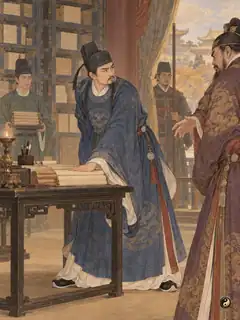
Wu Jing, a native of Junyi in Bianzhou, was appointed to the History Office under Empress Wu to compile the national history, rising to Diarist of Activity and Repose alongside Liu Zhiji and Xu Jian, and was later enfeoffed as Baron of Changyuan. He helped compile the Veritable Records of Empress Wu and wrote national and dynastic histories of his own, praised as concise and reliable. When Zhang Yue asked him to soften a passage concerning himself, Wu reportedly refused, insisting on honest writing. His Essentials of Government of the Zhenguan Era, in ten juan, arranges the political discussions of Emperor Taizong with Wei Zheng and other ministers and was prized by later rulers. He died in 749.

Life and times

  1. c. 670BornTang
  2. 749 CEDied

Works

  1. Literature · Prose52
    1. Essentials of Government of the Zhenguan EraTangWu Jing's Tang compilation of Emperor Taizong's dialogues with his ministers on government
    2. Essentials of Government of the Zhenguan Era: Juan 1Tang
    3. Essentials of Government of the Zhenguan Era: Juan 2Tang
    4. Essentials of Government of the Zhenguan Era: Juan 3Tang
    5. Essentials of Government of the Zhenguan Era: Juan 4Tang
    6. +25 more
      1. Essentials of Government of the Zhenguan Era: Juan 5Tang
      2. Essentials of Government of the Zhenguan Era: Juan 6Tang
      3. Essentials of Government of the Zhenguan Era: Juan 7Tang
      4. Essentials of Government of the Zhenguan Era: Juan 8Tang
      5. Essentials of Government of the Zhenguan Era: Juan 9Tang
      6. Essentials of Government of the Zhenguan Era: Juan 10Tang
      7. Essentials of Government of the Zhenguan Era: On the Way of the Ruler (Chapter 1)Tang
      8. Essentials of Government of the Zhenguan Era: On the Essentials of Government (Chapter 2)Tang
      9. Essentials of Government of the Zhenguan Era: On Appointing the Worthy (Chapter 3)Tang
      10. Essentials of Government of the Zhenguan Era: On Seeking Remonstrance (Chapter 4)Tang
      11. Essentials of Government of the Zhenguan Era: On Accepting Remonstrance (Chapter 5)Tang
      12. Essentials of Government of the Zhenguan Era: Forthright Remonstrance (appended)Tang
      13. Essentials of Government of the Zhenguan Era: Warnings for Ruler and Minister (Chapter 6)Tang
      14. Essentials of Government of the Zhenguan Era: On Choosing Officials (Chapter 7)Tang
      15. Essentials of Government of the Zhenguan Era: On Enfeoffment (Chapter 8)Tang
      16. Essentials of Government of the Zhenguan Era: On Settling the Status of the Crown Prince and the Princes (Chapter 9)Tang
      17. Essentials of Government of the Zhenguan Era: On Honouring Tutors (Chapter 10)Tang
      18. Essentials of Government of the Zhenguan Era: On Instructing the Crown Prince and the Princes (Chapter 11)Tang
      19. Essentials of Government of the Zhenguan Era: On Admonishing the Crown Prince (Chapter 12)Tang
      20. Essentials of Government of the Zhenguan Era: On Benevolence and Righteousness (Chapter 13)Tang
      21. Essentials of Government of the Zhenguan Era: On Loyalty and Righteousness (Chapter 14)Tang
      22. Essentials of Government of the Zhenguan Era: On Filial Piety and Brotherly Love (Chapter 15)Tang
      23. Essentials of Government of the Zhenguan Era: On Fairness (Chapter 16)Tang
      24. Essentials of Government of the Zhenguan Era: On Sincerity and Good Faith (Chapter 17)Tang
      25. Essentials of Government of the Zhenguan Era: On Frugality (Chapter 18)Tang
    7. Open all works→
  2. Literature · Sayings1
    1. Heeding Only One Side Leaves a Ruler in the DarkTangIdiom from Wang Fu's Comments of a Recluse: one-sided listening clouds judgement

Records

Joined the History Office and compiled the Veritable Records of Empress Wu

From the Shenlong years to 749

The Old Tang History says Wu Jing studied diligently and knew the classics and histories well. Wei Yuanzhong and Zhu Jingze thought highly of him, and when Wei became chief minister he recommended Wu for his talent as a historian and had him serve in the History Office, compiling the national history. In the Shenlong years he completed the Veritable Records of Empress Wu with Wei Chengqing, Cui Rong and Liu Zixuan and was moved to Diarist of Activity and Repose. He also wrote separate histories of the Liang, Qi, Zhou, Chen and Sui, and died at home in 749.

References (2)