
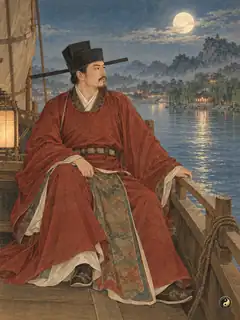
Ministers › Finance Ministers
Wang Anshi
Northern Song chief minister who launched the Xining New Policies, including the green-sprouts loans and hired-service levy, and a leading prose writer
Mural of the event “Wang Anshi's Reforms”, which this person took part in.
The structural illness of Northern Song's accumulated weakness deepened, and the Liao and Western Xia in the north repeatedly produced military pressure. On ascension Emperor Shenzong resolved to reform outside the norm, to enrich the country and strengthen the military, and save society from crisis.
Also known as Zi Jiefu · Hao Banshan · Linchuan Xiansheng · Jingguo Gong · Wen
Wang Anshi, courtesy name Jiefu, styled Banshan, was from Linchuan in Fuzhou and passed the jinshi examination in 1042. After serving as magistrate of Yin county, he sent Emperor Renzong a long memorial in 1058 urging reform. In 1069 Emperor Shenzong made him assistant chief minister; he set up a finance planning commission and introduced in turn the green-sprouts loans, the hired-service levy, the state trade bureaus, the baojia mutual-security system and the square-field land survey, becoming chief minister the next year. Opposed by Sima Guang and others, he left office in 1074, returned in 1075 and resigned for good in 1076, retiring to Jiangning, and in the Yuanfeng era he was made Duke of Jing. In 1086 most of his laws were repealed, and he died at Jiangning that year, posthumously named Wen. The Ming editor Mao Kun included him among the eight masters in his *Prose of Eight Masters of Tang and Song* (*Tang Song ba dajia wenchao*).
Life and times
- 1021 CEBorn
 Song
- 1069Wang Anshi's Reforms
 Took partage 48Wang Anshi introduced Green Sprouts, Service Exemption, and Market Exchange laws to strengthen state finances, provoking fierce disputes over implementation and power.
- Wang Anshi's Xining ReformsChancellor Wang Anshi enacted radical economic, tax, and military reforms from 1069 CE, bolstering state treasury reserves.
- Wang Anshi's Xining Reforms
- 1086 CEDied
Works
 Literature · Prose36
- Record of Visiting Mount BaochanSongWang Anshi's record of a cave trip cut short, a reflection on will, strength and means
- Reply to Remonstrance Official SimaSongWang Anshi's reply to Sima Guang, rebutting point by point four charges against his reforms
- Lament for ZhongyongSongYoung Wang Anshi's short piece on a child prodigy who, kept from study, grew up ordinary
- On Reading the Biography of Lord MengchangSongWang Anshi's essay of under a hundred characters, overturning Lord Mengchang's fame
- Fellow Learners: A Farewell to ZiguSongWang Anshi's farewell to Zeng Gong: two worthies who never met, alike through the sages
+25 more
- Epitaph for Mr Xu, Registrar of Hailing County in TaizhouSongWang Anshi's epitaph for Xu Ping, a gifted man who died a county registrar
- Inquiry into FaultsSongWang Anshi on why a man who mends his faults has recovered his nature, not faked it
- Explaining RevengeSongWang Anshi on revenge as a duty only for a lawless age, and his doubts about the Rites of Zhou
- Preface to the Meaning of the Rites of ZhouSongWang Anshi presents his commentary on the Rites of Zhou, when men and laws both flourished
- Preface to the Meanings of the Book of DocumentsSongWang Anshi prefaces the official commentary on the Documents that he and his son prepared
- Preface to the Meanings of the Book of OdesSongWang Anshi's preface to the official Odes commentary, on why their meaning is hard to grasp
- On Reading the Hereditary House of ConfuciusSongWang Anshi faults Sima Qian for breaking his own rules by giving Confucius a hereditary house
- On Reading the Biographies of the AssassinsSongWang Anshi weighs the assassins of the Records and finds Yu Rang's loyal death of little worth
- Written after the Collected Works of Li WengongSongWang Anshi on Li Wengong, who scorned laments of neglect yet railed at a chief minister himself
- Preface to the Linggu PoemsSongWang Anshi prefaces a recluse's poems on Linggu, a mountain whose spirit he finds in the poet
- Memorandum on a Century of Peace under Our DynastySongAnswering the throne, Wang Anshi credits a century of peace partly to luck and calls for action
- Memorial Offering AdmonitionsSongAs the emperor ends his mourning, Wang Anshi warns him against music, women and amusements
- Reply to Palace Assistant Zhang of ShaozhouSongWang Anshi thanks a man who praised his late father, and doubts what official histories record
- Preface Seeing Off Sun ZhengzhiSongWang Anshi holds that a gentleman never lets the times defeat the Way, and urges a friend on
- Account of the Conduct of Lord Xie, Drafter in the Ministry of WarSongWang Anshi records Xie Jiang's writing, governance and bold speech, and the bare house he left
- Spirit-Way Stele for Lord Li, Posthumous Chief Minister of the Imperial RegaliaSongWang Anshi's stele for a Yuzhang gentleman who left office to serve his aged brother
- Tomb Stele for Mr Sun, Fiscal Commissioner of GuangxiSongAn orphan from remote Yi studies his way up, then dies supplying the army against Nong Zhigao
- Grave Marker for Lord Chang, Edict Attendant of the Baowen PavilionSongWang Anshi's brief marker for Lord Chang of Ruyin, who long refused office and stood apart
- Epitaph with Preface for Mr Liu, Fiscal Supervisor of Jinghu NorthSongWang Anshi's epitaph for his friend Liu Mu, prized by great ministers yet held down too long
- Tomb Tablet for Lady Xiahou, Grand Lady of Xianyuan CountySongWang Anshi's tablet for Xie Jiang's young wife, whose quiet help freed him for public life
- The County School of CixiSongWang Anshi on a county school founded at Cixi and what schools were meant to do
- Names on the Wall of the Revenue Vice Commissioner's HallSongWang Anshi on a wall roll of finance officials: good laws need good officials to keep them
- The Lingzhi PavilionSongWang Anshi on a lingzhi kept in a friend's pavilion and how one reign's tastes shape an age
- Offering to Academician Ding YuanzhenSongWang Anshi mourns his patron Ding Yuanzhen, poor all his life and dead soon after promotion
- Offering to Wang Hui, ShenfuSongWang Anshi mourns Wang Hui, the friend his mother chose for him, lost soon after her
- Open all works→
- Literature · Sayings15
- Adding Flowers to BrocadeSongIdiom from Wang Anshi's poem Ji Shi: adding flowers to brocade, making good things better
- Unafraid of Clouds That Block the ViewSongLine from Wang Anshi's Climbing Feilai Peak: no cloud can block the view from the top
- Promote What Benefits, Abolish What HarmsSongIdiom from Wang Anshi's Reply to Sima Guang: reform defended as restoring ancient rule
- Having Given My All: Wang Anshi at Baochan MountainSongFamous line from Wang Anshi's Baochan Mountain essay: give your all and have no regrets
- Naming Any Object, He Wrote a Poem on ItSongAphorism from Wang Anshi's Lament for Zhongyong: a prodigy's gift that later withered
+10 more
- Once More the Spring Wind Greens the Southern ShoreSongLine from Wang Anshi's Mooring at Guazhou: spring greens the south while he longs for home
- Depth in Seeking and ReflectingSongLine from Wang Anshi's Visit to Mount Baochan: the ancients found truth by thinking deeply
- Sunk Back Among the Ordinary CrowdSongLine from Wang Anshi's Lament for Zhongyong: a prodigy who sank to the ordinary
- Clearing Away the Old to Lay Out the NewSongIdiom from the Zuo Tradition: a comet that sweeps away the old for the new
- Extraordinary Sights Found Only in Remote PlacesSongFamous line from Wang Anshi's Trip to Baochan Mountain: wonders lie in hard-to-reach places
- Plum Blossoms Opening Alone in the ColdSongLine from Wang Anshi's quatrain on plum blossom: flowers that brave the cold alone
- A Pagoda a Thousand Fathoms HighSongLine from Wang Anshi's Climbing Feilai Peak: a pagoda soaring above the clouds
- New Peach Charms Replace the OldSongLine from Wang Anshi's New Year's Day: fresh peach-wood charms on every door
- Firecrackers Sound Out the Old Year: Wang Anshi's New Year's DaySongLine from Wang Anshi's New Year's Day: firecrackers see the old year out
- Because I Stand on the Highest Level: Wang Anshi on Feilai PeakSongLine from Wang Anshi's Climbing Feilai Peak: from the top, clouds cannot block the view
- Literature · Poetry8
- Ascending Feilai PeakSongWang Anshi's quatrain from a peak near Hangzhou, a young reformer's vow to see past the clouds
- Mooring at GuazhouSongWang Anshi's quatrain moored across the Yangtze from Jingkou, homesick for Zhongshan
- New Year's DaySongWang Anshi's New Year quatrain of firecrackers and peach charms, hinting at reform
- Plum Blossoms (A Few Sprays by the Wall)SongWang Anshi's quatrain on a few plum sprays blooming alone by a wall, known only by their scent
- Sleepless Spring NightSongWang Anshi's quatrain of a sleepless spring night on duty, as flower shadows climb the rail
+3 more
- North HillSongWang Anshi's quatrain from his retirement at Zhongshan, idling through a spring day
- Clear Weather in SpringSongWang Anshi's reworking of a Tang quatrain by Wang Jia, on spring gone after the rain
- Written on the Wall of Master HuyinSongWang Anshi's quatrain on a neighbour's wall at Jiangning, giving stream and hills human deeds
- Literature · Lyrics2
- Gui Zhi Xiang · Meditation on the Past at JinlingSongWang Anshi's long ci at Jinling, reflecting on six dynasties of splendour gone to cold mist
- Thousand Autumns Prelude · Cold Washing-Stones at a LodgeSongWang Anshi's ci of autumn sounds, regretting a life tied down by fame and gain
 Treasures · Brushwork1
- Wang Anshi, Essentials of the Surangama SutraNorthern Song dynastyA sutra in the reformer Wang Anshi's hand
Family tree
- Direct kin
 Wang Anshi

Connections
- Interactions1
- Rulers and officials1
