
Royals › Monarch / Emperor
Kublai Khan
Grandson of Chinggis Khan who became Great Khan in 1260, named his dynasty Yuan in 1271 and completed the conquest of the Southern Song in 1279
Mural of the event “Four-Class Social System”, which this person took part in.
After Mongols entered the Central Plains, they faced the severe governance challenge of a population of only a million ruling nearly a hundred million Han. Yuan rulers continued the Mongol Empire's conquest-rank tradition and applied differentiated political control to the vast conquered ethnic groups.
Also known as Yuanshi Zu · Xue Chanhan
- Roles
- Monarch / Emperor
Kublai, fourth son of Tolui and grandson of Chinggis Khan, was given charge of the conquered Chinese lands by his brother Mongke and gathered Chinese scholar-advisers at his headquarters in Jinlianchuan. After Mongke died on campaign in 1259, Kublai was enthroned at Kaiping in 1260 under the reign title Zhongtong and defeated his brother Ariq Boke in the succession war. In 1271 he named his state Da Yuan after a phrase in the Book of Changes, made Dadu (modern Beijing) his capital the next year, and in 1279 crushed the last Song forces at Yamen. He ruled through a Central Secretariat with branch secretariats in the provinces, had the Tibetan lama Phags-pa devise a new script for Mongolian, and in 1280 issued the Shoushi calendar of Guo Shoujing and others. He died in 1294 with the temple name Shizu and the Mongol title Sechen Khan. Marco Polo's travel account describes his court and capital in detail.
Life and times
- 1215 CEBorn
 Song
 Yuan
- 1260Creation of the Provincial System
 Took partage 45Establishing the Branch Secretariat (Xingsheng), creating the lasting territorial template for Chinese provinces.
- Yuan Provincial Administrative System1276age 61Creation of Secretariat & Eleven Branch Provinces (Xingsheng)
- Yuan Provincial Administrative System
- 1271Establishment of Dadu
 Took partage 56Kublai built Dadu northeast of the former Jin capital, using axial palaces and a gridded plan for the Yuan imperial center.
- Liu Bingzhong Builds Kaiping Prefecturec. 1256age 41In 1256 Kublai commissioned Liu Bingzhong to design and build Kaiping Prefecture; the project was completed around 1259 and later became Yuan Shangdu.
- Kublai Proclaims the Great Yuan1260age 45Kublai Khan proclaimed the Great Yuan Dynasty in 1271 CE, constructing the planned imperial capital of Khanbaliq (Beijing).
- Liu Bingzhong Builds Kaiping Prefecture
- 1271Four-Class Social System
 Took partage 56The differentiated political control of vast conquered peoples by a Mongol ruling minority.
- Yuan Establishing Four-Class Social HierarchyYuan Dynasty instituted a four-tiered hierarchy among Mongols, Semu, Han, and Southern Chinese.
- Yuan Establishing Four-Class Social Hierarchy
- 1275Marco Polo's Journey
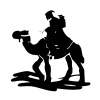 Took partage 60Marco Polo traveled overland to Yuan China, and the account produced after his return described Kublai's Asian realm to European readers.
- Marco Polo Meets Kublai at ShangduIn 1275, Marco Polo arrived at Yuan Shangdu with his father and uncle and met Kublai Khan.
- Marco Polo Meets Kublai at Shangdu
- c. 1279Wen Tianxiang Dies Unyielding at Dadu
 age 64After the Battle of Yamen, Wen Tianxiang was held in Dadu for three years, refused Kublai's offers, wrote the Song of Righteousness in prison and was executed at the Chaishi market.
- 1280Promulgation of Shoushi Calendar
 In powerage 65Guo Shoujing, Wang Xun, Xu Heng, and their collaborators compiled the Shoushi calendar using observations gathered across an unusually broad network of sites.
- 1293Yuan Grand Canal Integration
 Straightening the direct waterway from Dadu to Hangzhou, formalizing the enduring Jing-Hang Grand Canal.
- Guo Shoujing Opens the Tonghui Riverc. 1292age 77From 1292 to 1293, Guo Shoujing directed the Baifu-spring diversion and Tonghui River works, allowing grain boats to sail from Tongzhou into Dadu's Jishuitan.
- Guo Shoujing Opens the Tonghui River
- 1294 CEDied
Family tree
- Direct kin

Connections
- Shared events3
- Interactions2
- Rulers and officials2


