
Literature

Literary Forms Classical Poetry
 Four-Character Verse
 Chu Elegies
 Yuefu Ballads
 Old-Style Songs
 Regulated Quatrains
 Regulated Octaves
 Bamboo-Branch Songs
 Palindrome Verse
 Ci Lyrics
 Short Lyrics
 Mid-Length Lyrics
 Long Lyrics
 Self-Composed Tunes
 Sanqu & Drama
 Sanqu Songs
 Song Suites
 Yuan Zaju Drama
 Chuanqi Drama
 Southern Drama
 Storytelling Ballads
 Rhapsody & Parallel Prose
 Grand Han Rhapsodies
 Short Rhapsodies
 Parallel Prose
 Prose Rhapsodies
 Classical Prose
 Pre-Qin Masters
 Historical Narrative
 Essays & Memorials
 Travel Writing
 Letters & Prefaces
 Informal Essays
 Epitaphs & Elegies
 Notebooks
 Classical Fiction
 Tales of the Strange
 Tang–Song Tales
 Vernacular Stories
 Chapter Novels
 Qing Tales of Wonder
 Satirical Novels
 Fables & Lore
 Philosophers' Fables
 Satirical Parables
 Historical Allusions
 Ancient Myths
 Folk Legends
 Literary Criticism
 Literary Theory
 Poetry Talks
 Drama Criticism
 Rhetoric & Style
 Sayings & Idioms
 Idioms
 Proverbs
 Common Sayings
 Aphorisms
 Couplets
 Rhymes & JinglesCivilizational Canons
 Values & Ethics
 Cosmos & Nature
 Poetry & Lyrical Spirit
 Melodies & Performing Arts
 Crafts & Material Wisdom
 Culinary & Gastronomy
 Strategies
 Education
 Sciences
 Architecture
 Infrastructure
 CommerceThrough the Dynasties
 Xia
 Shang
 Zhou
 Qin
 Han
 Three Kingdoms
 Jin
 Northern and Southern
 Sui
 Tang
 Five Dynasties and Ten Kingdoms
 Song
 Yuan
 Ming
 QingMasters & Authors
 Classical PoetryFour-Character VerseChu ElegiesYuefu BalladsOld-Style SongsRegulated QuatrainsRegulated OctavesBamboo-Branch SongsPalindrome VerseCi LyricsShort LyricsMid-Length LyricsLong LyricsSelf-Composed TunesSanqu & DramaSanqu SongsSong SuitesYuan Zaju DramaChuanqi DramaSouthern DramaStorytelling BalladsRhapsody & Parallel ProseGrand Han RhapsodiesShort RhapsodiesParallel ProseProse RhapsodiesClassical ProsePre-Qin MastersHistorical NarrativeEssays & MemorialsTravel WritingLetters & PrefacesInformal EssaysEpitaphs & ElegiesNotebooksClassical FictionTales of the StrangeTang–Song TalesVernacular StoriesChapter NovelsQing Tales of WonderSatirical NovelsFables & LorePhilosophers' FablesSatirical ParablesHistorical AllusionsAncient MythsFolk LegendsLiterary CriticismLiterary TheoryPoetry TalksDrama CriticismRhetoric & StyleSayings & IdiomsIdiomsProverbsCommon SayingsAphorismsCoupletsRhymes & JinglesCivilizational Canons
 Values & EthicsCosmos & NaturePoetry & Lyrical SpiritMelodies & Performing ArtsCrafts & Material WisdomCulinary & GastronomyStrategiesEducationSciencesArchitectureInfrastructureCommerceThrough the Dynasties
 XiaShangZhouQinHanThree KingdomsJinNorthern and SouthernSuiTangFive Dynasties and Ten KingdomsSongYuanMingQingMasters & Authors

Classical Prose · LT505
Letters & Prefaces
Personal correspondence, anthology prefaces, and colophons.
54works
9dynasties
43authors
Mural guide
At a garden gate, two correspondents exchange a sealed letter as a path recedes beyond the doorway.
 Qianlong EmperorQing
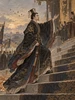 Cao PiThree Kingdoms
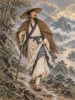 Su Shi (Su Dongpo)Song
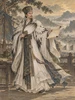 Zhuge LiangThree Kingdoms
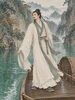 Wu Jun (Shuqing)Northern and Southern
 Ji Yun (Ji Xiaolan)Qing
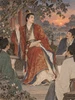 Xiao GangNorthern and Southern
 Yuan HongdaoMing
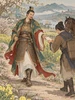 Qian LiuFive Dynasties and Ten Kingdoms
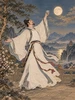 Li BaiTang
 Liu ZongyuanTang
 Tao YuanmingJin
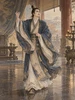 Cao ZhiThree Kingdoms
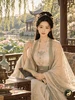 Li QingzhaoSong
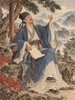 Ouyang XiuSong
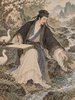 Wang XizhiJin
 Han YuTang
 Sima QianHan
 Qiu Chi (Xibin)Northern and Southern
 Zhuo WenjunHan
 Sima GuangSong
 DorgonQing
 Yao ChongTang
 Sun ChuoJin
- Letter in Reply to Ren An
 Every man must die once; a death may be weightier than Mount Tai or lighter than a goose feather, according to what it is used for.
- Letter of FarewellThe vermilion string is snapped, the bright mirror cracked; the morning dew has dried, the fair face faded.
- Letter in Reply to Sun HuizongFarm families work hard; at the summer and winter festivals we boil a sheep and roast a lamb and cheer ourselves with a dipper of wine.
- Letter Admonishing Nephews Yan and DunI desire you all, upon hearing others' faults, to treat it as hearing your parents' names: ears may listen, but mouths must never utter them. Emulating Bogao imperfectly still yields a prudent gentleman—carving a swan that resembles a duck; emulating Jiliang imperfectly degrades into frivolous insolence—drawing a tiger that ends up looking like a dog.
- Admonitions for WomenA woman has four kinds of conduct: womanly virtue, womanly speech, womanly bearing and womanly work.
- Letter Breaking Ties with Shan JuyuanMoreover I constantly disparage Tang and Wu and belittle the Duke of Zhou and Confucius.
- Letter to Wu Zhi · Remembering Past WanderingsIn the old days when we went about together, we rode with carriages side by side and sat with mats touching.
- Letter to Yang DezuEveryone thought he held the pearl of the numinous snake and every family thought it had the jade of Mount Jing.
- Letter of Admonition to My SonWithout living simply, one cannot clarify one's aspirations; without stillness, one cannot reach far horizons.
- Admonition to My NephewOne's aims should be lofty and far-reaching: admire the worthies of the past, cut off sensual desires and cast away doubts and hesitations
- Letter to Wu Zhi, Prefect of Zhaogefloated sweet melons in the clear spring and sank red plums in the cold water.
- Letter to Zhong Yao on the Ninth DayCao Pi sends chrysanthemums to Zhong Yao, noting that people prize the name of the Double Ninth.
- Preface to the Orchid Pavilion Gathering
 Looking up to gaze upon the vastness of the universe, looking down to survey the richness of all living things, allowing the eyes to wander and the heart to roam.
- Biography of Master Five WillowsHe loved reading but did not seek exhaustive explanations; whenever something struck a chord, he was so delighted he forgot to eat.
- Preface to the Orchid Pavilion Poems of the Third Day of the Third Month (Later Preface)The ancients compared nature to water: how apt! Is it not that kept still it is clear, stirred up it is muddy?
- Reply to Secretary XieThe splendor of mountains and rivers has been universally celebrated from antiquity. Lofty peaks pierce the clouds; crystal streams reveal their gravel beds. Rock cliffs on both shores shimmer in kaleidoscopic hues; verdant woods and emerald bamboo flourish through all four seasons.
- Letter to Zhu Yuansi
 Wind and mist have completely vanished; sky and mountains share the same crystalline azure. Drifting with the current, wandering freely east or west. Across the hundred leagues from Fuyang to Tonglu, the marvelous mountains and wondrous waters are peerless under Heaven.
- Letter to Attendant ShiSheer cliffs reach the sky and a lone peak enters the Milky Way.
- Letter to Chen BozhiIn the third month of late spring, south of the Yangzi the grasses grow tall, assorted flowers bloom on the trees and flocks of orioles fly about.
- Letter to the Prince of XiangdongLately I see that the literary style of the capital is unusually feeble and dull, vying in loose and shallow writing, hasty yet slack.
- Admonition to Daxin, Duke of DangyangThe way to conduct oneself is different from the way to write: in conducting oneself one must first be careful and grave; in writing one should be free and unrestrained.
- Postscript to the Biography of Censor ZhangHolding one city to shield the whole realm.
- Letter to Governor Han of JingzhouIn life I need not be made a marquis of ten thousand households; I wish only to make the acquaintance of Han of Jingzhou.
- Letter to Wei Zhongli on the Way of the TeacherQu Yuan's rhapsody says, 'The dogs of the town bark in packs; they bark at what they find strange.'
- Preface to the Sacred Teachings of the Tripitaka of the Great TangWind in the pines and the moon on water cannot match his purity; immortal dew and bright pearls cannot equal his radiance.
- Testament Admonishing My Sons and GrandsonsWealth and rank are what others resent.
- Preface to Poems on Enjoying the MoonArgues that autumn, and its fifteenth night, is the best time to enjoy the moon.
- Family Instructions of the Qian ClanIn the arts of the heart do not offend against heaven and earth; in word and deed be without shame before the sages.
- 'The Flowers Bloom on the Field Paths; You May Come Home Slowly' (Letter to the Queen)The flowers are blooming on the field paths; you may come home slowly.
- Letter to Grand Commandant Han of the Bureau of Military AffairsI hold that writing is the form taken by one's qi; writing cannot be acquired by study, but qi can be attained by nourishing it.
- Reply to Remonstrance Official SimaWhat scholars contend over above all is names and realities. When names and realities are clear, the principles of the world are grasped.
- Postscript on Wu Daozi's PaintingsWith poetry reaching Du Zimei, prose reaching Han Tuizhi, calligraphy reaching Yan of Lu and painting reaching Wu Daozi, the changes of past and present and all the accomplishments under heaven were complete.
- Letter to Remonstrator GaoYou can still show your face to the scholar-officials and go in and out of court calling yourself a remonstrance official. This means you no longer know there is such a thing as shame in the world!
- Letter in Reply to Xie MinshiIn general they are like drifting clouds and flowing water, with no fixed form at the outset, but always moving where they should move and stopping where they cannot but stop; their patterns are natural and their postures abundant.
- On Frugality, for My Son KangEveryone takes extravagance as glory; my heart alone takes frugality and plainness as beauty.
- Afterword to the Records of Metal and StoneI happened to have a good memory, and every day after dinner we sat in the Guilai Hall brewing tea; pointing to the piles of books and histories, we would say in which book, which juan, which page and line a certain matter was, and whoever was right won and drank first. When I won, I would raise my cup and laugh so hard that the tea spilled into my lap and I got up without drinking it.
- Preface Presenting to Student Ma of DongyangIn the bitter cold, when the inkstone froze hard and my fingers could not bend or straighten, I did not slacken.
- Reply to Master LiuThis is what the world calls superiors and inferiors in mutual trust. Do you, sir, think I could manage it?
- Preface to the Poetry of XiaoxiuExpressing one's innate spirit and authentic sensibility, unconstrained by rigid stylistic molds; refusing to put brush to paper unless flowing straight from one's own heart. When emotion meets circumstance, a thousand words flow in an instant like waters rushing east, captivating the soul.
- Letter in Reply to Li YuanshanWith syntax, diction and cadence all flowing from one's own breast—that is true novelty.
- Instructions for the Students at LongchangIf the will is not set, nothing in the world can be accomplished.
- Jinggao Collected DraftsThe Donglin society is where this bookish scholar's foolish heart has not yet given up
- Zhengshi, from Record of Daily KnowledgePreserving All-under-Heaven is a responsibility in which even the humblest common man has his share.
- Fourth Letter Sent from the Fan County Magistracy to Brother MoI think the first rank of people in the world is the farmers, while scholars are last of the four classes.
- Letter to Younger Brothers on Reading and AspirationWhen scholars study, first they must have Aspiration (Zhi); second, Discernment (Shi); third, Perseverance (Heng). With aspiration, one refuses base mediocrity; with discernment, one recognizes learning is boundless and never grows complacent; with perseverance, there is nothing that cannot be achieved. None of these three can be lacking.
- Family Letters of Zeng Guofanlooking at books is like attacking cities and seizing territory to extend one's lands; reciting is like digging deep moats and building strong ramparts to hold what one has won.
- The Leader's Will (Sun Yat-sen's Political Testament)The revolution has not yet succeeded. All my comrades must continue to strive, following my Plans for National Reconstruction, Fundamentals of National Reconstruction, Three Principles of the People and the Manifesto of the First National Congress, to carry them through.
- Letter to Shi KefaOur dynasty's pacification of the Yan capital was taken from the rebel Chuang, not from the Ming.
- Complete Tang PoemsPoetry reached the Tang with every form complete and every method present.
- Complete Library of the Four TreasuriesNow is the time to collect them and send them to the capital, to display the glory of a common script through a thousand ages.
- Annotated Catalogue of the Complete Library of the Four TreasuriesThough some disorder and alteration of words and sentences is unavoidable, the work as a whole is still Qian's original.
- Letter to SomeoneTo study the classics, first examine the meanings of the words, then understand the sense of the text.
- Miscellaneous Selections from the Classics, Histories and Hundred SchoolsEach category is always headed by the Six Classics: trickling streams take the sea as their home.
- Essence of Tang and Song Poetry (Imperially Selected)Having a Prose Essence, we cannot be without a Poetry Essence.