
 Atlas
 Tarim Basin
 Shennongjia
 Hengduan Mountains
 Xishuangbanna
 Changbai Forest Region
 Ejina
 Min Mountains / Qionglai Mountains
 Jiuzhaigou
 Southern Qinling Foothills
 Junggar Wilds
 Hoh Xil
 Tianshan Mountains
 Yangtze Estuary Wetlands
 South China Mangroves
 Wuyi Mountain Tea Region
 Hainan Tropical Scrub


















Xishuangbanna
North of the Tropic of Cancer, Xishuangbanna preserves tropical rainforest habitat for elephants, peafowl, and diverse wildlife.
 Prefecture: Xishuangbanna
 Province: Yunnan
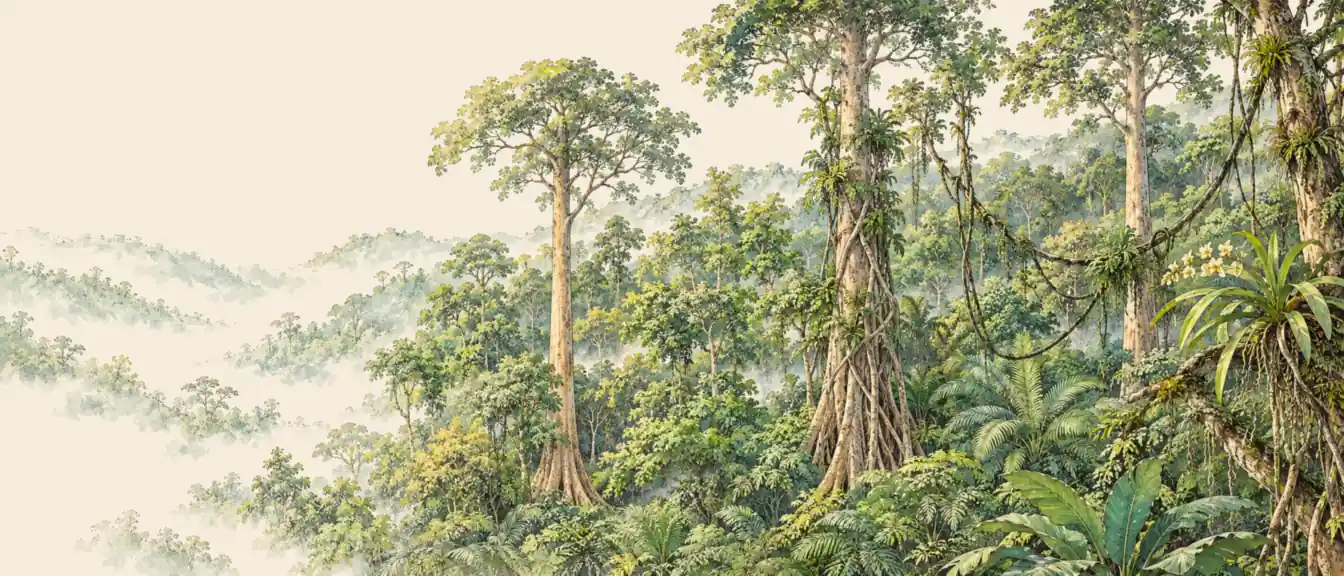
Tall trunks rise from a misty forest, wrapped in vines, with ferns and broad-leaved plants crowding below and small yellow flowers on a branch at right.
Vista1

- Jinghong Wild Elephant Valley
In the Sancha River valley within Mengyang Nature Reserve, a raised canopy walkway lets visitors watch wild Asian elephants safely from above.
Gardens1

- Xishuangbanna Tropical Botanical Garden
Founded in 1959 on Gourd Island at Menglun, this garden covers about 1,125 hectares with 38 thematic gardens and more than 12,000 living plant species.
Natural Wonder1

- Mengla Parashorea Rainforest Area
Towering Parashorea chinensis, the tree that proved China holds true tropical rainforest, gives Mengla a celebrated canopy walkway high above the forest floor.
Yuan1

- Dai Elephant Culture in XishuangbannaHistorical cultural context, c. 13th century
Xishuangbanna Dai traditions preserve long-standing cultural memories of elephant reverence, human–elephant coexistence, and elephants in farming and warfare.
Modern Era2

- Later World Heritage Listings
In 1994 the Ancient Building Complex in the Wudang Mountains was inscribed on the World Heritage List; the Classical Gardens of Suzhou, the Yungang Grottoes, Quanzhou and others followed, and in 2023 the Jingmai Mountain old tea forest landscape was inscribed.
- Jingmai Mountain Old Tea Forests Inscribed2023 CE
In 2023, Jingmai Mountain's old tea forests were inscribed for understorey tea cultivation, traditional villages, and community governance.
