
 Atlas
Atlas Tarim Basin
 Shennongjia
 Hengduan Mountains
 Xishuangbanna
 Changbai Forest Region
 Ejina
Ejina Min Mountains / Qionglai Mountains
 Jiuzhaigou
 Southern Qinling Foothills
 Junggar Wilds
 Hoh Xil
 Tianshan Mountains
 Yangtze Estuary Wetlands
 South China Mangroves
 Wuyi Mountain Tea Region
 Hainan Tropical Scrub















Min Mountains / Qionglai Mountains
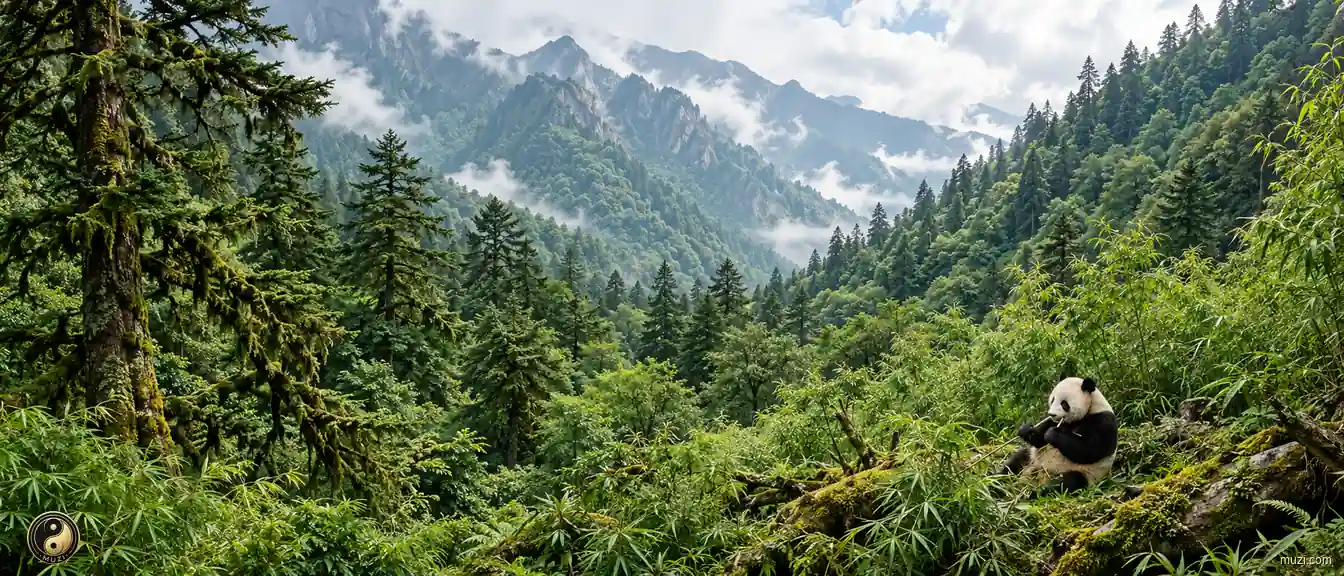
The last home of the giant panda — the bamboo forests of the Min and Qionglai ranges provide the ultimate refuge for this low-metabolic-rate marvel of evolution.
 Prefecture: Ngawa
 Province: Sichuan
A giant panda feeds among bamboo beside an old moss-covered conifer in the layered Min–Qionglai mountain forest.
Natural Wonder2
- Wolong Giant Panda Nature Reserve
A core area of Giant Panda National Park, Wolong supports some of the densest wild panda populations amid thick arrow-bamboo groves.
- Fengtongzhai Panda Nature Reserve
In 1869 the giant panda first became known to science here, and Fengtongzhai remains a sanctuary for wildlife in the Qionglai Mountains.
Vista2

- Mount Siguniang Alpine Meadow
Dubbed the Alps of the East, Mount Siguniang pairs snow peaks with alpine rhododendron groves and fir and spruce woods in a rich natural treasury.
- Tangjiahe Wildlife Nature Reserve
In the Minshan range, Tangjiahe forms a natural corridor where hoofed mammals and carnivores meet, home to wild takin and golden snub-nosed monkeys.
Qing1

- Armand David Meets the Giant Panda1869 CE, Qing
In 1869, Armand David encountered and documented the giant panda at Dengchigou in Baoxing, bringing its specimen into modern science.