
 Atlas
Atlas


























 Zanda
Zanda
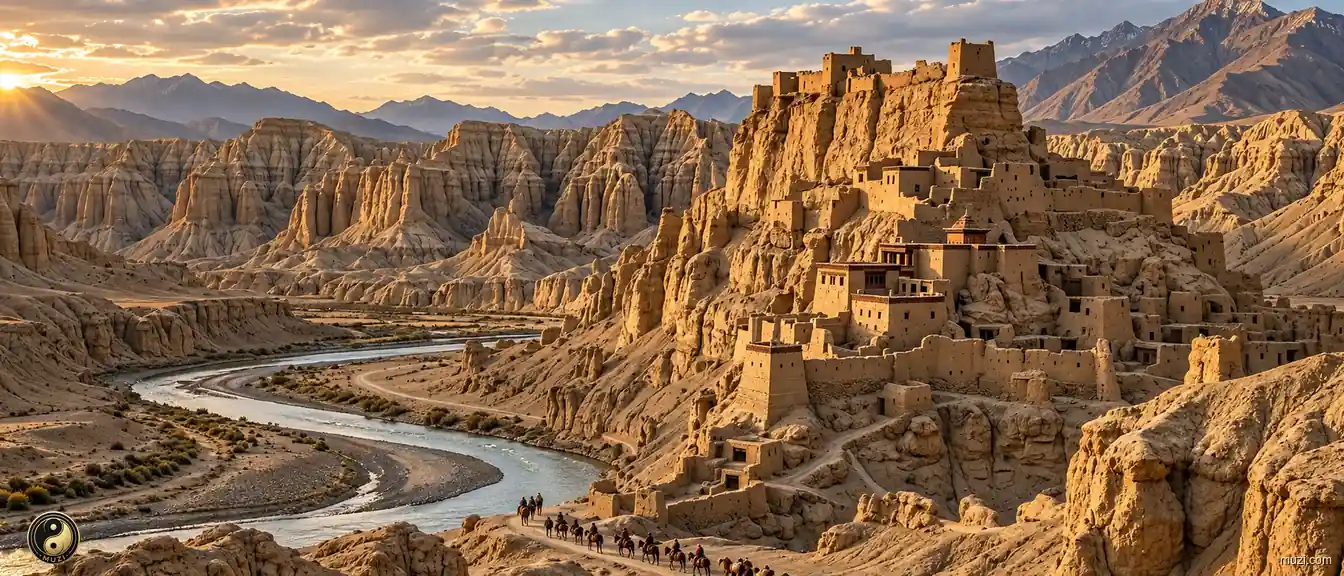
The site of the ancient Guge Kingdom — a colossal forest of yardang earth pillars carved by water erosion, a giant maze of clay geometries secretly hiding a vanished kingdom in extreme desolation.
 Prefecture: Ngari Prefecture
 Province: Tibet
Earthen towers and terraced homes rise among Zanda’s sculpted clay pillars, above a winding river and a small caravan crossing the valley.
Archaeology1

- Zanda Guge Kingdom Royal Palace Ruins
Crowning a summit of eroded earth pillars, the mysterious Guge palace citadel was the capital of a vanished kingdom, adorned with exquisite thousand-year-old Buddhist murals.
Natural Wonder1

- Zanda Xiangquan Valley Earth Forest Geopark
Sculpted by water and weathering in Tertiary sediments, the Zanda earth forest ranks among the world's largest and most classic formations of its kind.
Temple1

- Tholing Monastery
The oldest monastery in Western Tibet founded in 996 CE, cradle of the Later Diffusion of Tibetan Buddhism.
Sculpture1

- Piyang Donggar Grottoes & Murals Heritage
Tibet's largest Buddhist cave complex, Piyang-Donggar preserves exceptionally rare mandala murals from the early Guge period.
Tang1

- The Guge Kingdom Foundation TraditionLate Tubo to early Northern Song, c. 843–966 CE
Ali histories and Guge-site materials record the tradition of a Tubo royal descendant migrating west and establishing the Guge polity.
Song2

- Atisha Arrives at Tholing MonasteryNorthern Song (1042 CE)
In 1042, Atisha reached Tholing at the invitation of Guge's rulers, translated texts with Rinchen Zangpo and Nagtso, and composed the Lamp for the Path to Enlightenment.
- Atisha Teaches at Tholing1042 CE
In 1042 CE, Atisha reached Tholing Monastery and worked with translators on Buddhist teaching and translation.