 Atlas
Atlas





















 Irtysh Valley
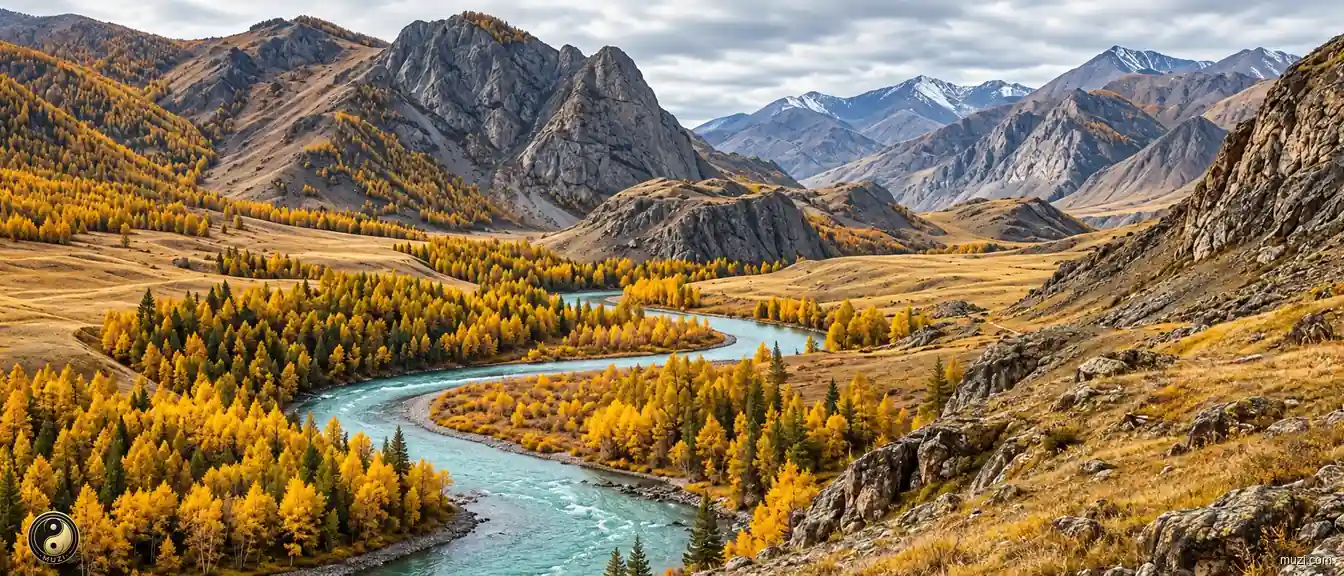
The Irtysh is a rare river that flows north toward the Arctic Ocean, cutting a green corridor through the Altai interior.
 Prefecture: Altay Prefecture
 Province: Xinjiang
A turquoise river winds through a golden autumn valley, where larch forests follow the banks beneath rugged, snow-dusted Altai mountains.
Natural Wonder3
- Shenzhong Peak in Koktokay Irtysh Grand Canyon
A sheer 300-meter granite bell peak rising from the source of the Irtysh River in the Altai Mountains.
- Kanas Lake Moon Bay & Fairy Bay
Kanas Lake, a color-shifting glacial lake in the high mountains, sits in China's only zone of southern Siberian taiga plants and wildlife.
- Irtysh Grand Canyon Shenzhong Mountain
Granite pinnacles of the Altai crowd the rushing Irtysh River here, forming a canyon landmark of giant rocks around Shenzhong Mountain.
Bridge1

- Burqin Colorful Beach & Irtysh Ferry
At this old Irtysh ferry crossing near Burqin, the two banks could not differ more: green woods line the south, multicolored eroded cliffs the north.
Infrastructure1
- Koktokay No. 3 Mine
Colossal spiral opencast mine pit and world-renowned geological treasury of rare metals.
In its history1
- Temujin1162–1227 CE (birth by other accounts 1155 or 1167)
Part of Irtysh Valley's history: Rise of Genghis Khan. Founder of the Mongol empire, proclaimed Chinggis Khan at the source of the Onon in 1206, who made war on the Jin and Khwarazm and died during his last campaign against Western Xia
Yuan2

- Rise of Genghis Khan
Temujin united the Mongol Plateau tribes and was proclaimed Genghis Khan at a kurultai, founding the Mongol Empire and launching its expansion.
- Genghis Khan Crosses the AltaiGenghis Khan's reign, 1218–1219 CE
In 1218–1219 the first Mongol western expedition crossed the Altai toward the Irtysh region on the route between Mongolia and Central Asia.