
 Atlas

























 Juyan Lake
A terminal oasis where the Heihe River dies into the Badain Jaran Desert — the Han dynasty's extreme northern outpost, where military wooden slips were unearthed, a forward base of the Qin-Han empire in the Gobi.
 Prefecture: Alxa League
 Province: Inner Mongolia
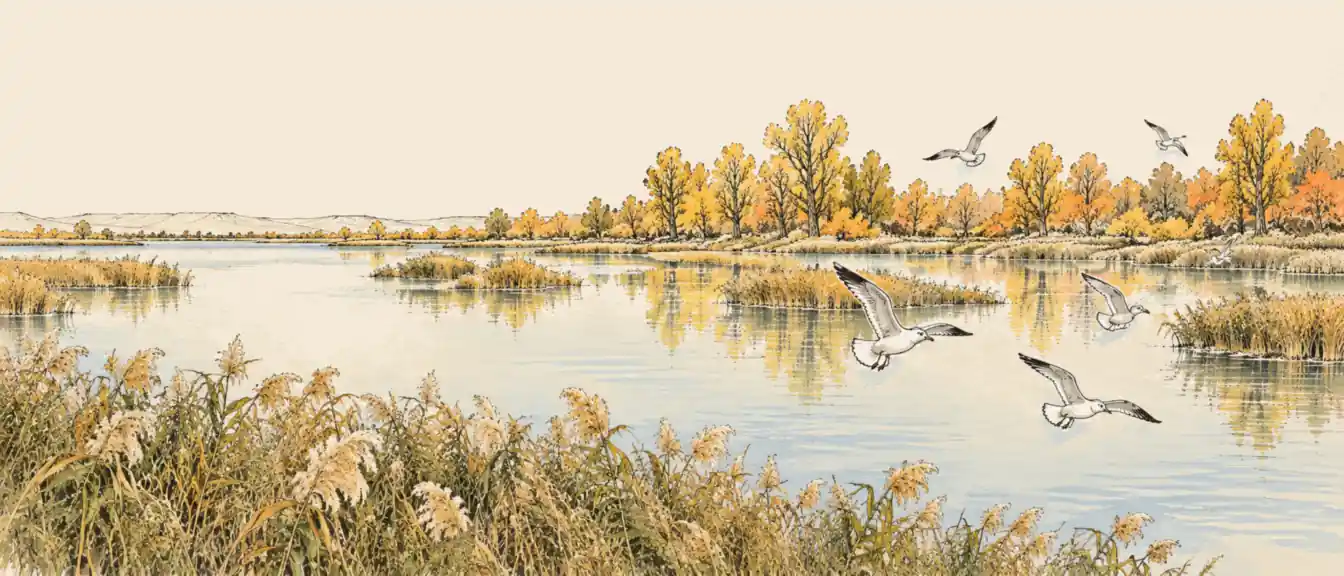
Reeds crowd the foreground of a wide, calm lake as several white birds fly over the water, and a row of golden trees is reflected along the far shore.
Archaeology3

- Khara-Khoto Western Xia Fortress Ruins
Western Xia texts, Buddhist scriptures and stupas have been unearthed at Khara-Khoto, a desert citadel that once guarded the northern Silk Road.
- Juyan Jiaqu Houguan Beacon & Commandery
Part of the Juyan frontier defenses begun in 102 BCE, the Jiaqu command post site yielded nearly eight thousand wooden and bamboo slips.
- Ejina Red City Han Dynasty Fort Site
The Red City is a Han-period fort among the Juyan remains, with rammed-earth walls standing on the plain, and its match with the Zhelu barrier is still unsettled.
Natural Wonder1

- Juyan Lake National Wetland Park
Fed by the Heihe River, Juyan Lake forms the green heart of the Ejina desert, with reed beds and gathering flocks of migratory birds.
Han1

- Juyan Slips Record Han Frontier Life102 BCE
By 102 BCE, dated slips from Juyan recorded Han garrisoning and administrative life on the frontier.
Song1

- Western Xia's Heishuicheng Military Command1038–1227 CE
During the Western Xia period, the Black Water Military Command administered the area around Heishuicheng, which became a military and trade post on the Hexi Corridor.