



































 County-level
A La Shan Zuo Banner
Alxa Left Banner lies between the Helan Mountains and the Badain Jaran Desert, a sparsely settled landscape since antiquity.
 MUZIChinese Matrix
Alxa encompasses the towering dunes and lakes of the Badain Jaran Desert, the golden poplar forests of Ejin and the ruins of Khara-Khoto.
The regional profile of Alxa League begins with the concrete evidence “Alxa encompasses the towering dunes and lakes of the Badain Jaran Desert, the golden poplar forests of Ejin and the ruins of Khara-Khoto.” The clue links spatial form with everyday experience, giving the regional idea a concrete setting and human scale. Long-term change preserved, adjusted, and transmitted these relationships, showing how environmental influence and community action worked together. These interactions provide a factual basis for understanding the connections, distinctions, and continuities between Alxa League and nearby places. Its significance lies in connecting regional geography, historical continuity, and cultural difference through checkable local evidence about Alxa League.
County-level
Alxa Left Banner lies between the Helan Mountains and the Badain Jaran Desert, a sparsely settled landscape since antiquity.
County-level
Most of Alxa Right Banner extends across the Badain Jaran Desert, a vast landscape that has long supported sparse settlement.
County-level
The Juyan site complex, centered on Khara-Khoto, Datong City, and Jiaqu Fortress, preserves frontier documents from the mid-Western to early Eastern Han.
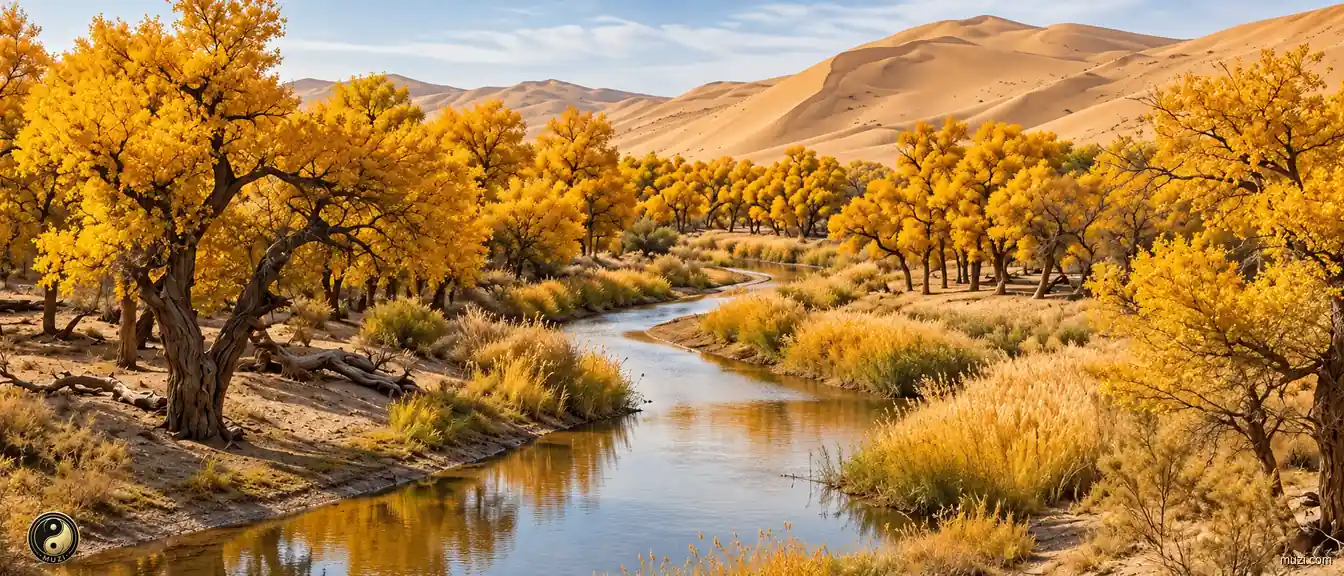
A poplar forest belt on the edge of the Badain Jaran Desert — living a thousand years, standing dead a thousand more, the iron-blooded warrior fighting desertification at the front line.
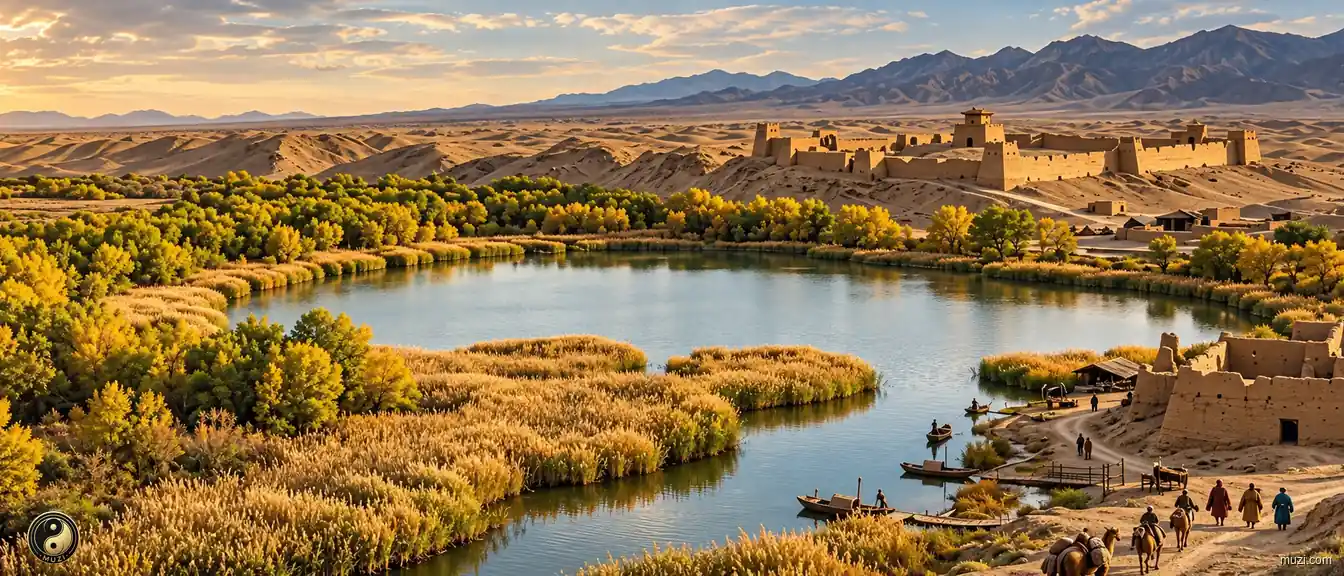
A terminal oasis where the Heihe River dies into the Badain Jaran Desert — the Han dynasty's extreme northern outpost, where military wooden slips were unearthed, a forward server of the Qin-Han empire in the Gobi.
Left to wither when the river changed course, Ejina's dead poplars still stand upright, silent witnesses to desert winds and the old Western Xia city of Khara-Khoto.
View attraction
Built along the Heihe river system, this green corridor forms a desert-oasis line of defence safeguarding the environment of northern China.
View attraction
Western Xia texts, Buddhist scriptures and stupas have been unearthed at Khara-Khoto, a desert citadel that once guarded the northern Silk Road.
View attraction
More than ten thousand inscribed Juyan Han slips came from this frontier fort, once the command center of the Juyan defensive line.
View attraction
Fed by the Heihe River, Juyan Lake forms the green heart of the Ejina desert, with reed beds and gathering flocks of migratory birds.
View attraction
Rammed-earth walls still rise from the desert at the Red City, a key fortress in the Han dynasty's Zhelu barrier defenses.
View attraction