





































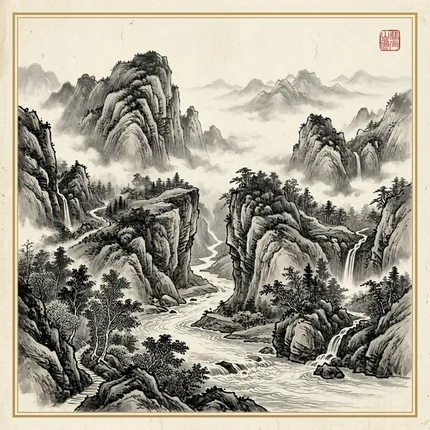
 Prefecture-level
Shenyang
Shenyang's Mukden Palace and the Fuling and Zhaoling tombs are World Heritage sites, while the Zhang Residence and 9.18 Museum recall modern history.
 MUZIChinese Matrix

Liaodong Peninsula, the Liao River plain, and Northeast Asian seaways converge here, alongside a dense legacy of modern industry.
Within the province-level setting of Liaoning, the spatial identity of Liaoning is first captured by this local fact: “Liaodong Peninsula, the Liao River plain, and Northeast Asian seaways converge here, alongside a dense legacy of modern industry.” It points to an observable local combination in which the setting of Liaoning is shaped by both environment and lived practice. Historical development brought natural conditions and human activity into repeated negotiation, leaving traces in settlement, routes, and memory. Specific places and continuing lives turn a broad regional relationship into experience that can be observed and checked. The meaning of Liaoning rests in specific places and continuing life, not only in its name or formal classification.
Prefecture-level
Shenyang's Mukden Palace and the Fuling and Zhaoling tombs are World Heritage sites, while the Zhang Residence and 9.18 Museum recall modern history.
 Prefecture-level
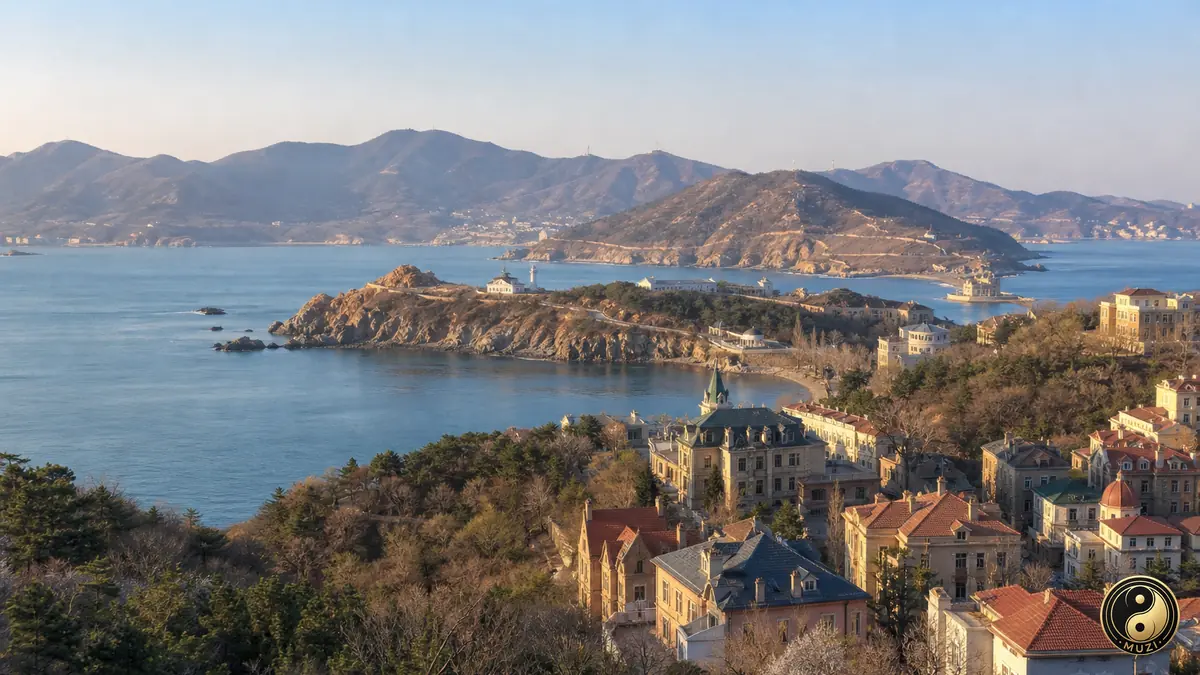
Dalian, a breezy seaside city, offers Xinghai Square, Tiger Beach and the historic forts of Lüshunkou, plus fresh seafood and a proud football tradition.
Prefecture-level
Anshan, China's steel capital, is known for the granite peaks of Qianshan, the giant Xiuyan jade Buddha at Yufo Garden and Tanggangzi hot springs.
Prefecture-level
Fushun preserves Hetu Ala and the Yongling tombs, cradle of the Qing dynasty, alongside the vast West Open-Pit Mine and the Lei Feng Memorial.
Prefecture-level
Benxi lets visitors boat along the underground river of Benxi Water Cave, admire Guanmenshan's autumn maples and climb the Goguryeo fortress on Wunü Mountain.
Prefecture-level
Dandong on the Yalu River keeps the Broken Bridge and a war memorial museum, with the Hushan Great Wall and Fenghuang Mountain close by.
Prefecture-level
Jinzhou has Yiwulü Mountain, the Liao-era main hall of Fengguo Temple in Yixian, the tidal causeway to Bijia Mountain and the Liaoshen Campaign Memorial.
Prefecture-level
Yingkou at the mouth of the Liao River runs the busy Bayuquan port, honors maternal love at Wang'er Mountain and offers Xiongyue hot springs.
Prefecture-level
Fuxin, China's agate capital, has the 8,000-year-old Chahai site with its stone-pile dragon and Ruiying Temple, a major Tibetan Buddhist monastery.
Prefecture-level
Liaoyang, one of Northeast China's oldest cities, has its ancient White Pagoda, Han and Wei tomb murals and the hot springs of Gongchangling.
Prefecture-level
Panjin is famed for its Red Beach of seepweed, reed wetlands where red-crowned cranes nest, the Liaohe Oilfield and Panjin rice.
Prefecture-level
Tieling keeps the early-Qing Yingang Academy, Longshou Mountain and Lianhua Lake wetlands, and is a heartland of the errenzhuan folk duet.
Prefecture-level
Chaoyang holds the Niuheliang Hongshan goddess temple, the millennium-old North Pagoda and a national geopark of early bird fossils.
Prefecture-level
Huludao has Xingcheng's well-preserved Ming walled town, the Jiumenkou Water Great Wall in Suizhong, Juehua Island and a thriving swimwear industry.
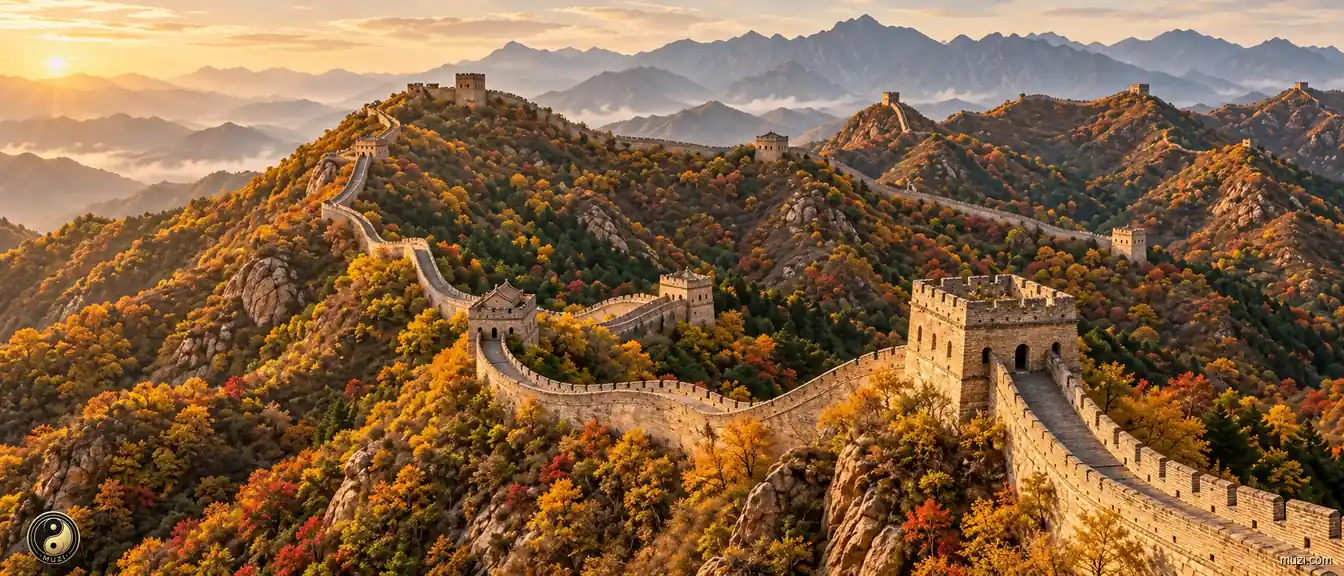
The longest military fortification in human history — winding ten thousand li along the northern ridges, guarding the boundary of agrarian civilization for two millennia.