


































 Prefecture-level
Central and Western
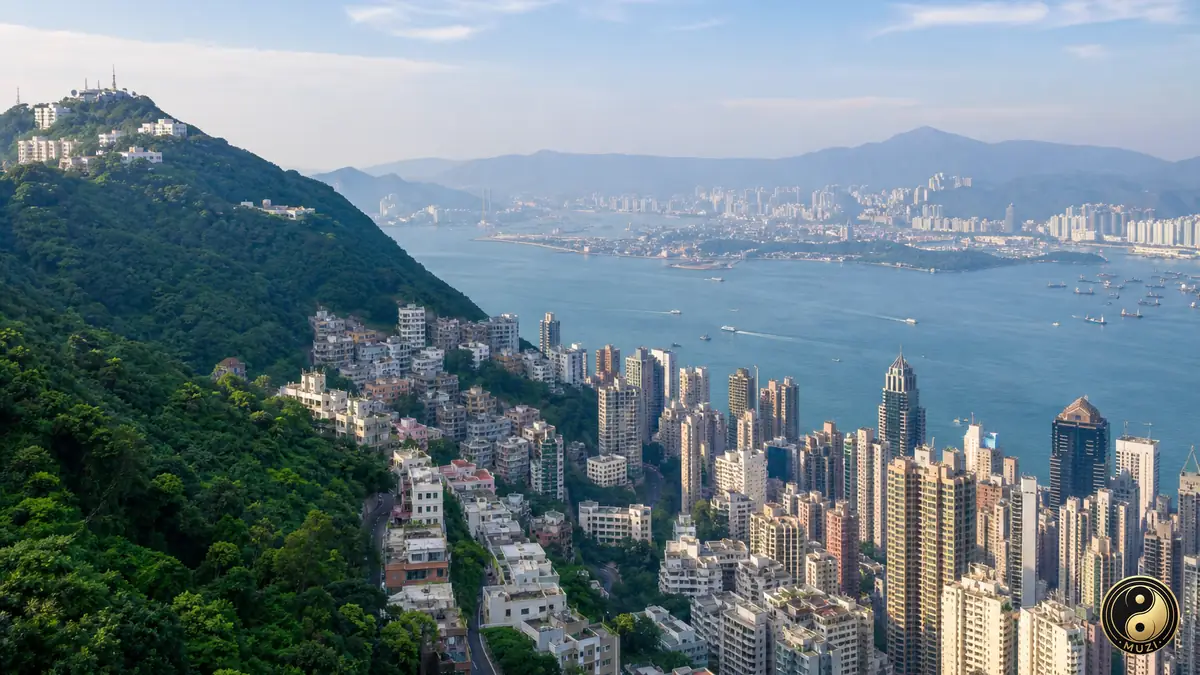
Central's skyscrapers line Victoria Harbour below Victoria Peak, while Central and Western also keeps heritage such as Sheung Wan's Man Mo Temple.
 MUZIChinese Matrix

On the Pearl River estuary’s eastern shore, a global harbor combines surrounding hills and islands with trade networks and Sino-Western heritage.
In regional terms, the clearest first clue to Hong Kong is “On the Pearl River estuary’s eastern shore, a global harbor combines surrounding hills and islands with trade networks and Sino-Western heritage.” Together, environmental, historical, and cultural elements give Hong Kong a profile that can be distinguished from nearby places. Continuing local life gave inherited spaces new uses and memories, allowing historical layers and contemporary activity to coexist. Today, the interaction between environment and society remains visible in landscape, urban texture, daily activity, and local memory. These details make Hong Kong a clear case of how a wider region is built from specific places and sustained lives.
Prefecture-level
Central's skyscrapers line Victoria Harbour below Victoria Peak, while Central and Western also keeps heritage such as Sheung Wan's Man Mo Temple.
 Prefecture-level
Wan Chai is known for the Convention and Exhibition Centre, Happy Valley Racecourse and Causeway Bay shopping, with the Blue House recalling old neighbourhoods.
Prefecture-level
The Museum of Coastal Defence guards Lei Yue Mun at Shau Kei Wan, while Eastern District also holds Law Uk Folk Museum, Taikoo Shing and North Point.
Prefecture-level
Repulse Bay and Stanley beaches sparkle on Hong Kong Island's south shore, and Southern District is also home to Aberdeen harbour and Ocean Park.
Prefecture-level
The Avenue of Stars and Tsim Sha Tsui Clock Tower face the harbour, while Mong Kok's Ladies' Market and Temple Street keep Yau Tsim Mong lively.
Prefecture-level
Apliu Street electronics stalls and Ki Lung Street fabric shops define Sham Shui Po, which also preserves the Han dynasty Lei Cheng Uk Tomb and Mei Ho House.
Prefecture-level
Kowloon Walled City Park recalls the former walled city, Kai Tak Cruise Terminal sits on the old runway, and Kowloon City is famed for Thai eateries.
Prefecture-level
Sik Sik Yuen Wong Tai Sin Temple draws crowds of worshippers, and Chi Lin Nunnery's Tang-style halls grace Wong Tai Sin beneath Lion Rock.
Prefecture-level
Kwun Tong pairs its waterfront promenade and converted industrial buildings with the Lei Yue Mun seafood village and Cha Kwo Ling Village.
Prefecture-level
The Hakka walled village of Sam Tung Uk is now a museum, while Tsuen Wan rises toward Tai Mo Shan and boasts Yuen Yuen Institute and The Mills.
Prefecture-level
The old Tsing Shan Monastery clings to Castle Peak, and Tuen Mun adds Butterfly Beach and a new town threaded by the Light Rail.
Prefecture-level
Migratory birds flock to the Mai Po wetlands, while Ping Shan Heritage Trail and Kat Hing Wai trace Tang clan history in Yuen Long, famed for wife cakes.
Prefecture-level
Sheung Shui's Liu Man Shek Tong and Fanling's Lung Yeuk Tau Heritage Trail showcase walled-village traditions, while North District also includes Lo Wu and Sha Tau Kok.
Prefecture-level
Crowds visit the Lam Tsuen Wishing Trees each Lunar New Year, Tai Po's old station houses the Railway Museum, and Plover Cove Reservoir lies nearby.
Prefecture-level
Called Hong Kong's back garden, Sai Kung offers a lively seafood waterfront and the hexagonal rock columns of High Island Reservoir in the UNESCO Global Geopark.
Prefecture-level
The Shing Mun River runs through Sha Tin new town, home to Che Kung Temple, the Ten Thousand Buddhas Monastery, the racecourse and the Hong Kong Heritage Museum.
Prefecture-level
The busy Kwai Chung container terminals and the Tsing Ma Bridge spanning from Tsing Yi make Kwai Tsing the hub of Hong Kong port logistics.
Prefecture-level
The Tian Tan Buddha sits at Ngong Ping on Lantau, Tai O stilt houses and Cheung Chau's Bun Festival charm visitors, and the airport lies in Islands District.