


































 Prefecture-level
Dongcheng
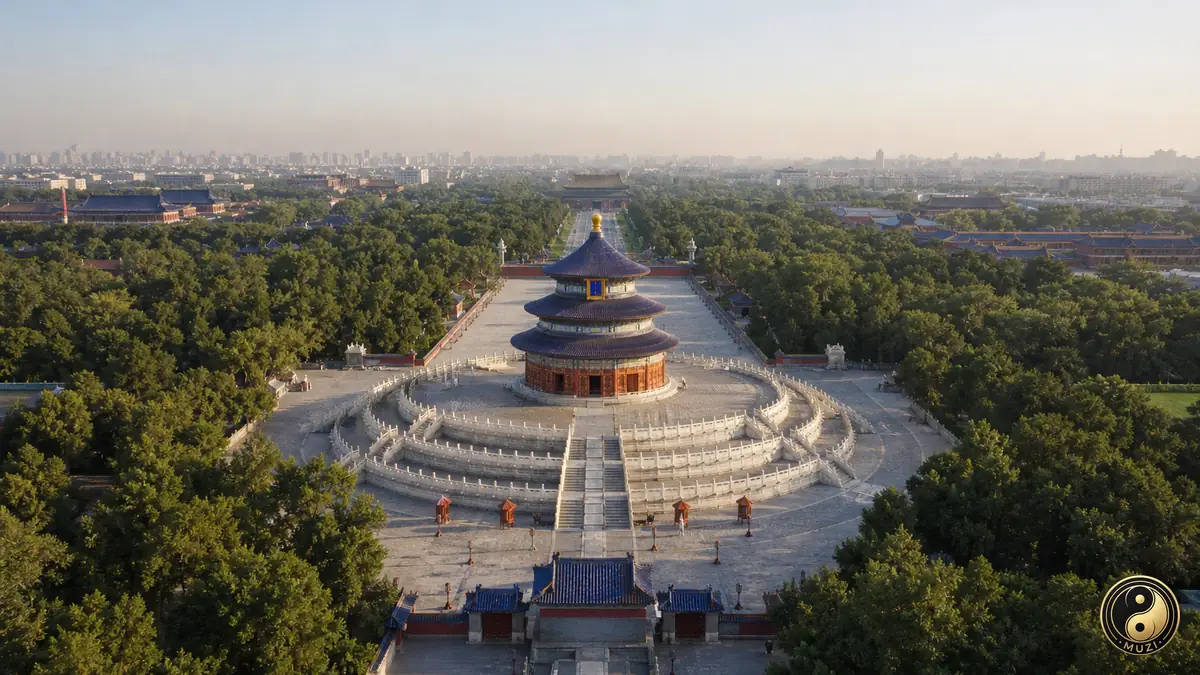
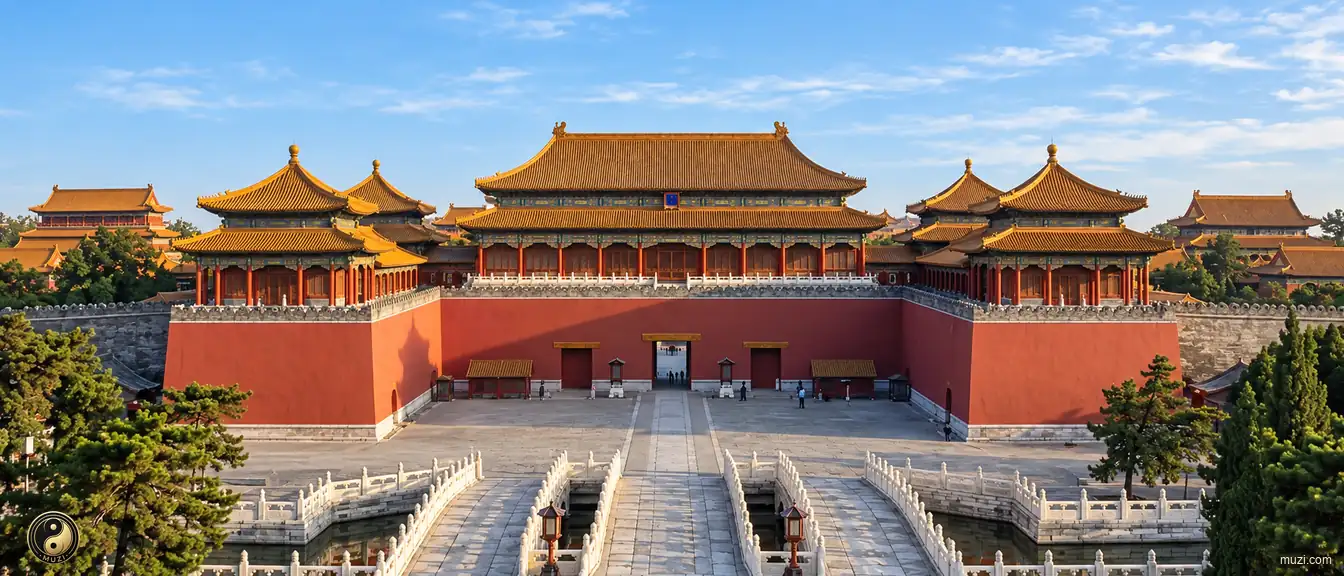
Dongcheng holds the Forbidden City and the Temple of Heaven, plus the Nanluoguxiang hutongs, the Lama Temple and the Wangfujing shopping street.
 MUZIChinese Matrix
A northern capital whose historic axis holds imperial urban form, surrounding landscapes, and contemporary civic life.
A useful starting point for Beijing is the documented fact “A northern capital whose historic axis holds imperial urban form, surrounding landscapes, and contemporary civic life.” The natural conditions and social experience of Beijing therefore belong to one connected geographic story. Communities responded to surrounding conditions through residence, exchange, and daily practice, giving the spatial pattern a traceable history. The chain from environmental conditions to social practice gives the regional change of Beijing a clear real-world expression. Taken together, these clues clarify the position, change, and distinctive contribution of Beijing within the larger region.
Prefecture-level
Dongcheng holds the Forbidden City and the Temple of Heaven, plus the Nanluoguxiang hutongs, the Lama Temple and the Wangfujing shopping street.
 Prefecture-level
Xicheng pairs the waterside lanes of Shichahai with Prince Gong's Mansion, Beihai Park, the White Dagoba Temple and the Liulichang culture street.
 Prefecture-level
Chaoyang combines the Guomao business district and Sanlitun nightlife with the Olympic Bird's Nest stadium and the 798 Art District.
 Prefecture-level
Fengtai holds the Marco Polo Bridge with its countless stone lions, the walled town of Wanping where war broke out in 1937, and the Garden Expo park.
Prefecture-level
Shijingshan offers the eight temples of Badachu in the Western Hills, the Ming murals of Fahai Temple and the transformed Shougang steelworks park.
Prefecture-level
Haidian is home to the Summer Palace, the Old Summer Palace ruins, Peking and Tsinghua universities and the Zhongguancun technology hub.
Prefecture-level
Mentougou holds Tanzhe Temple, said to predate Beijing itself, the Ming and Qing village of Cuandixia and the old trade roads of western Beijing.
Prefecture-level
Fangshan is home to the Peking Man site at Zhoukoudian, the Buddhist stone sutras of Yunju Temple and the karst valleys of Shidu.
Prefecture-level
Tongzhou, northern end of the Grand Canal with the Randeng Pagoda and Zhangjiawan port, now hosts the Beijing sub-centre.
Prefecture-level
Shunyi hosts Beijing Capital International Airport, the Olympic rowing park beside the Chaobai River and the Hanshiqiao wetland.
 Prefecture-level
Changping holds the Ming Tombs beneath Tianshou Mountain and the Juyongguan Pass of the Great Wall, and is known for its strawberries.
Prefecture-level
Daxing hosts the phoenix-shaped Beijing Daxing International Airport, the Nanhaizi Milu deer park and the watermelons of Panggezhuang.
Prefecture-level
Huairou is known for the Mutianyu Great Wall, Yanqi Lake with its international conference centre and the ancient Hongluo Temple.
Prefecture-level
Pinggu is famous for its peaches, with Jinhai Lake, the Jingdong Grand Canyon and the temples of Yaji Mountain adding scenery.
Prefecture-level
Miyun guards Beijing's largest reservoir and offers the steep Simatai section of the Great Wall and the restored water town of Gubei.
Prefecture-level
Yanqing is home to the Badaling Great Wall, the alpine venues of the 2022 Winter Olympics and the 2019 Beijing Horticultural Expo park.
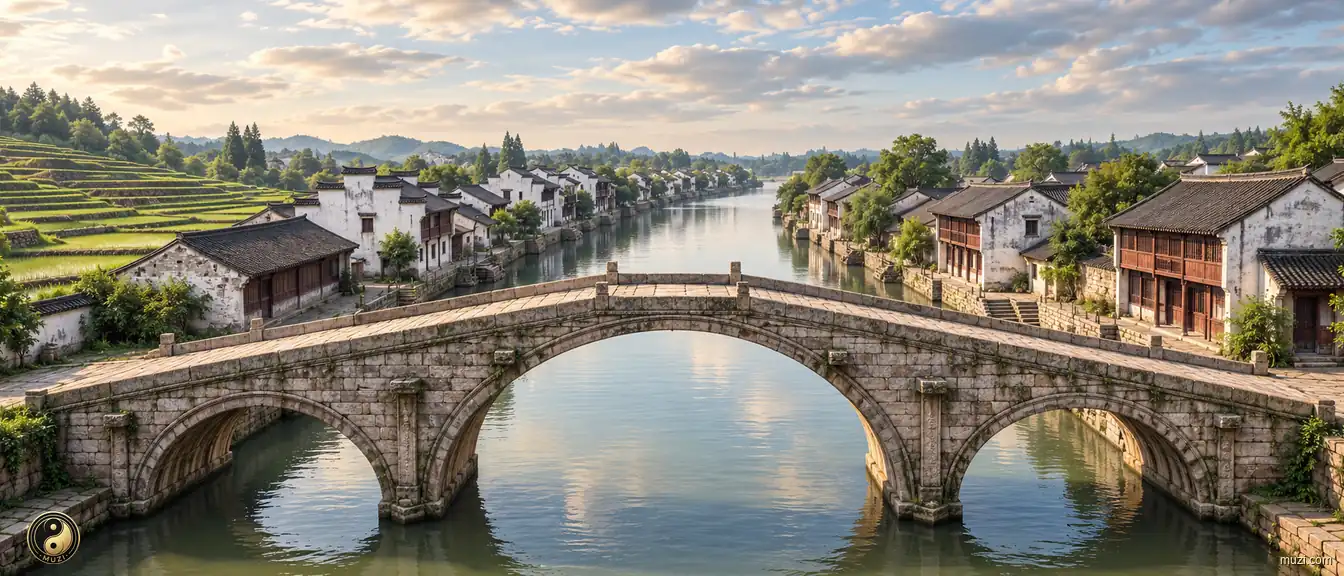
The world's longest man-made waterway — crossing five major river systems to connect north and south, continuously pumping southern grain and wealth into the empire's heart.
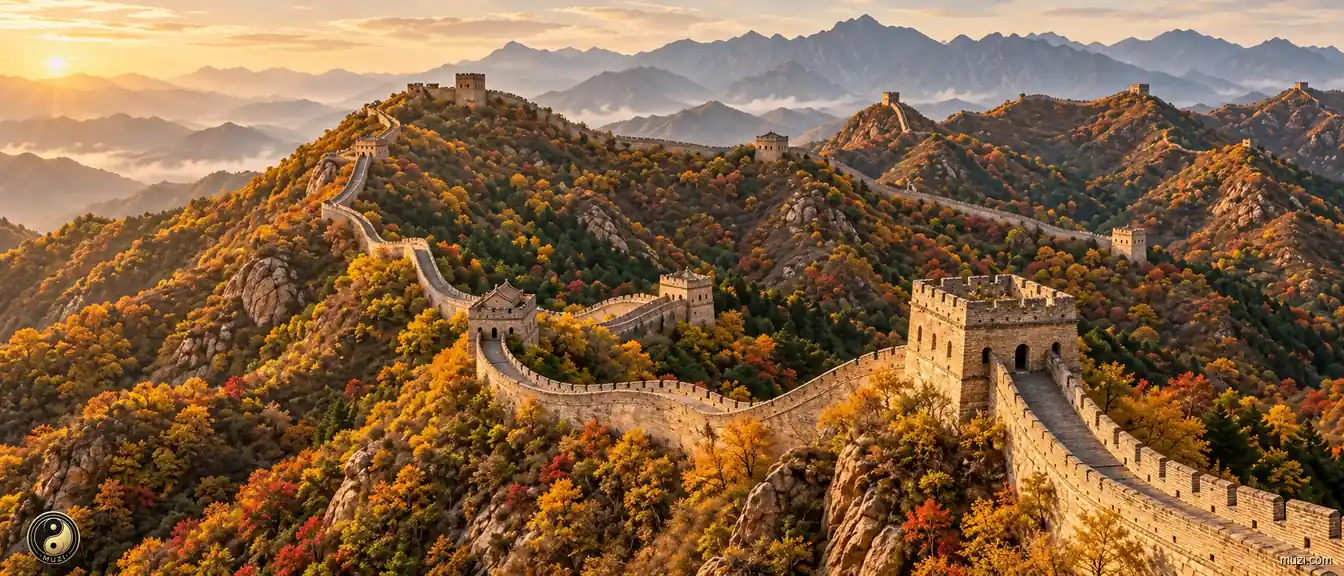
The longest military fortification in human history — winding ten thousand li along the northern ridges, guarding the boundary of agrarian civilization for two millennia.
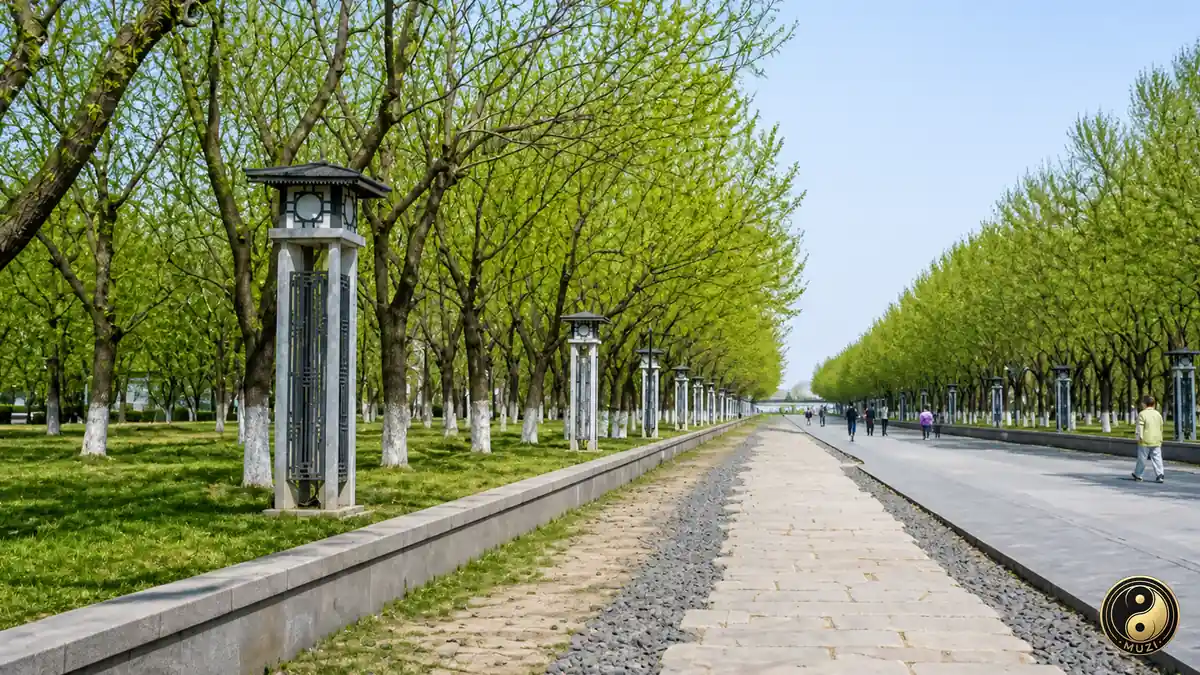
A north–south urban axis through Beijing's historic heart, uniting 15 heritage components and a capital-planning tradition rooted in the Yuan founding of Dadu.
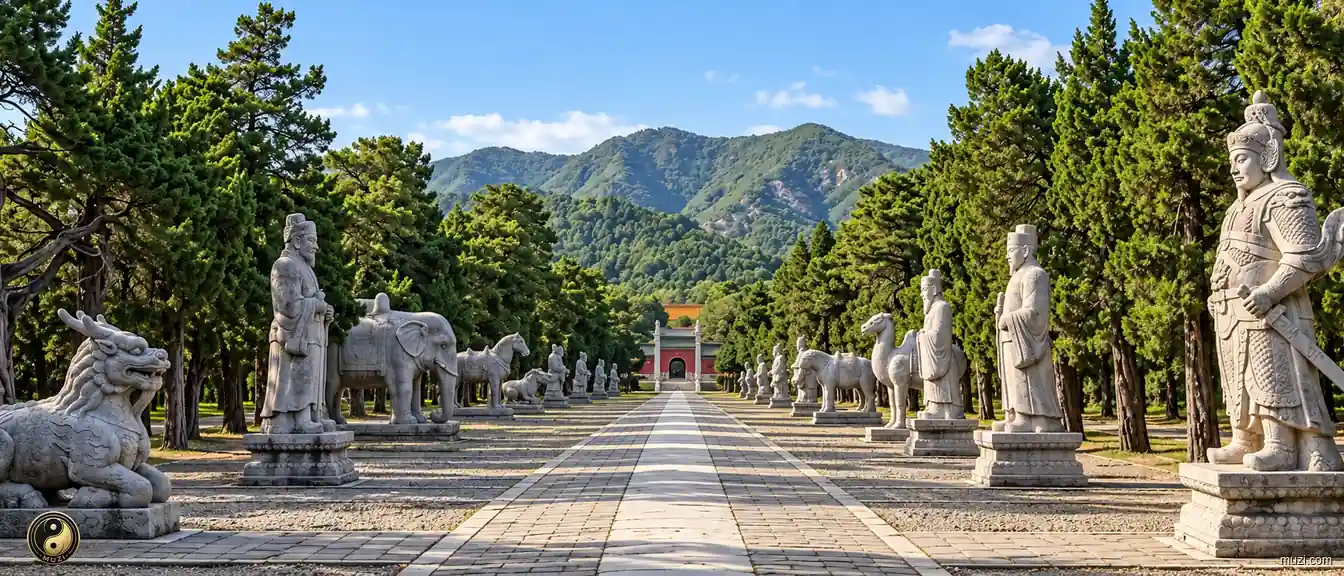
The thirteen Ming imperial tombs — perfectly following the arc of the Tianshou Mountains, a grand mausoleum matrix using the natural peaks as cemetery walls, the ultimate underground political landscape.
The six armies wailed, all clad in mourning white; but the rage that lifted his cap was for a rosy-cheeked beauty. "A beauty lost and adrift is not what I long for; the rebels were doomed by Heaven through their own wild feasting."
Only then did I realize that outside the suburbs spring had never been absent, though city dwellers were unaware of it. To not neglect duty through excursions, while wandering carefree among mountains, rocks, and trees—such is the joy of this humble official.
The affairs of the state have rotted to this point. I, an old man, am finished; if you too make light of your life and lose sight of the great cause, who will be left to hold up the affairs of the realm?
By the established rules of the prison, the locks are opened only at dawn; in the middle of the night the living and the dead lie heel to head, with no room to turn or get away. That is why so many are infected.
His hair rose against his cap in rage, all for a beauty.
A late-Ming account of Beijing's sights and customs in eight juan.
A late-Qing record of the festival year in Beijing.
A late-Yuan gazetteer of Dadu, now known only from quotations.
He appointed his own officials and called his army the 'Jingnan', the force to quell the troubles.
On jisi Wei Zhongxian hanged himself.
If we now ride this momentum and strike straight at the Yuan capital, we can have it without a battle.
Your servant knows the Way of Heaven; why speak of the people's hearts?
Those who speak of moving south should be beheaded. The capital is the root of the realm; once it is shaken, all is lost.
The emperor left the palace and climbed Coal Hill; gazing at the beacon fires lighting up the sky, he sighed: 'It is only my people who suffer.'
Our state pacified and settled Yan, the capital; we took it from the rebel Chuang, not from the Ming.
Before me I see not the ancients; behind me I see not those to come. Pondering the boundless infinity of heaven and earth, alone in grief my tears stream down!
Seeking refuge at welcoming doors recalls Zhang Jian; enduring death for a brief while awaits Du Gen. I raise my blade and laugh toward Heaven: whether leaving in exile or staying to die, our loyal spirits stand like towering Kunlun peaks!
Though my body cannot stand in the ranks of men, my heart burns fiercer than any man's! In all my life, my loyal courage has ever burned for others. Who among common minds can fathom my spirit? Heroes at dead ends must endure cruel trials. Where in this vast dusty world can I find a kindred soul? My azure robes are drenched in tears!
When times are desperate, integrity shows itself, and one by one these deeds are handed down in the histories.
The safety of the southern realm hangs on this one decision.
so that the useless may become useful and men may be formed who understand the classics and can meet change.
Now is the time to collect them and send them to the capital, to display the glory of a common script through a thousand ages.
Zhen became domineering beyond control.
The palaces of Beijing and the three mausoleums Chang, Xian and Jing were all built under him.
I came south on orders; how can I go back at once without having achieved anything?
In the eighth year he proposed that the dynasty be named Great Yuan, and the Central Capital be made the Great Capital.
The basis of the calendar lies in observation, and of the instruments of observation none comes before the armillary and the gnomon.
The one who will bring chaos to Youzhou is surely this barbarian.
