





































 Prefecture-level
Wanzhou
Wanzhou, a Three Gorges reservoir city on the Yangtze, offers Taibai Rock, the broad Qinglong Waterfall and its famous grilled fish.
 MUZIChinese Matrix

The Jialing and Yangtze rivers cut through a hilly municipality where gorges, clustered urban districts, and broad countryside coexist.
The spatial setting of Chongqing is grounded in the local fact “The Jialing and Yangtze rivers cut through a hilly municipality where gorges, clustered urban districts, and broad countryside coexist.” These relationships connect landscape, inherited places, and community experience without reducing Chongqing to an administrative label. Over time, these relationships accumulated through residence, exchange, production, and community continuity across successive historical periods. Viewed beside neighboring areas, Chongqing also shows how roads, resources, and movement create local distinctions within a wider region. For regional study, Chongqing places location, long-term formation, and present meaning within one connected explanation.
Prefecture-level
Wanzhou, a Three Gorges reservoir city on the Yangtze, offers Taibai Rock, the broad Qinglong Waterfall and its famous grilled fish.
Prefecture-level
Fuling, where the Wu River meets the Yangtze, guards the underwater Baiheliang hydrological inscriptions and is the home of Chinese zhacai pickled mustard.
Prefecture-level
Yuzhong, the peninsula heart of Chongqing, gathers the Jiefangbei monument, the stilted Hongyadong complex and Chaotianmen at the meeting of two rivers.
Prefecture-level
Dadukou keeps the steelmaking memory of the century-old Chongqing Iron and Steel works in its industrial museum beside the Yangtze.
Prefecture-level
Jiangbei faces Yuzhong across the river with the Jiangbeizui financial district and Chongqing Grand Theatre, while Guanyinqiao is a busy shopping hub.
 Prefecture-level
Shapingba combines the bustling old streets of Ciqikou, the Zhazidong and Bai Mansion memorial sites below Gele Mountain, and many universities.
Prefecture-level
Jiulongpo is known for the graffiti streets of Huangjueping near the old Sichuan Fine Arts Institute, Huayan Temple and the Chongqing Zoo.
Prefecture-level
Nan'an offers night views of Chongqing from Nanshan's Yikeshu lookout and a riverside drive past the old Danzishi and Longmenhao streets.
Prefecture-level
Beibei pairs misty Jinyun Mountain with the North Hot Springs and the Little Three Gorges of the Jialing River, and hosts Southwest University.
Prefecture-level
Qijiang is celebrated for vivid peasant woodblock prints, the old Dongxi town and dinosaur footprints preserved at Laoying Mountain.
Prefecture-level
Dazu is world-famous for the Baodingshan and Beishan cliff carvings of the Dazu Rock Carvings heritage site, and for Longshui hardware.
Prefecture-level
Yubei hosts Chongqing Jiangbei International Airport, the historic Longxing ancient town and the hot springs and gorges of Tongjing.
Prefecture-level
Banan is a spa district with the South and East hot springs, plus the historic towns of Fengsheng and Mudong near the Yangtze.
Prefecture-level
Qianjiang features the covered bridge of Zhuoshui town over the Apeng River and Xiaonanhai, a lake formed by a Qing dynasty earthquake.
Prefecture-level
Changshou, named for longevity, offers the island-dotted Changshou Lake and the old town below Puti Mountain.
Prefecture-level
Jiangjin, hometown of Marshal Nie Rongzhen, is known for the waterfalls of Simian Mountain and the old towns of Zhongshan and Baisha.
Prefecture-level
Hechuan is famed for Diaoyu Fortress, which resisted Mongol armies for 36 years, the walled Laitan town and the meeting of three rivers.
Prefecture-level
Yongchuan offers the bamboo sea and tea hills of Chashan Zhuhai, the riverside Songji old town and its long-established fermented black beans.
Prefecture-level
Nanchuan is home to Jinfo Mountain, part of the South China Karst World Heritage site, and known for square bamboo shoots and Shenlong Gorge.
Prefecture-level
Bishan is famed for spicy Laifeng fish and has grown into a green city of lakes such as Xiuhu Park and Fengxiang Lake.
Prefecture-level
Tongliang is famed for its dragon dance, a national intangible heritage, the riverside Anju ancient town and the memorial to Qiu Shaoyun.
Prefecture-level
Tongnan is known for the gilded cliff Buddha of Dafo Temple, rapeseed blossoms at Chongkan and as the hometown of Taoist sage Chen Tuan.
Prefecture-level
Rongchang is famed for ramie summer cloth, Anfu pottery and the Rongchang pig breed, with the old streets of Wanling beside the Laixi River.
Prefecture-level
Kaizhou, hometown of Marshal Liu Bocheng, wraps its new town around Hanfeng Lake and rises to the forests of Xuebao Mountain.
Prefecture-level
Liangping is home to Shuanggui Hall, a leading Chan Buddhist temple, plus famous pomelos, woodblock New Year prints and a vast bamboo sea.
Prefecture-level
Wulong amazes with the Three Natural Bridges and Furong Cave of the South China Karst heritage site and the alpine meadows of Fairy Mountain.
Prefecture-level
Chengkou, deep in the Daba Mountains, is known for smoked bacon, the forests of Kanggu and Jiuchong Mountain and Sichuan-Shaanxi Soviet relics.
Prefecture-level
Fengdu draws visitors to the Ghost City on Ming Mountain, the snow-white formations of Xueyu Cave and its spicy chilli chicken.
Prefecture-level
Dianjiang is famed for peony blossoms each spring on the slopes of Mingyue Mountain and for stone-ground tofu pudding.
Prefecture-level
Zhongxian is known for the twelve-storey Shibaozhai pavilion against Yuyin Hill, a name honouring loyal heroes, and citrus groves along the Yangtze.
Prefecture-level
Yunyang treasures the Zhang Fei Temple, relocated for the Three Gorges reservoir, the deep Longgang sinkhole and the fortified Peng Clan Hall.
Prefecture-level
Fengjie, the city of poetry, stands at Kuimen gate of Qutang Gorge with Baidicheng above the Yangtze, and is famous for navel oranges.
Prefecture-level
Wushan offers Goddess Peak above the Wu Gorge, the Little Three Gorges of the Daning River and the ancient human site at Longgupo.
Prefecture-level
Wuxi is known for the ancient salt springs of Ningchang town, the alpine meadows of Hongchiba and the gorges of the Daning River.
Prefecture-level
Shizhu, hometown of Ming general Qin Liangyu, is known for coptis root, the cool summer forests of Huangshui and Tujia work songs.
Prefecture-level
Xiushan is known for its lantern song and dance, the river town of Hong'an facing Hunan and Guizhou, and the high meadows of Chuanhegai.
 Prefecture-level
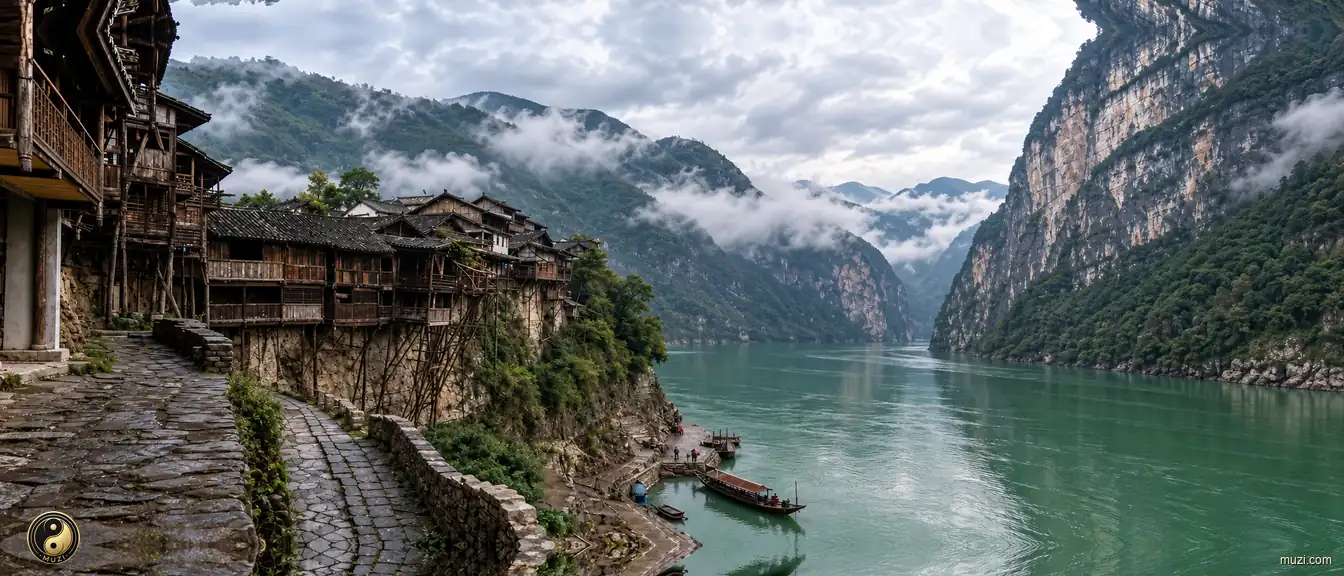
Youyang offers a Peach Blossom Spring scenic area, the cliffside stilted houses of Gongtan on the Wu River and Tujia hand-waving dance.
Prefecture-level
Pengshui offers the clear gorges of the Ayi River, the sea of clouds on Mowei Mountain and Miao culture at Chiyou Jiuli City.
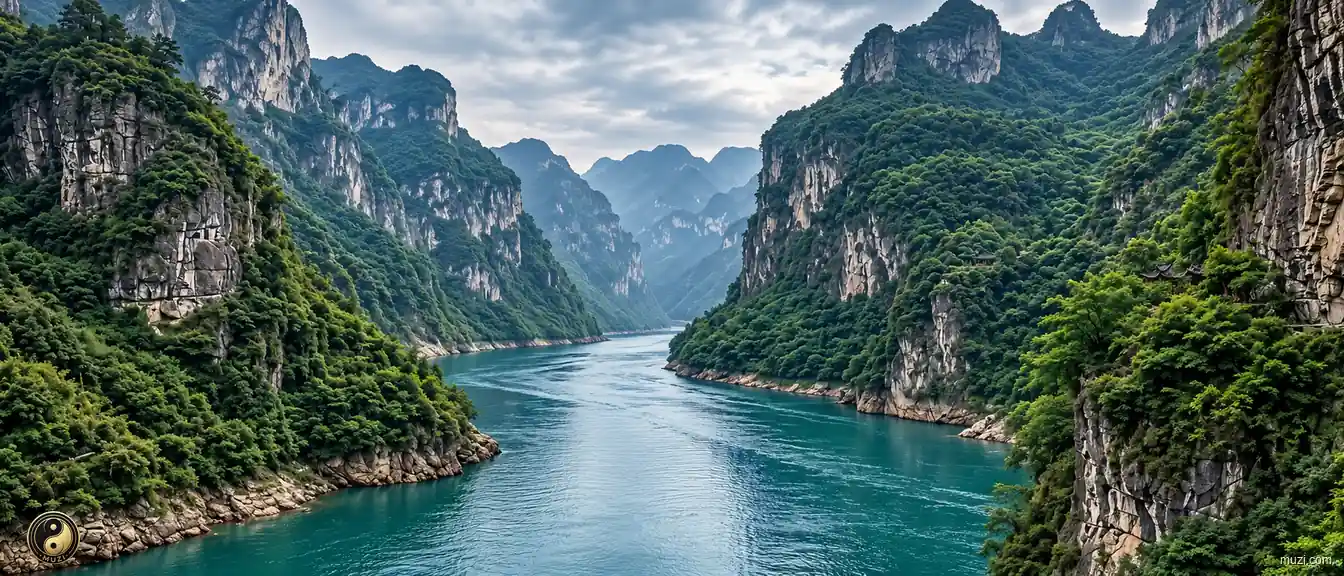
Asia's longest river, flowing six thousand kilometers from the Tibetan Plateau to the East China Sea — the aorta and golden waterway of Chinese civilization.
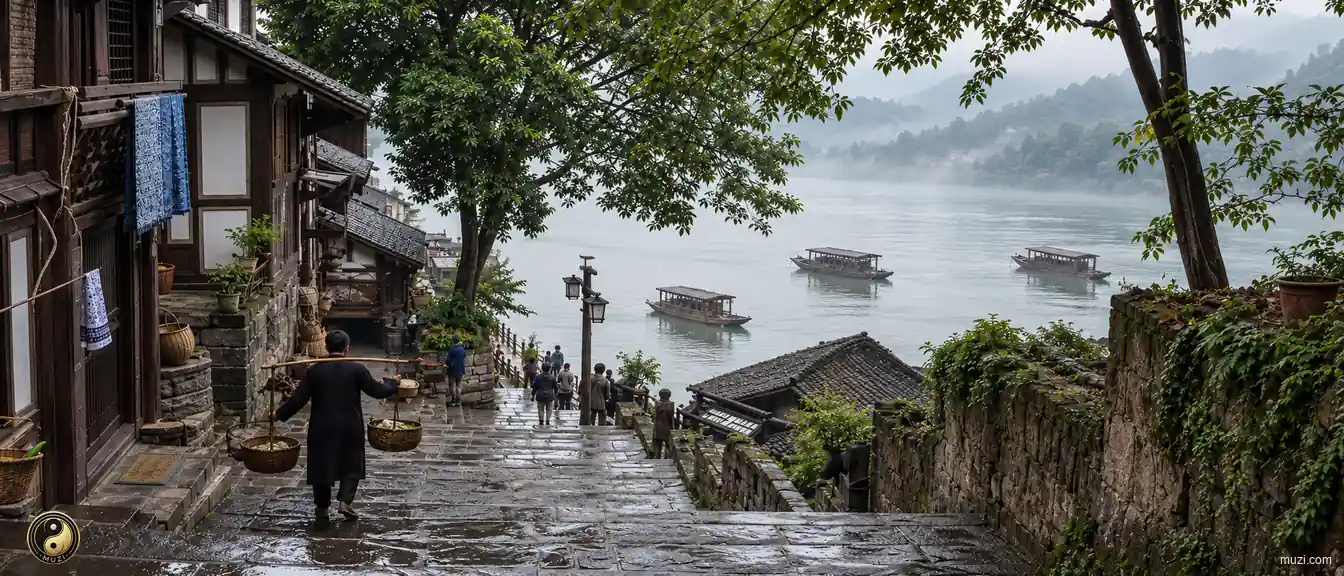
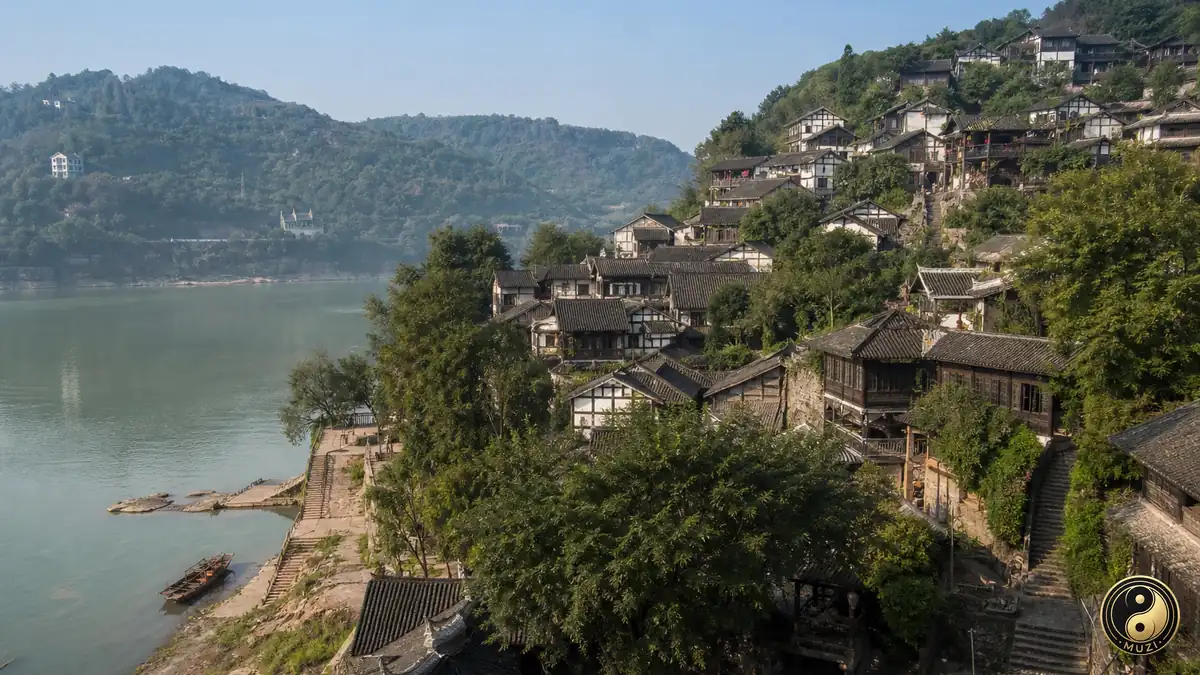
Chongqing's thousand-year-old dock town; Bayu folkways and mountain-city life converge; Chen Mahua twists and Maoxuewang tripe are famous far and wide.
Sheer-cliff town on the Wujiang Gallery; Tujia stilted houses tier down the slope; the flagstone old street continues a salt-trade legacy since Three Kingdoms.
They plan deeply and think far ahead, hasten to meet the state's emergencies, and delight in fulfilling the duty of subjects.
He led out the army but died before victory, forever making heroes wet their sleeves with tears.