





































 Prefecture-level
Hangzhou
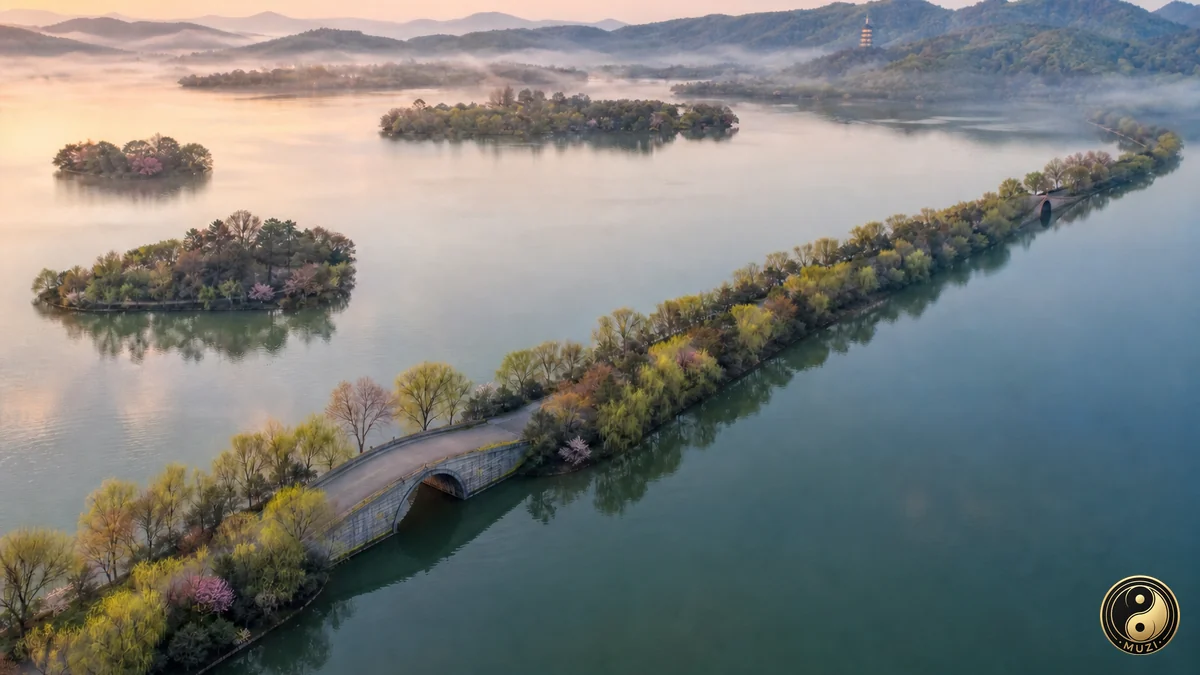
Hangzhou's West Lake, Lingyin Temple and Longjing tea gardens frame a city at the southern end of the Grand Canal.
 MUZIChinese Matrix

The Qiantang tide marks a mountainous coast where Jiangnan towns and maritime commerce give Zhejiang its layered character.
For Zhejiang, the relationship between place and life becomes visible in “The Qiantang tide marks a mountainous coast where Jiangnan towns and maritime commerce give Zhejiang its layered character.” This evidence connects landform, movement, settlement, and cultural expression instead of treating them as isolated details. The present profile of Zhejiang reflects environmental adaptation and local stewardship built up over an extended period rather than a short-lived change. This process explains how Zhejiang remains connected to its surrounding region while retaining a recognizable local character. That is why Zhejiang matters: local detail can illuminate environmental setting, social process, and cultural memory together.
Prefecture-level
Hangzhou's West Lake, Lingyin Temple and Longjing tea gardens frame a city at the southern end of the Grand Canal.
 Prefecture-level
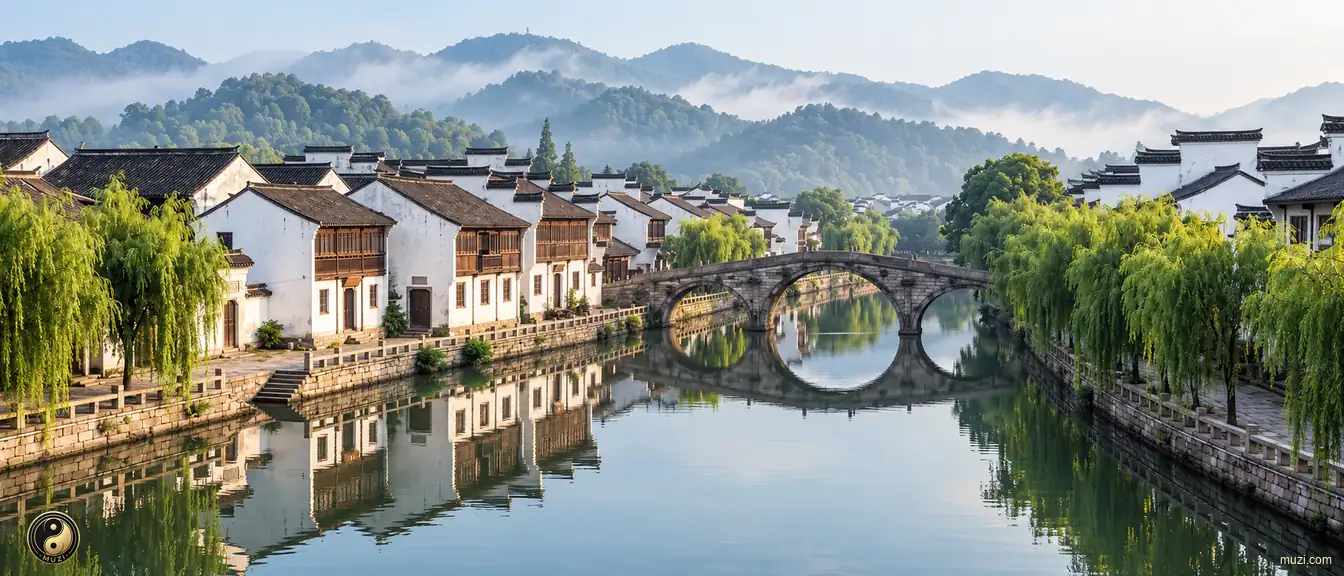
Ningbo treasures Tianyi Pavilion, China's oldest surviving private library, the Hemudu Neolithic site and one of the world's busiest ports.
 Prefecture-level
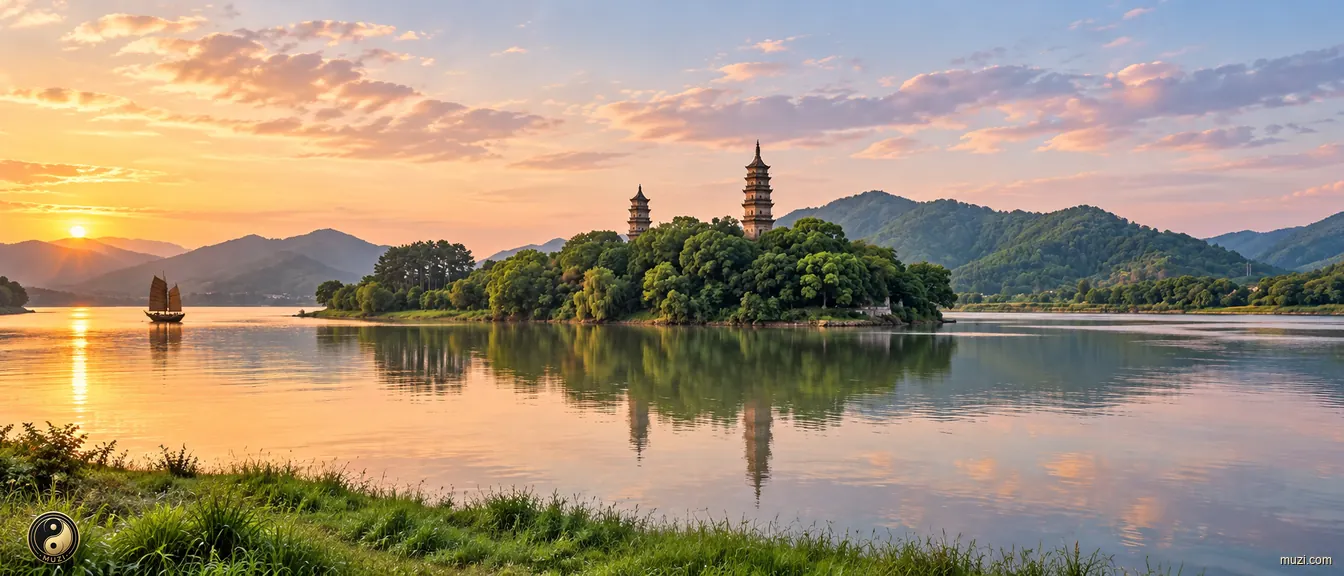
Wenzhou is known for the jagged peaks of Yandang Mountain, the clear Nanxi River villages and its enterprising merchants worldwide.
 Prefecture-level
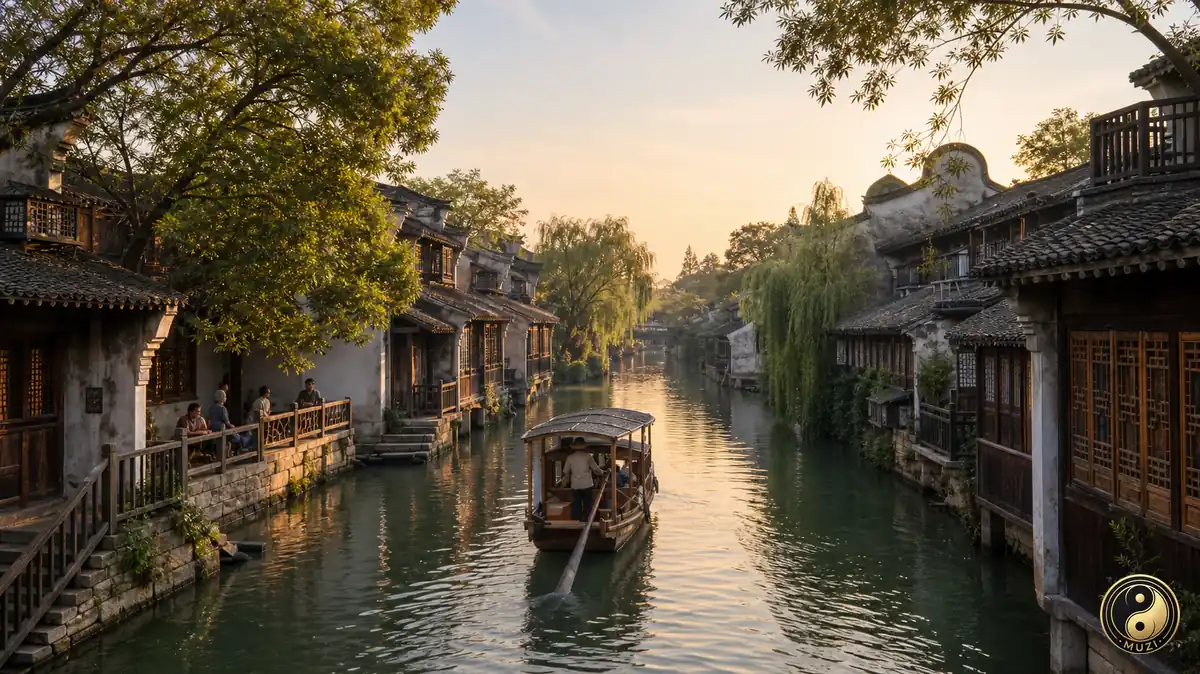
Jiaxing remembers the Red Boat on South Lake, keeps the water towns of Wuzhen and Xitang, and is famed for its zongzi rice dumplings.
 Prefecture-level
Huzhou, on Lake Tai's southern shore, is a silk capital with Nanxun water town, Anji's bamboo forests and the famous Hu writing brush.
 Prefecture-level
Shaoxing is Lu Xun's hometown and home of the Orchid Pavilion, a canal city of black-awning boats and mellow yellow rice wine.
 Prefecture-level
Jinhua is famous for its cured ham, the Hengdian film studios and the vast small-commodities market of Yiwu.
 Prefecture-level
Quzhou keeps the Southern Confucius Family Temple, the World Heritage Danxia cliffs of Jianglang Mountain and the old border town of Nianbadu.
 Prefecture-level
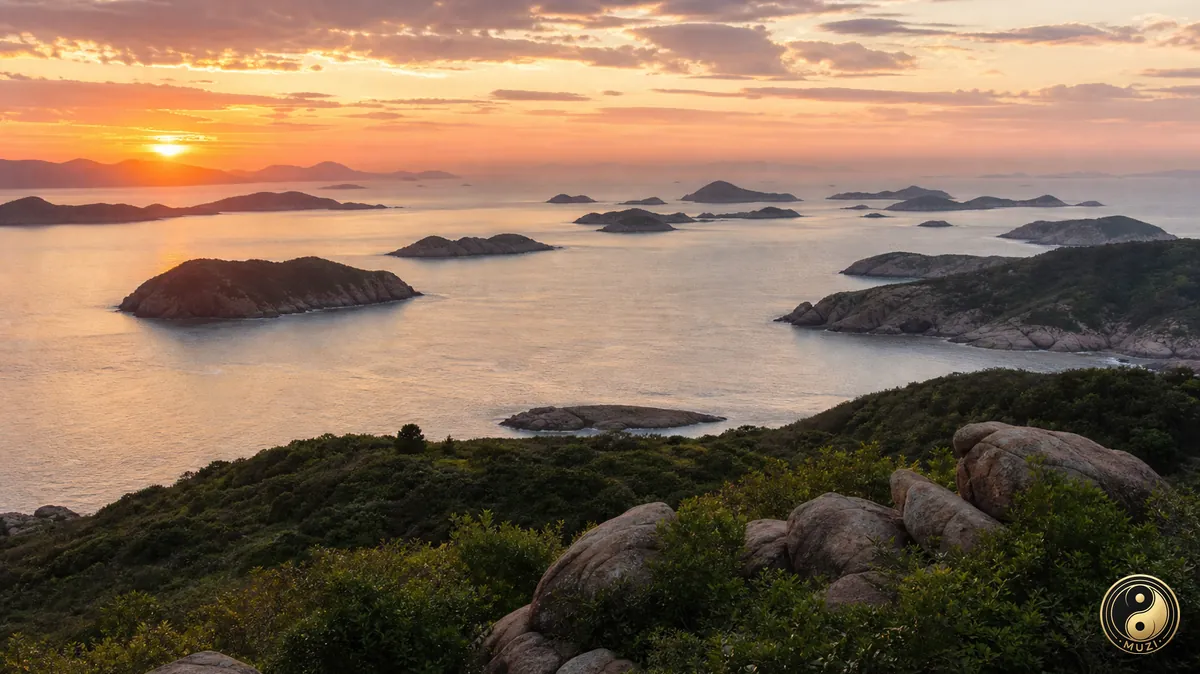
Zhoushan, a city of more than a thousand islands, is known for the Buddhist sanctuary of Putuo Mountain and Shenjiamen fishing port.
 Prefecture-level
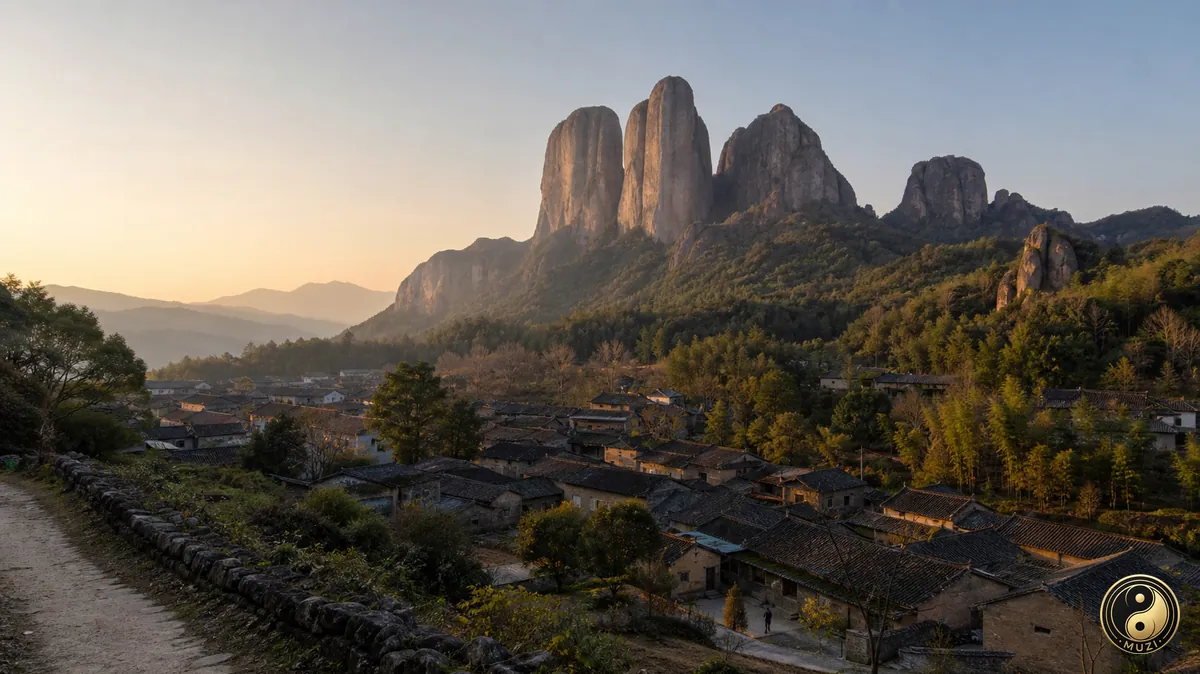
Taizhou holds Guoqing Temple on Tiantai Mountain, cradle of Tiantai Buddhism, the Linhai city wall and the cloud-wrapped peaks of Shenxianju.
Prefecture-level
Lishui, the green valley of Zhejiang, preserves Longquan celadon and sword making and the terraced fields of Yunhe.
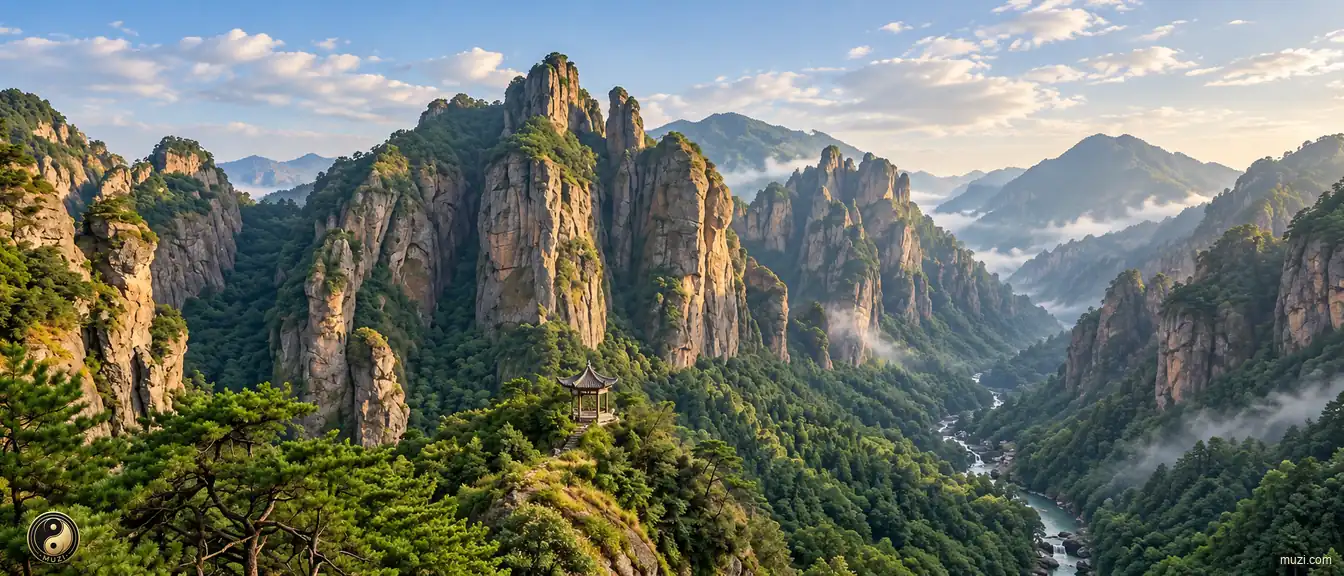
The premier mountain of the southeast — its rhyolite cliffs cut like knife and axe, breaking Jiangnan's gentle aesthetics with hard geometric lines.
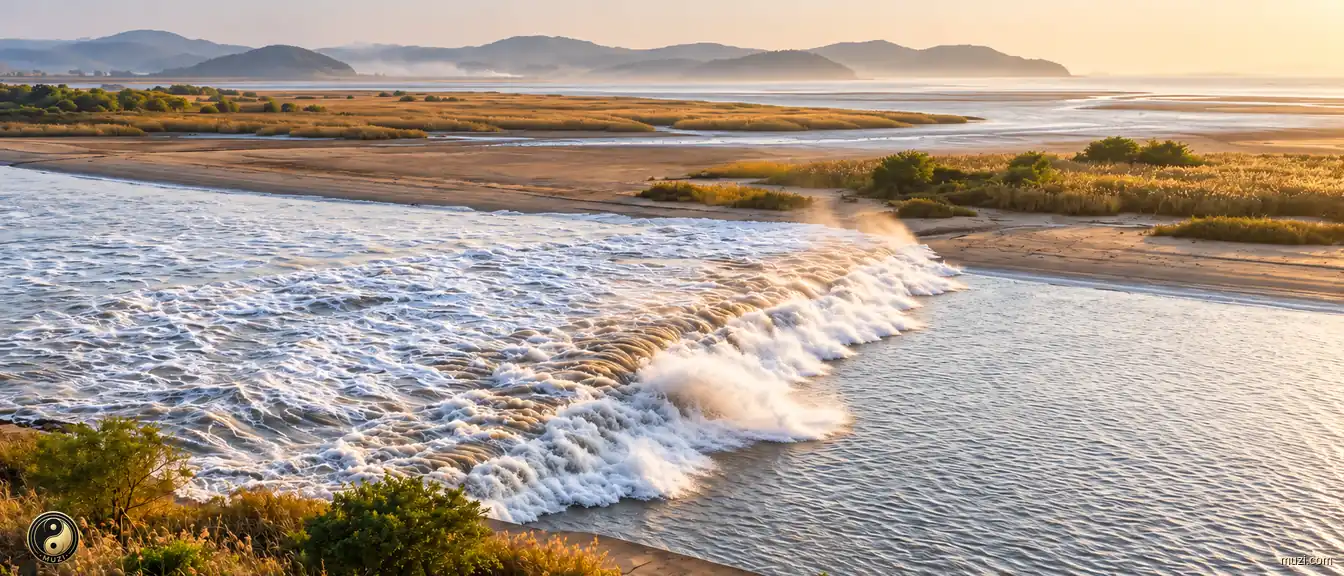
The world's greatest tidal bore — every year on the eighteenth day of the eighth lunar month, a wall of water roars into Hangzhou Bay with earth-shaking fury.
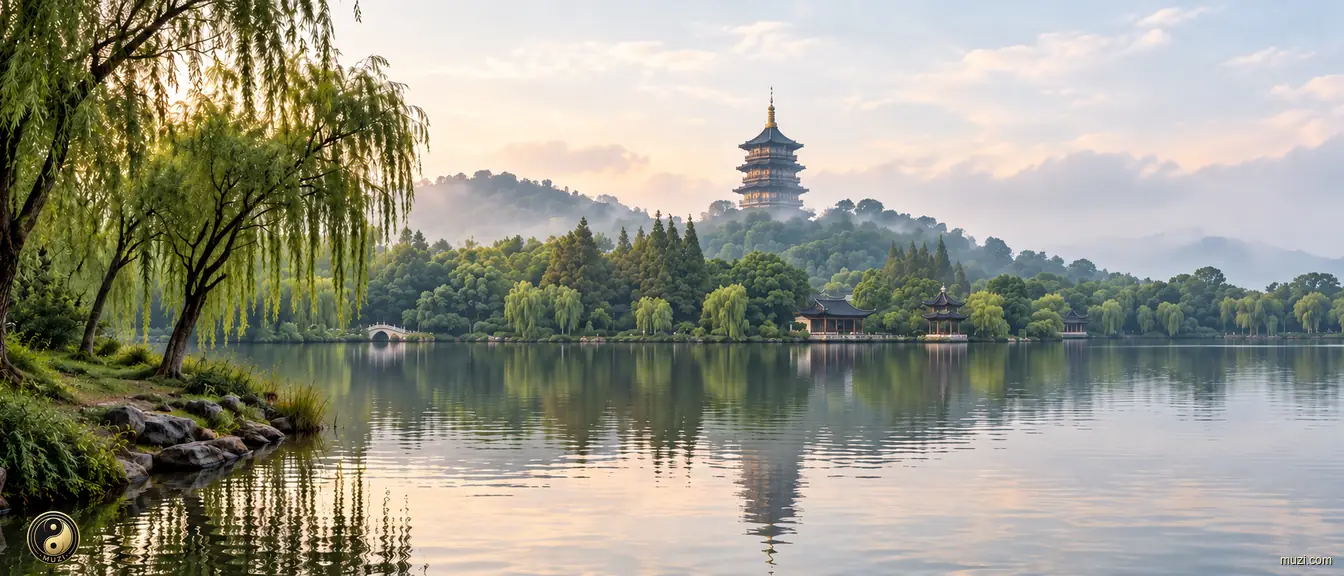
West Lake's cloud-wreathed hills, famous bridges, and causeways have shaped Jiangnan's poetic urban landscape for centuries.
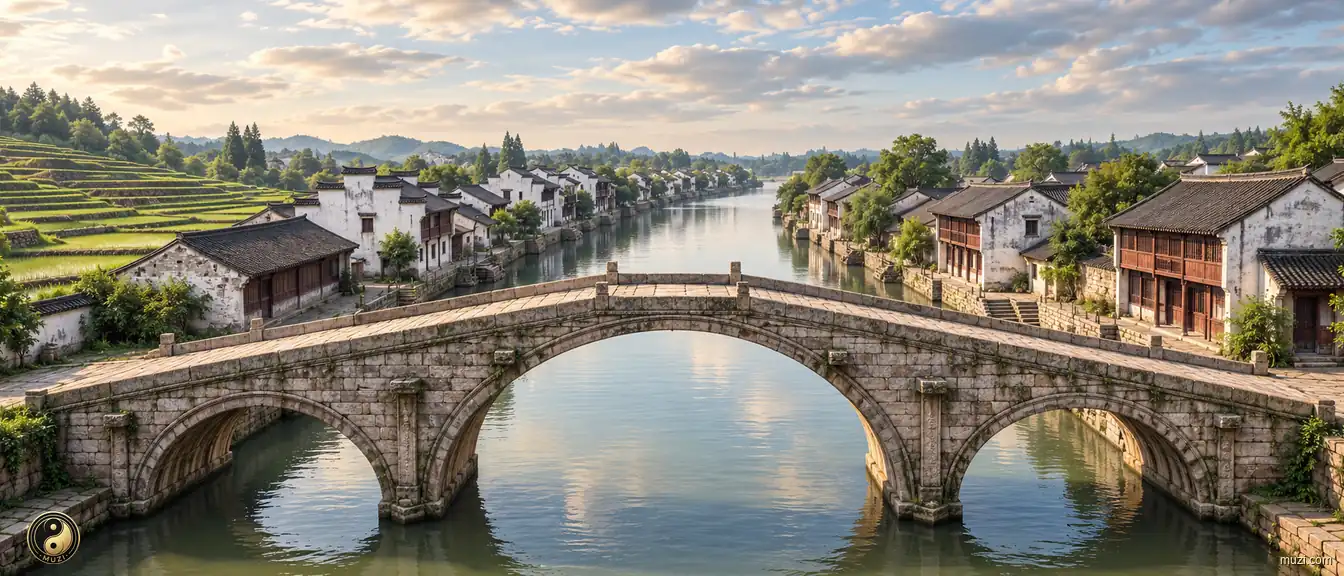
The world's longest man-made waterway — crossing five major river systems to connect north and south, continuously pumping southern grain and wealth into the empire's heart.
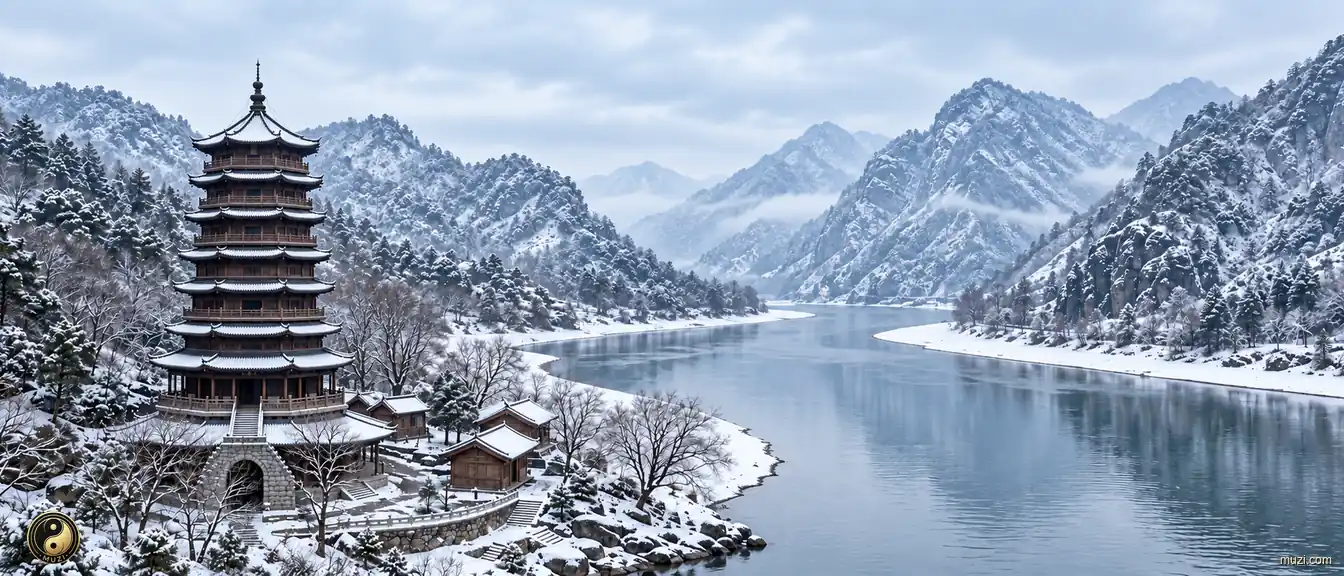
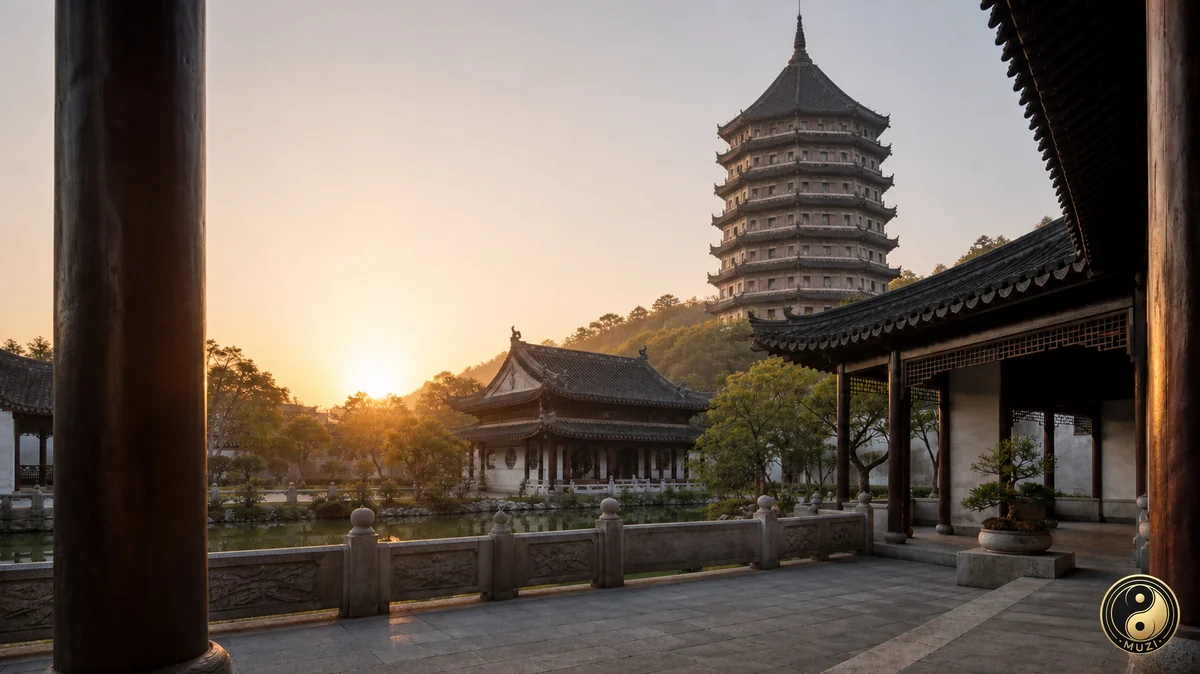
A thousand-year-old pagoda on the Qiantang riverside — both a tide-taming lighthouse and a spiritual monument to humanity's architectural will confronting the river's nonlinear fury.
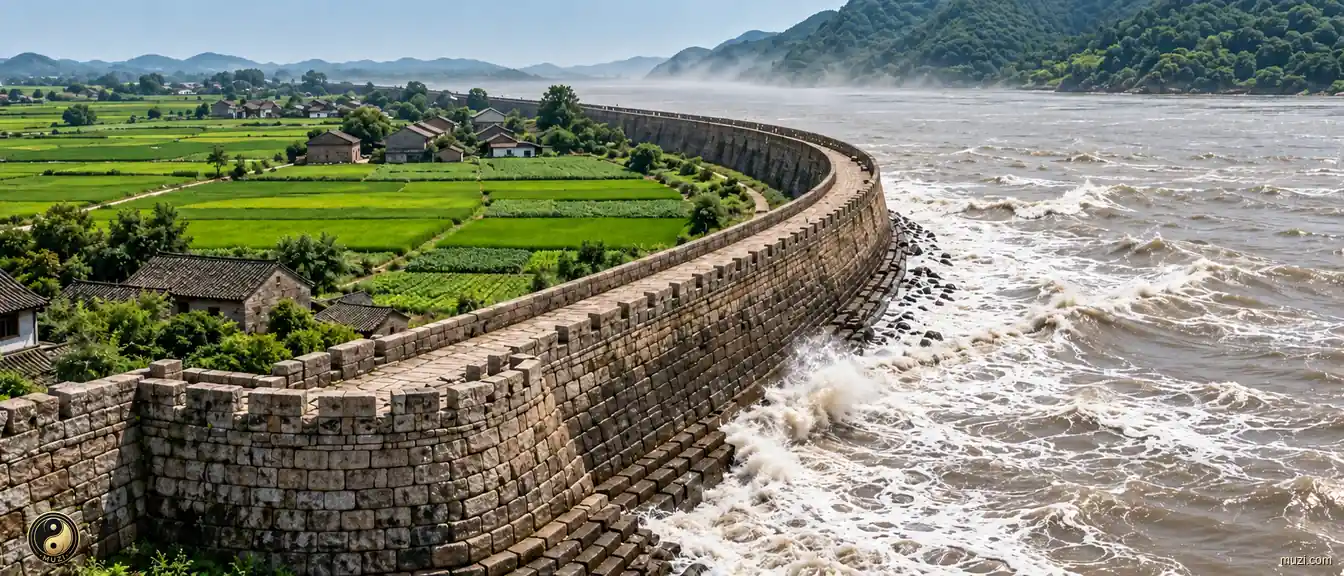
Hundreds of kilometers of stone seawall lying like a dragon — precision mortise-and-tenon joinery resisting violent tidal bores, defending the security of Jiangnan's wealthiest region.
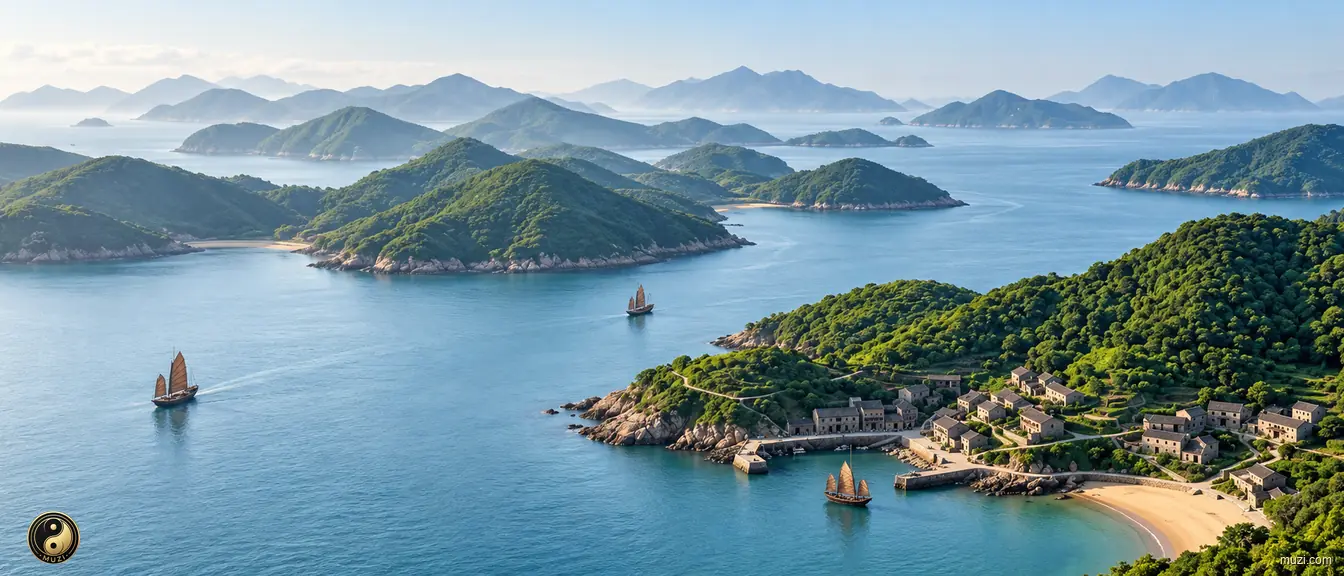
An archipelago of more than a thousand islands scattered across the East China Sea, linking riverine waters with open sea.
Ningbo joins the Grand Canal and Maritime Silk Road as a historic port for trade with Japan and Korea.
A natural deep-water port wedged in the crevice of the Zhejiang-Fujian mountains — from here, Wenzhou merchants departed with the monsoon winds, laying their commercial networks across the entire globe.
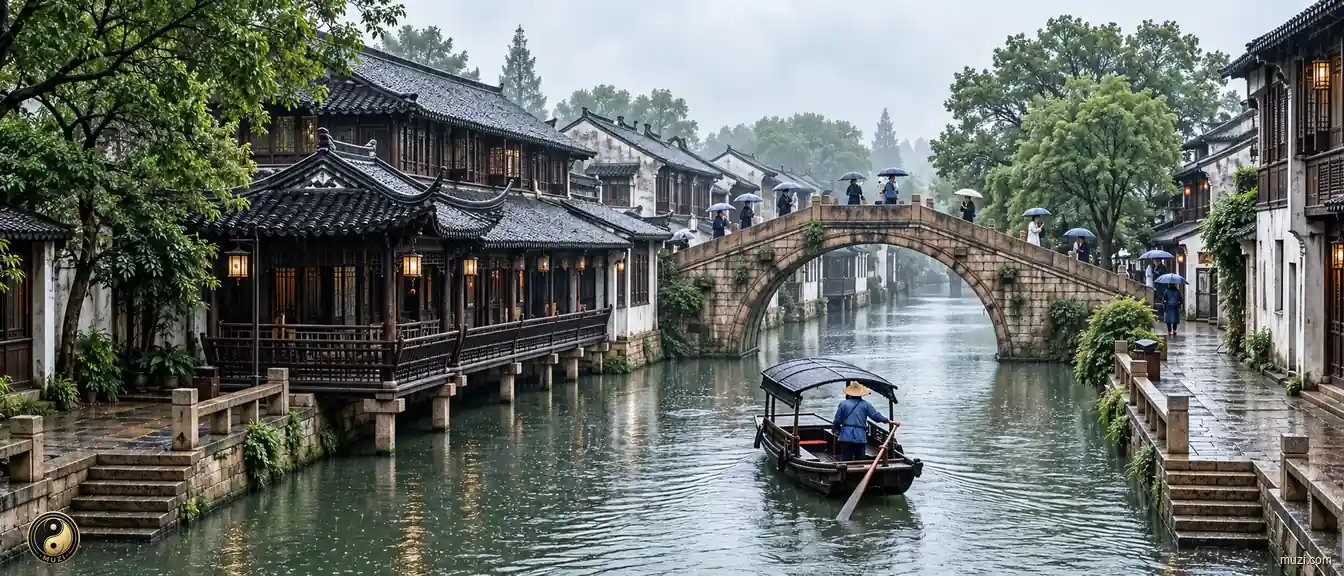
Wuzhen's bridges, streams, waterside homes, and covered corridors preserve a lived-in Jiangnan water-town character.
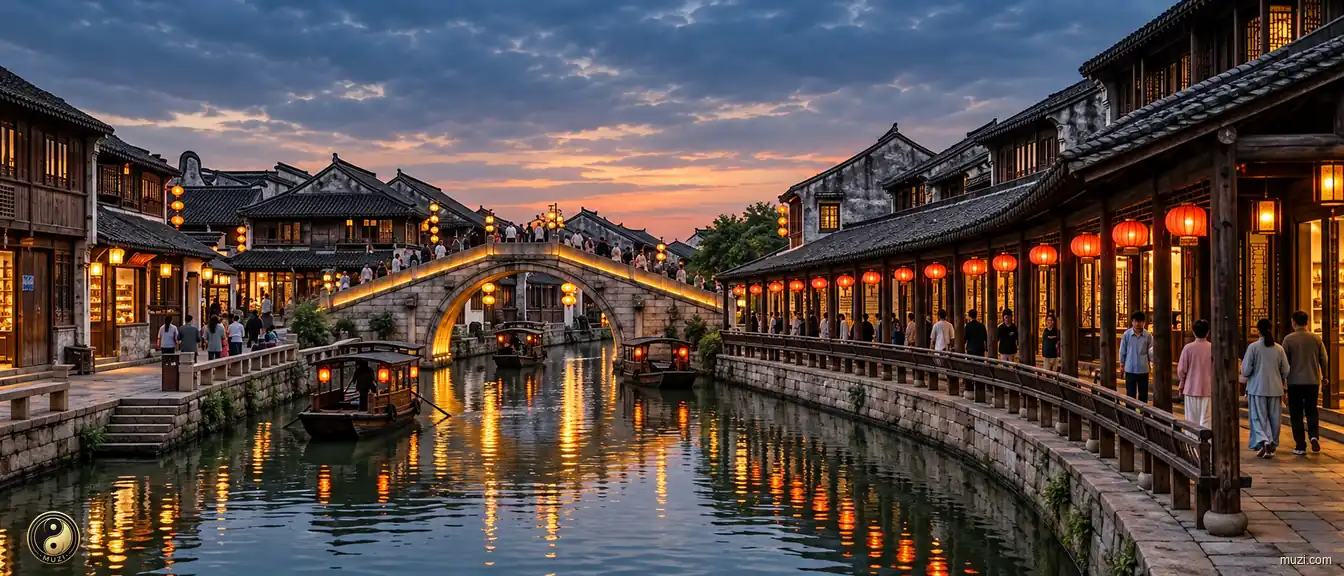
Xitang's Misty Rain Corridor — kilometers of covered waterside arcades winding like a dragon, a bottom-up human-scale commercial interface self-organized by commoners without any official planning.
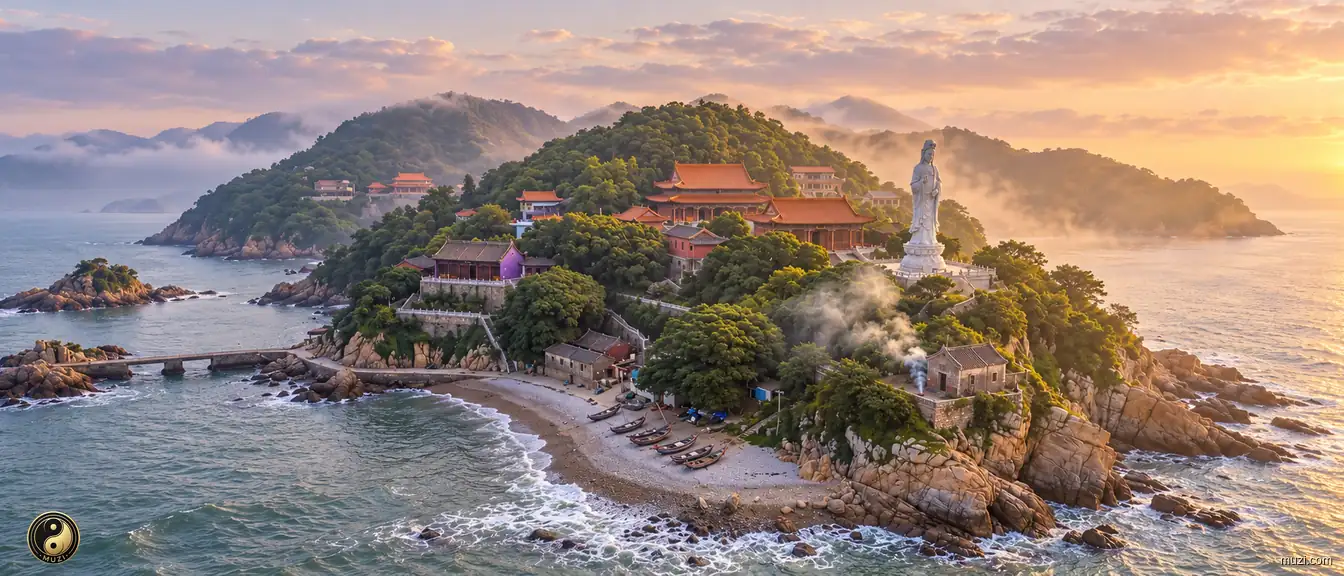
Mount Putuo, the bodhimanda of Guanyin — a sacred island Buddhist realm suspended alone in the East China Sea's waves, a spiritual lighthouse whose thousand-year Sanskrit chanting and tidal rhythm illuminate the return path for seafarers.
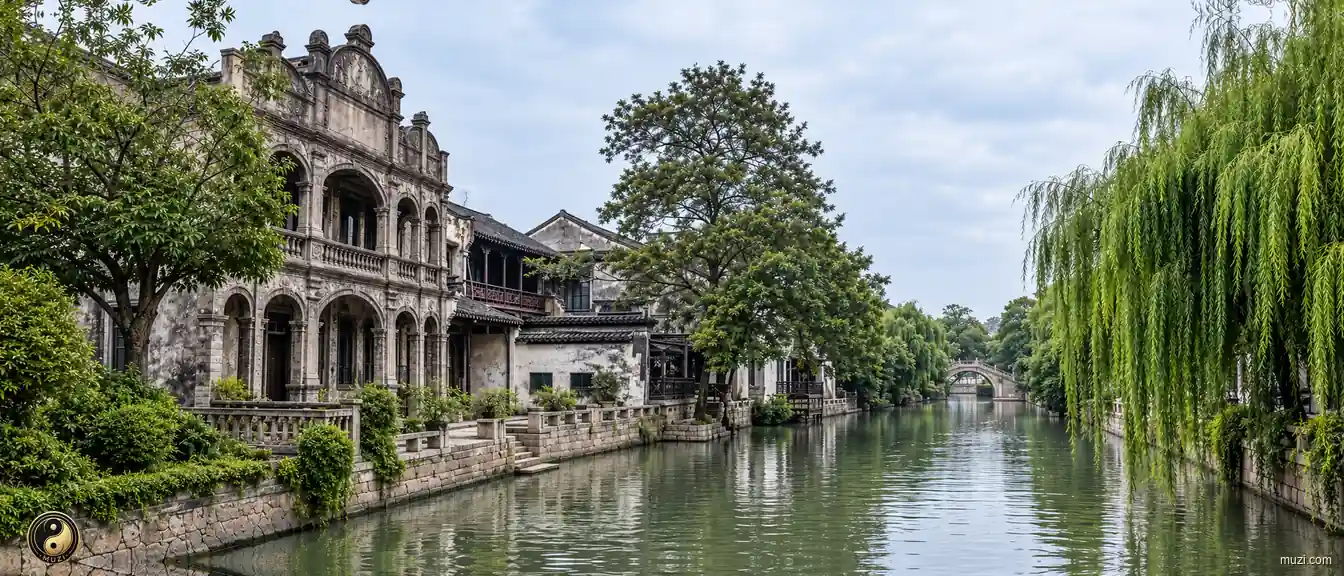
Jiangnan water town as a Chinese-Western architectural fusion; silk magnate Zhang Shiming's former residence and Hundred Rooms Alley showcase modern Jiangnan prosperity.
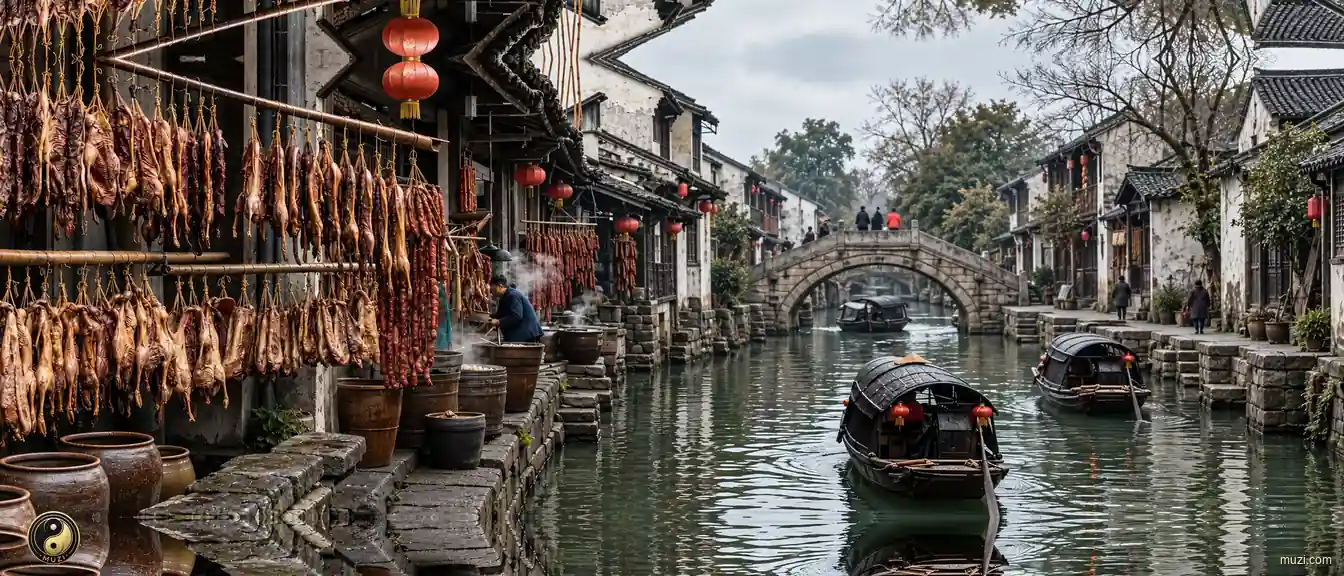
Hometown of shifu private advisers and Shaoxing rice wine; the December festival drapes streets with cured duck and sausage — Jiangnan's most lived-in water town.
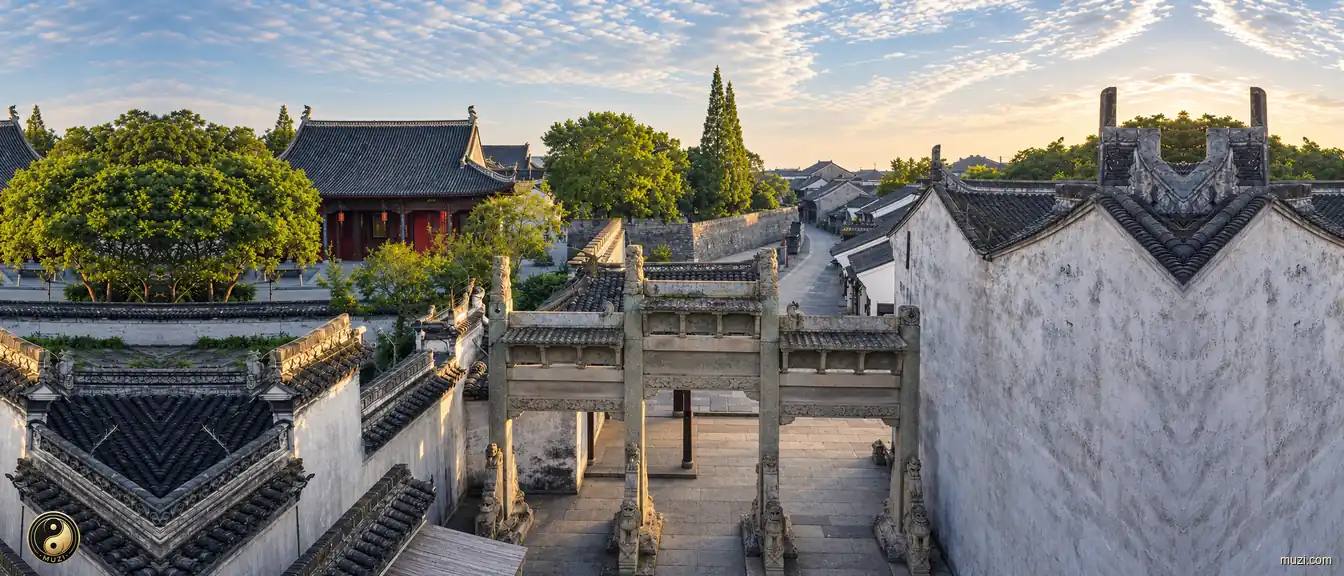
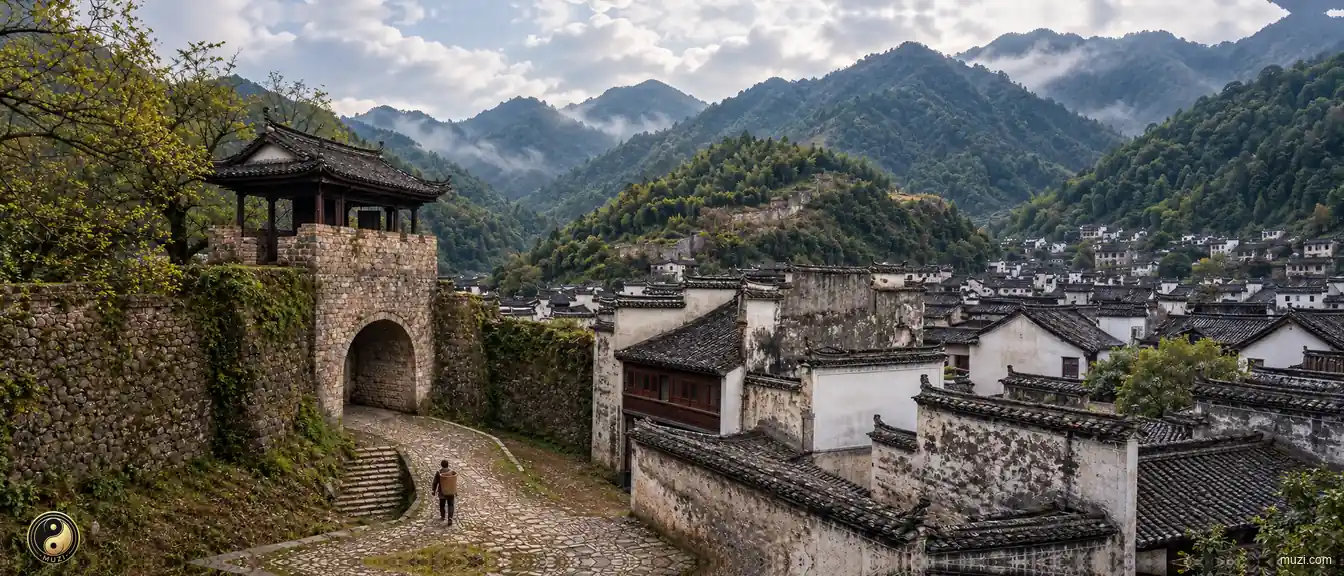
Foremost ancient county town in Jiangnan; Tang-dynasty urban layout preserved intact; filial piety culture and the Confucian Temple carry a thousand-year lineage.
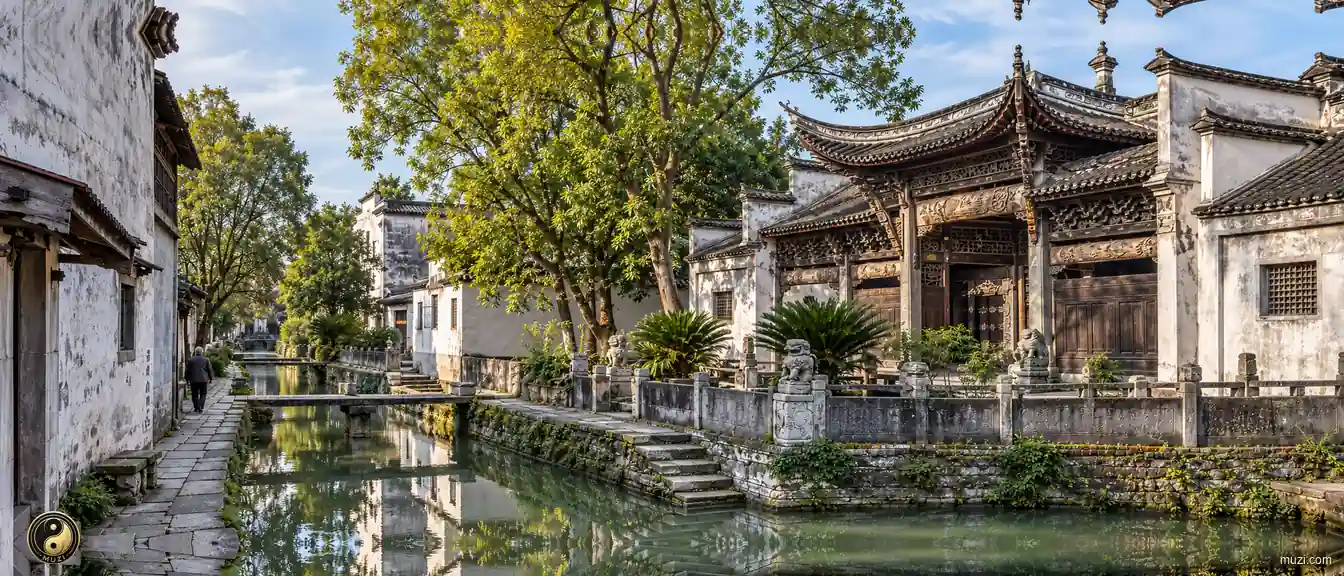
Ming-Qing village in Jiangnan threaded by a Bagua water system; the Tong clan ancestral hall and exquisite carvings showcase eastern Zhejiang clan culture.
Unique ancient town straddling three provinces where a hundred surnames gather; Fengling Pass and Ming-Qing buildings are living fossils of military-commercial hybrid history.
Li Wei governed Zhejiang for five years with quick intelligence; his orders were carried out and his prohibitions obeyed.
This child has a precious destiny; his fortune will exceed mine.