






































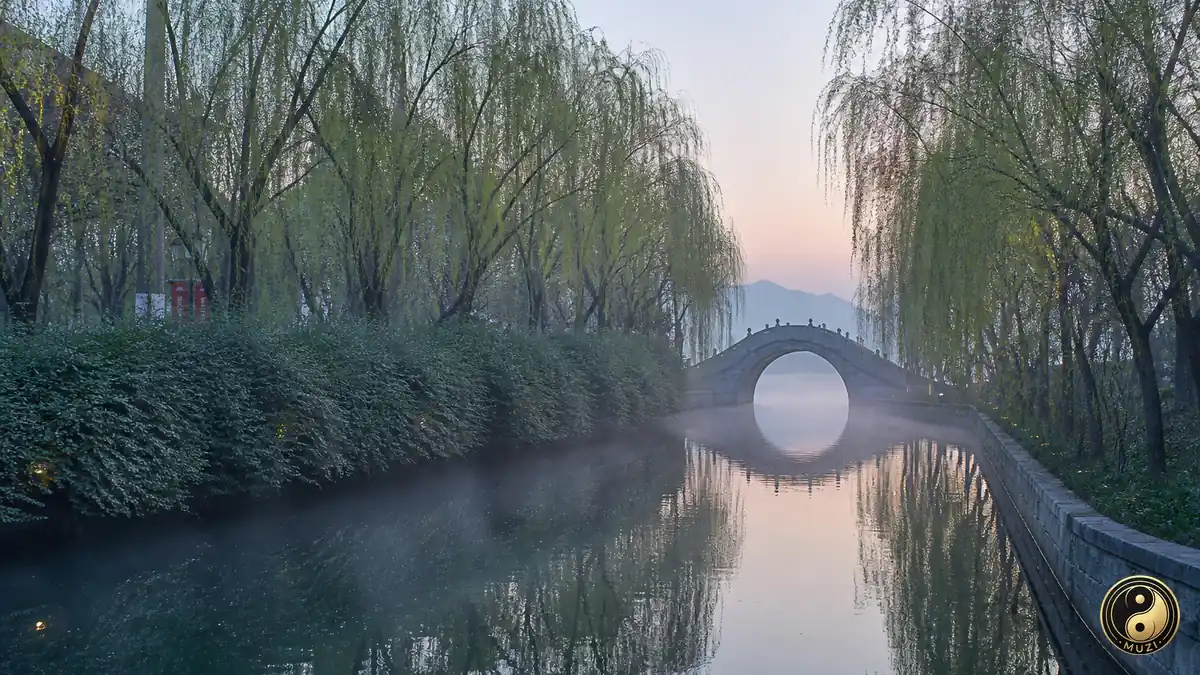
 County-level
Shang Cheng District
The Southern Song Imperial Palace and Deshou Palace ruins recall imperial Linan in Shangcheng, alongside historic apothecary guilds in Qinghefang.
 MUZIChinese Matrix
Hangzhou's West Lake, Lingyin Temple and Longjing tea gardens frame a city at the southern end of the Grand Canal.
The spatial setting of Hangzhou is grounded in the local fact “Hangzhou's West Lake, Lingyin Temple and Longjing tea gardens frame a city at the southern end of the Grand Canal.” These relationships connect landscape, inherited places, and community experience without reducing Hangzhou to an administrative label. Over time, these relationships accumulated through residence, exchange, production, and community continuity across successive historical periods. Viewed beside neighboring areas, Hangzhou also shows how roads, resources, and movement create local distinctions within a wider region. For regional study, Hangzhou places location, long-term formation, and present meaning within one connected explanation.
County-level
The Southern Song Imperial Palace and Deshou Palace ruins recall imperial Linan in Shangcheng, alongside historic apothecary guilds in Qinghefang.
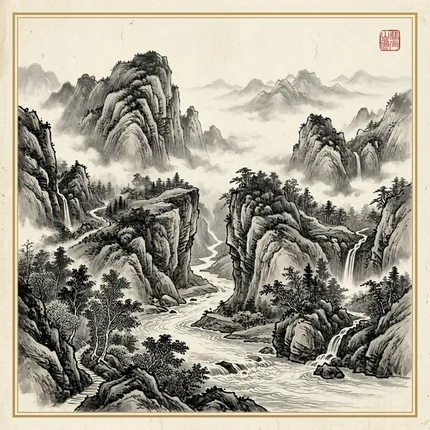 County-level
The historic Gongchen Bridge marks the southern terminus of the Grand Canal in Gongshu, bordered by cobblestone alleys and ancient Xiangji Temple.
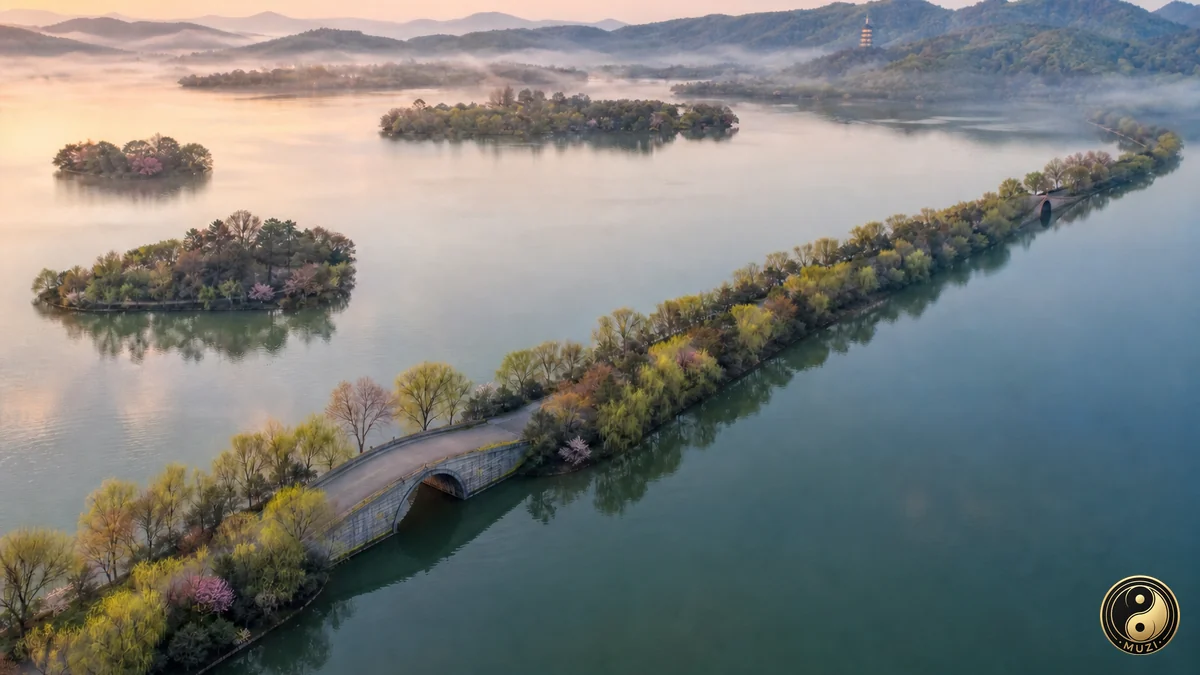 County-level
World Heritage West Lake cultural landscape features the willow-lined Su Causeway and Lingyin Temple in Xihu, ancestral cradle of Longjing tea.
County-level
Xixing Ancient Town preserves Grand Canal transshipment wharves in Binjiang, where the dramatic tides of the Qiantang River surge past modern esplanades.
County-level
The eight-thousand-year-old Kuahuqiao dugout canoe highlights prehistoric water transport in Xiaoshan, overlooking the scenic shores of Xianghu Lake.
County-level
World Heritage Liangzhu Archaeological Ruins preserve five millennia of urban civilization in Yuhang, near the Zen tea traditions of Mount Jingshan.
County-level
The serene river scenery of Dwelling in the Fuchun Mountains unfolds along the Fuchun River in Fuyang, home to Sun Quan ancestral village in Longmen.
County-level
Towering ancient cedar forests crown Mount Tianmu in Linan, ancestral home of Wuyue Kingdom founder Qian Liu and the scenic waterfalls of Daming Mountain.
County-level
Misty winter plum groves blanket Mount Chaoshan in Linping, near the seven-arch Guangji Bridge over the Grand Canal in historic Tangqi water town.
County-level
Tidal surges sweep the expansive estuaries of the Qiantang River in Qiantang, bordered by riverside reed marshes and coastal eco-parks.
County-level
The ancient fishing terrace of hermit Yan Ziling overlooks the Fuchun River gorges in Tonglu, near the limestone wonders of Yaolin Fairyland.
County-level
Over a thousand forested islets scatter across the crystal waters of Qiandao Lake in Chun An, submerged above the ancient stone streets of ancient Shicheng.
County-level
Ancient Yanzhou Prefecture City guards the confluence of three rivers in Jiande, famous for mist over the cold Xin An River and Daciyan Hanging Temple.
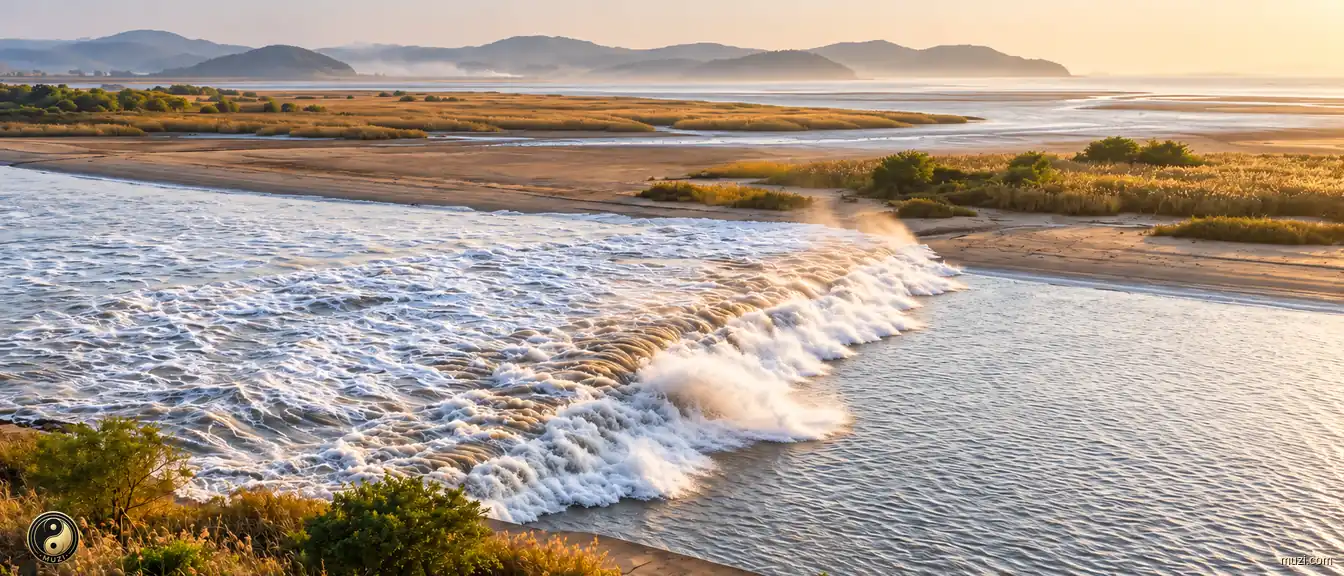
The world's greatest tidal bore — every year on the eighteenth day of the eighth lunar month, a wall of water roars into Hangzhou Bay with earth-shaking fury.
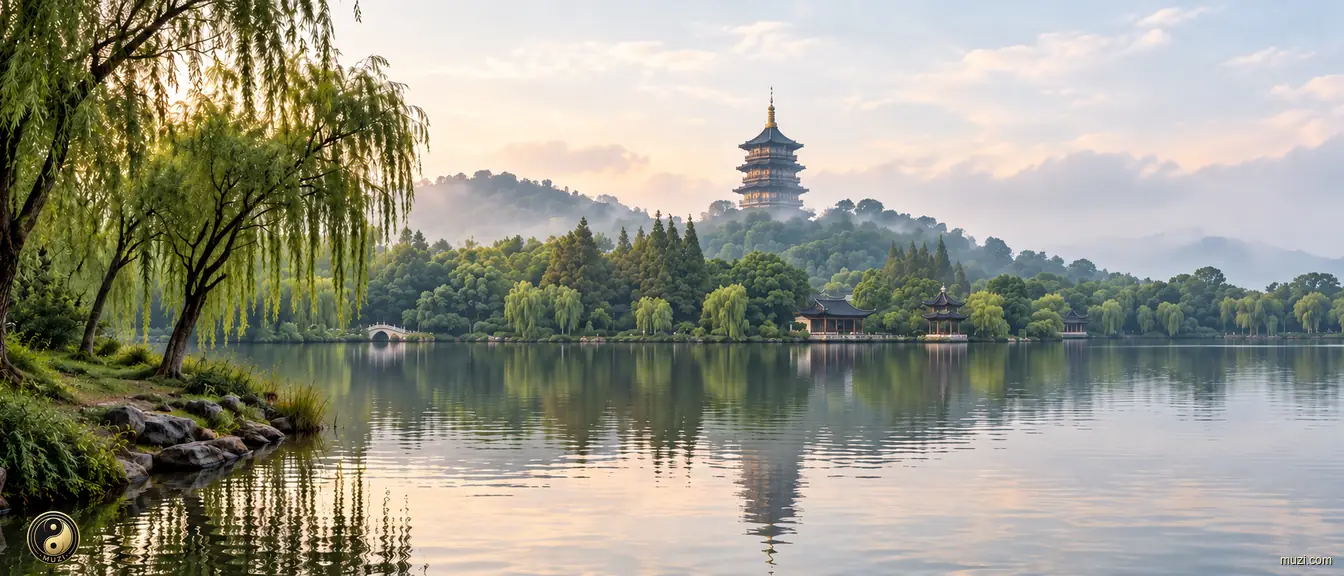
West Lake's cloud-wreathed hills, famous bridges, and causeways have shaped Jiangnan's poetic urban landscape for centuries.
The Northern Song pagoda overlooking the estuary, legendary vantage point for the Qiantang tidal bore.
View attraction
Along the south bank of the Qiantang, the Xiaoshan seawall held back tidal floods, protecting the prosperous farmland and towns behind it.
View attractionLayered lakes and stacked peaks are pristine and fair. With autumn sweet osmanthus and ten leagues of lotus blooms. Markets display jewels and pearls, households overflow with silk brocades, vying in splendor.
On the tomb of the Prince of E the grass grows thick; in the autumn sun, desolate, the stone beasts stand tottering. The ruler and ministers who crossed south made light of the state; the elders of the Central Plains watched for the banners. The hero is dead; what use is lamenting now? The realm was split in two and could no longer hold. Do not sing this song by the West Lake: the light on the water and the colours of the hills cannot bear such grief.
Where are they not gold and jade outside and rotten wadding within? Now you do not examine this, but examine my oranges!
West Lake is at its most splendid in spring and under the moon; in a single day, at morning mist and evening mountain haze. This year spring snow was heavy and plum blossoms were held back by cold, blooming together with apricot and peach in an extraordinary spectacle.
Mist and frost coalesced into boundless haze; sky, clouds, hills, and waters were pure white above and below. Shadows on the lake were merely one line of long dike, one dot of Mid-Lake Pavilion, one blade of grass for my skiff, and two or three mustard seeds for the passengers aboard.
On West Lake during the Mid-Seventh Month, there is nothing worth seeing except the crowds who come to look. Viewing these crowds, one classifies them into five types... When moonlight turned pale and the east showed white, the guests finally dispersed.
Lotus leaves reaching to the sky, an endless green; lotus blossoms catching the sun, a red like no other.
If I were to compare West Lake to Xi Shi, light make-up or heavy, either way she is lovely.
Guo the soldier signs a pledge to bring Xiuxiu to the Prince, but when he lifts the curtain the sedan chair is empty; at home Xiuxiu admits she is a ghost, seizes Cui Ning with both hands, and takes him with her into death.
On Wu Hill the wine-shop banners still flutter in the wind: twice now the dream of Jiangnan.
Guang took a stone, struck the jar and broke it; the water gushed out and the child survived.
Return our two emperors and restore our territory, and then we can spare each other.
He led out the army but died before victory, forever making heroes wet their sleeves with tears.
Wang Pi passed messages back and forth; Wang Shuwen made the decisions; Wei Zhiyi wrote the proclamations.