



































 County-level
Ding Hai District
Ancient ramparts and admiral yamens of Dinghai Ancient City preserve naval defense heritage in Dinghai, ancestral home of author Sanmao.
 MUZIChinese Matrix
Zhoushan, a city of more than a thousand islands, is known for the Buddhist sanctuary of Putuo Mountain and Shenjiamen fishing port.
Within the regional setting of Zhejiang, the spatial identity of Zhoushan is first captured by this local fact: “Zhoushan, a city of more than a thousand islands, is known for the Buddhist sanctuary of Putuo Mountain and Shenjiamen fishing port.” It points to an observable local combination in which the setting of Zhoushan is shaped by both environment and lived practice. Historical development brought natural conditions and human activity into repeated negotiation, leaving traces in settlement, routes, and memory. Specific places and continuing lives turn a broad regional relationship into experience that can be observed and checked. The meaning of Zhoushan rests in specific places and continuing life, not only in its name or formal classification.
County-level
Ancient ramparts and admiral yamens of Dinghai Ancient City preserve naval defense heritage in Dinghai, ancestral home of author Sanmao.
County-level
The grand statue of Nanhai Guanyin crowns the sacred Buddhist island of Mount Putuo in Putuo, overlooking the fishing harbors of Shenjiamen.
County-level
The scenic island ridges of Mount Daishan embrace East Sea coves in Daishan, home to the coastal fishing lanes of Dongsha Ancient Town.
County-level
Over four hundred islands of the Shengsi Archipelago dot the East Sea in Shengsi, famous for mussel sea pastures in Gouqi and the green village of Houtouwan.
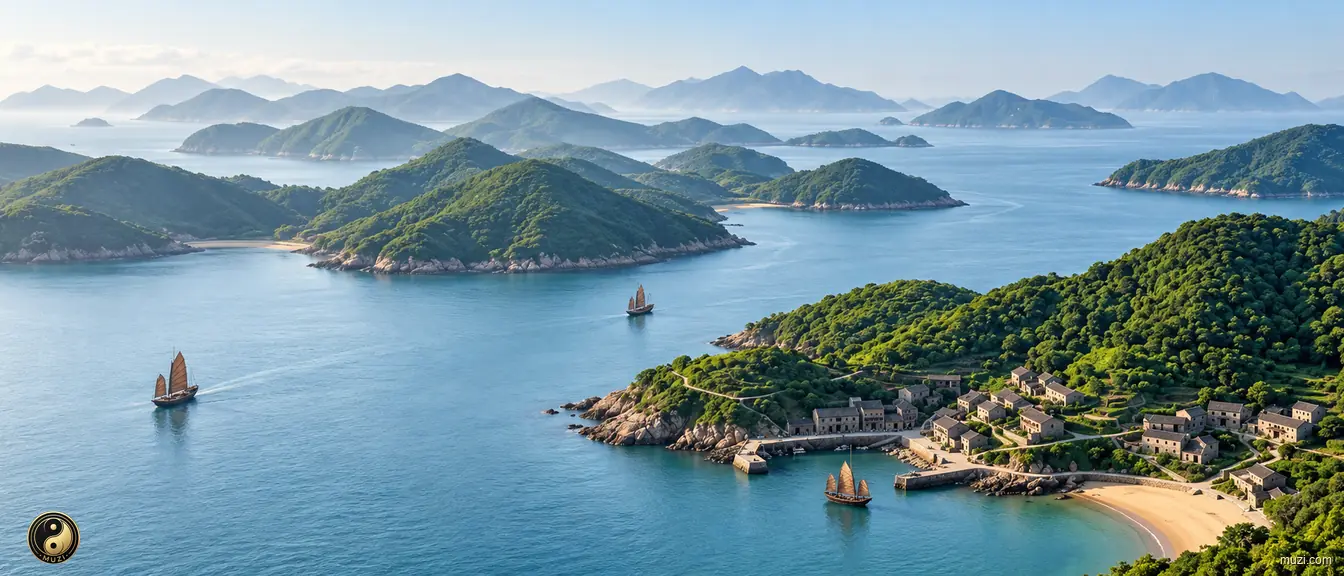
An archipelago of more than a thousand islands scattered across the East China Sea, linking riverine waters with open sea.
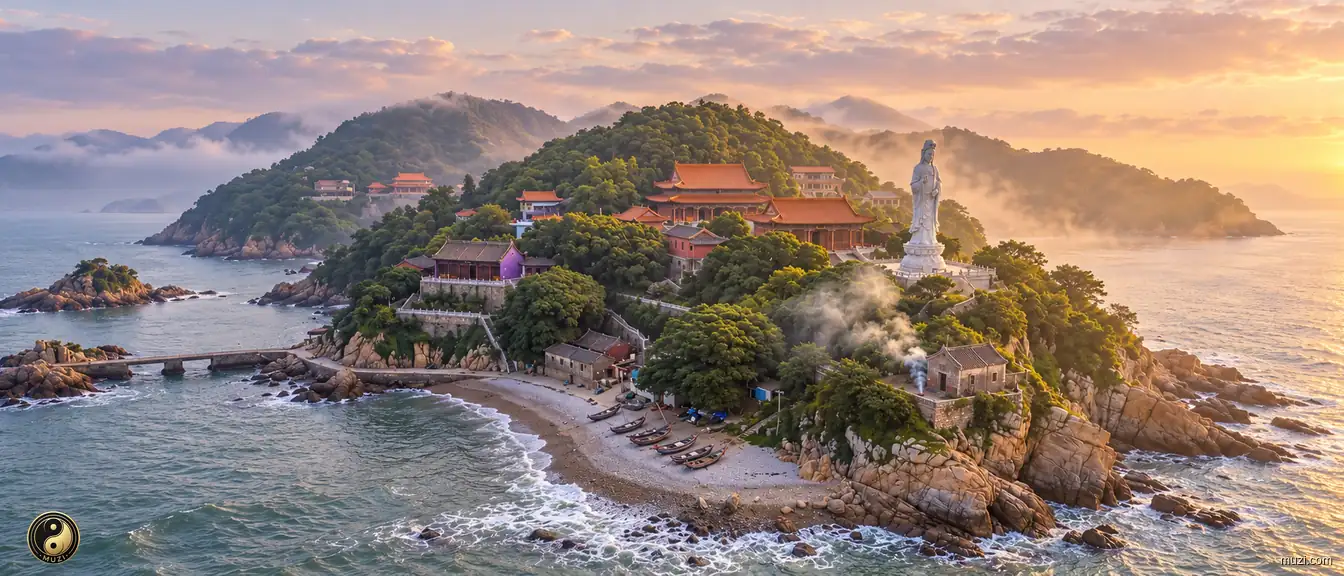
Mount Putuo, the bodhimanda of Guanyin — a sacred island Buddhist realm suspended alone in the East China Sea's waves, a spiritual lighthouse whose thousand-year Sanskrit chanting and tidal rhythm illuminate the return path for seafarers.
Ivy and creeping vines have completely swallowed the abandoned village of Houtouwan, a hauntingly beautiful island scene in the East China Sea.
View attraction