


































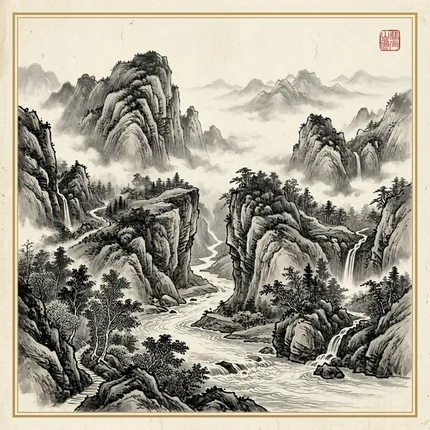
 Prefecture-level
Lanzhou
The Yellow River flows through Lanzhou, where Zhongshan Iron Bridge faces White Pagoda Hill, and beef noodles and waterwheels are city icons.
 MUZIChinese Matrix

The Hexi Corridor runs between the Loess and Tibetan plateaus, carrying Silk Road remains through deserts and mountain country.
The spatial setting of Gansu is grounded in the local fact “The Hexi Corridor runs between the Loess and Tibetan plateaus, carrying Silk Road remains through deserts and mountain country.” These relationships connect landscape, inherited places, and community experience without reducing Gansu to an administrative label. Over time, these relationships accumulated through residence, exchange, production, and community continuity across successive historical periods. Viewed beside neighboring areas, Gansu also shows how roads, resources, and movement create local distinctions within a wider region. For regional study, Gansu places location, long-term formation, and present meaning within one connected explanation.
Prefecture-level
The Yellow River flows through Lanzhou, where Zhongshan Iron Bridge faces White Pagoda Hill, and beef noodles and waterwheels are city icons.
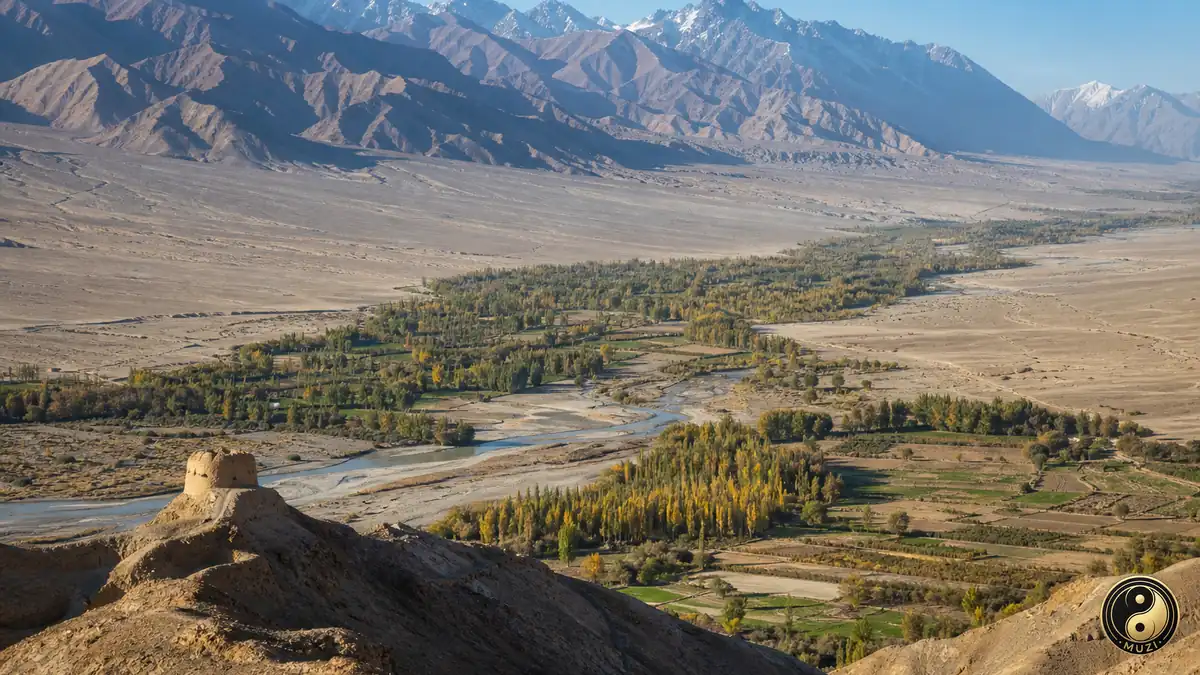 Prefecture-level
Jiayuguan Pass, the Ming Great Wall's western stronghold hailed as the greatest pass under heaven, stands near the Overhanging Great Wall and Wei-Jin tomb murals.
Prefecture-level
Jinchang, China's nickel capital, draws on Qilian snowmelt, while Yongchang's Shengrong Temple and Shajing culture sites reveal a long past.
Prefecture-level
Baiyin, the copper city named for its mines, offers the Yellow River Stone Forest at Jingtai and the Huining site where Red Army forces reunited in 1936.
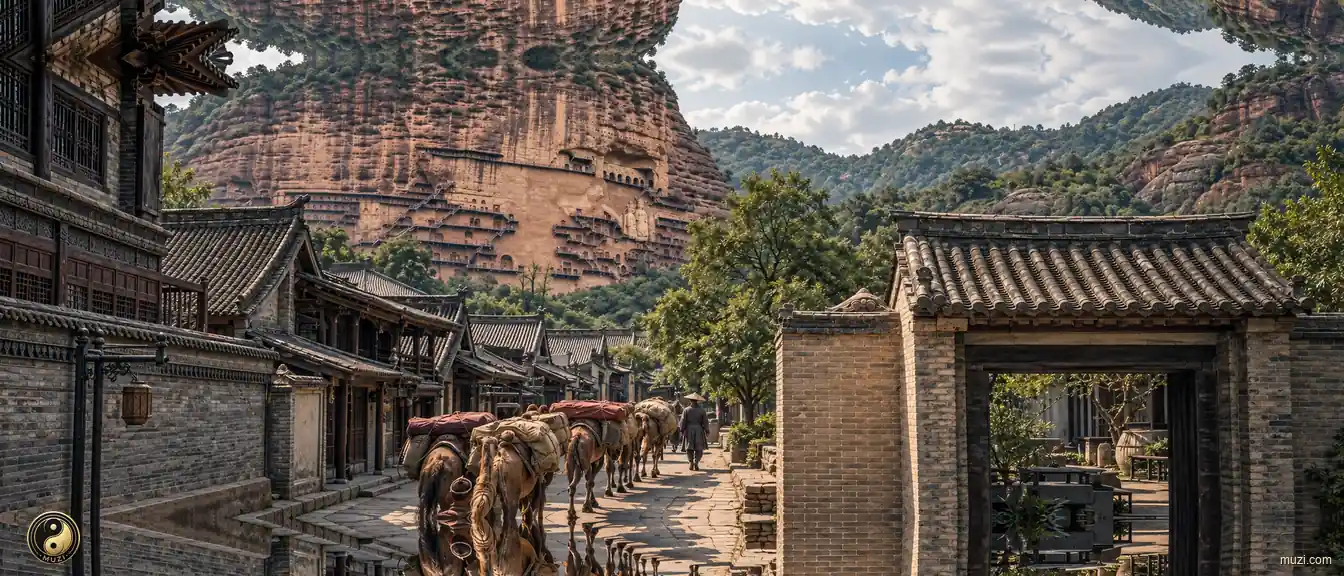 Prefecture-level
Tianshui, legendary home of Fuxi, treasures the clay sculptures of Maijishan Grottoes, the Fuxi Temple and the Neolithic Dadiwan site.
Prefecture-level
Wuwei, ancient Liangzhou, is where the Bronze Galloping Horse was unearthed at Leitai, and Tiantishan Grottoes and Kumarajiva Temple recall Buddhism's eastward path.
Prefecture-level
Zhangye is known for its rainbow Danxia landforms, the reclining Buddha of its Great Buddha Temple, and an oasis watered by the Hei River.
Prefecture-level
Kongtong Mountain, a famed Taoist peak, rises over Pingliang, while Jingchuan's Queen Mother Palace and Zhuanglang's terraced fields add distinct character.
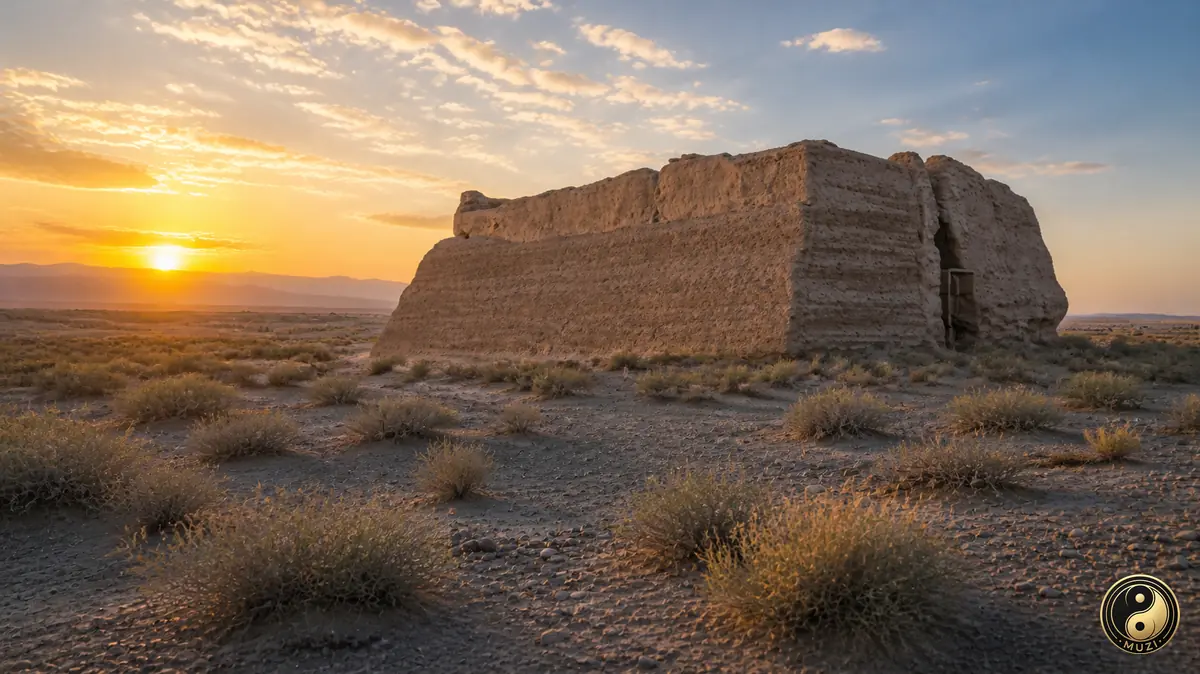 Prefecture-level
Jiuquan counts Dunhuang's Mogao Caves and Crescent Lake among world-famous sights, along with Guazhou's Yulin Grottoes and the Han-era Jiuquan spring.
Prefecture-level
Qingyang spreads across the deep loess of Dongzhi Plateau, an early Zhou farming heartland where sachet embroidery and Huanxian shadow puppetry endure.
Prefecture-level
Dingxi, China's potato capital, includes Lintao, namesake of the Majiayao culture, and Longxi, the ancestral seat of the Li clan.
Prefecture-level
Longnan, the Jiangnan of Gansu, preserves the Xixia Ode cliff inscription and the Qiuchi kingdom site, while the Baishuijiang reserve shelters giant pandas.
Prefecture-level
Linxia, historic Hezhou, is renowned for brick carving and hua'er folk songs, with the Bingling Temple Grottoes beside Liujiaxia Reservoir in Yongjing.
Prefecture-level
Gannan is home to Labrang Monastery beside the Sangke grasslands, the hidden valleys of Zhagana, and Maqu at the Yellow River's first great bend.
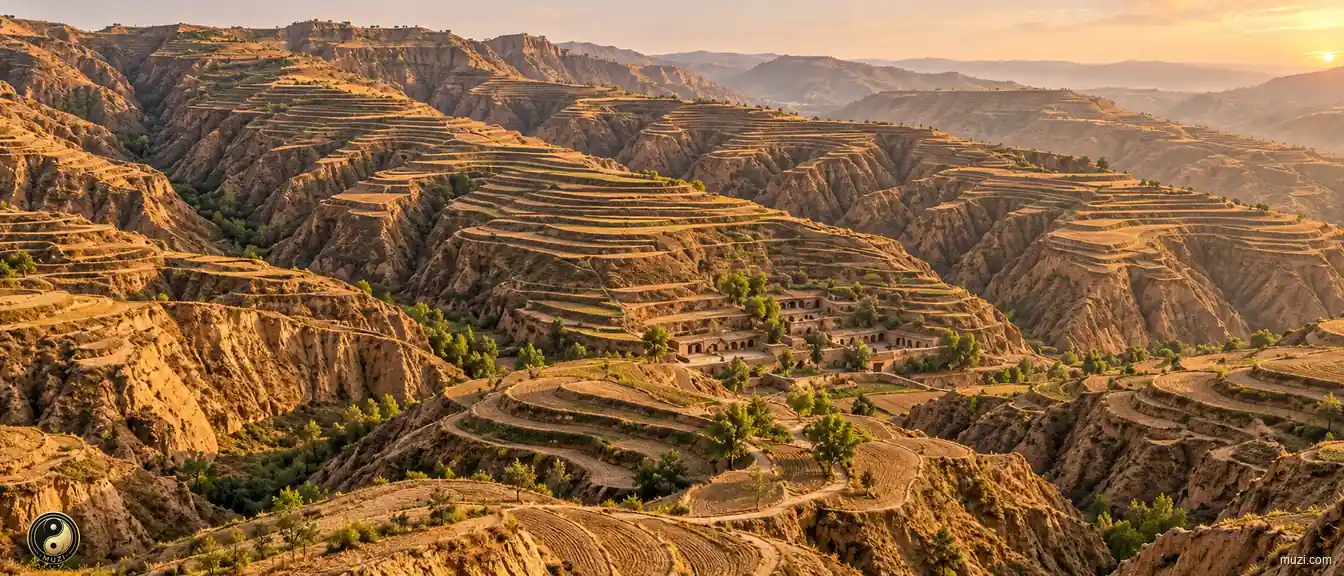
The Loess Plateau's windblown soils are fertile and workable, supporting early agrarian communities.
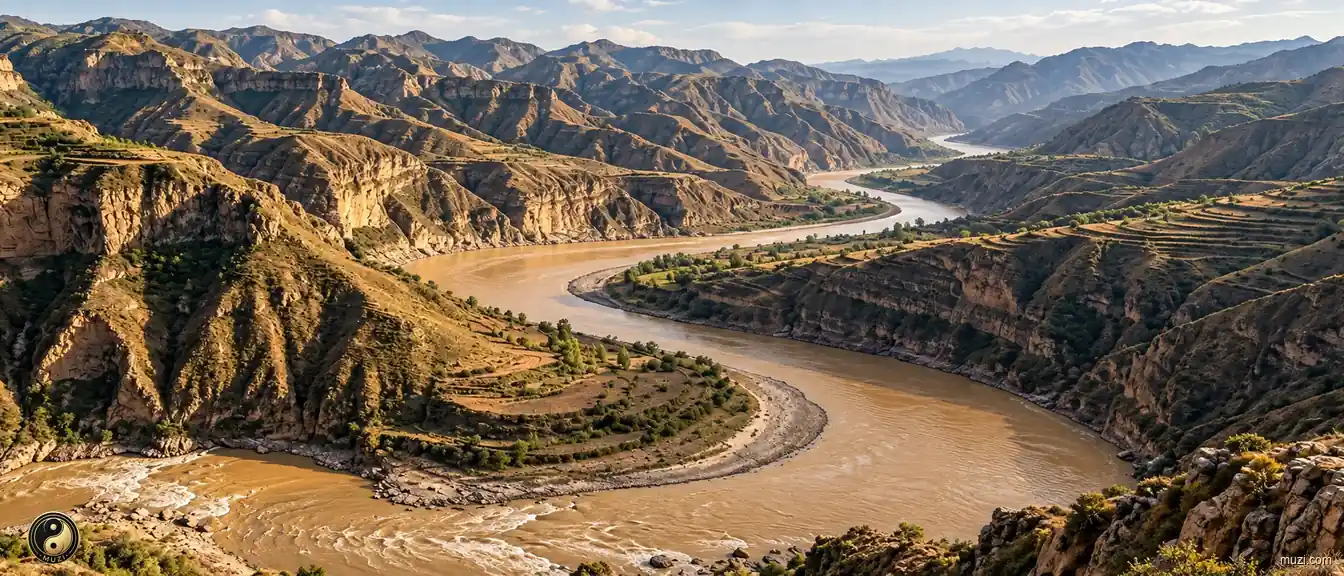
The Yellow River carries loess to the sea and remains a major river in the history of Chinese agrarian civilization.
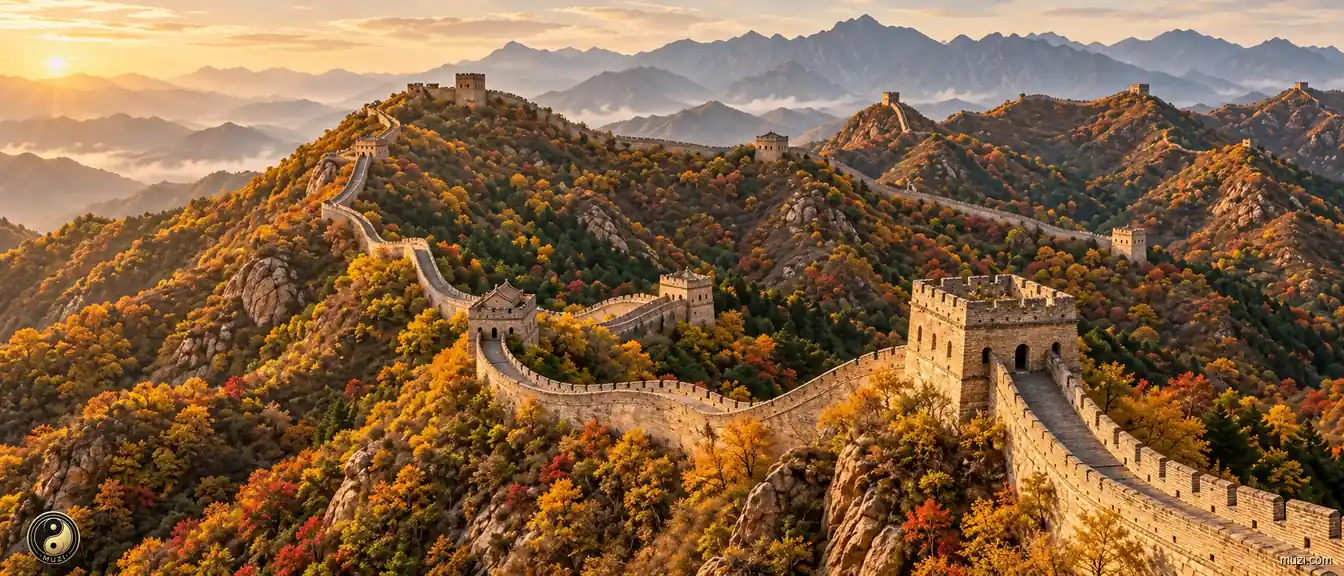
The longest military fortification in human history — winding ten thousand li along the northern ridges, guarding the boundary of agrarian civilization for two millennia.
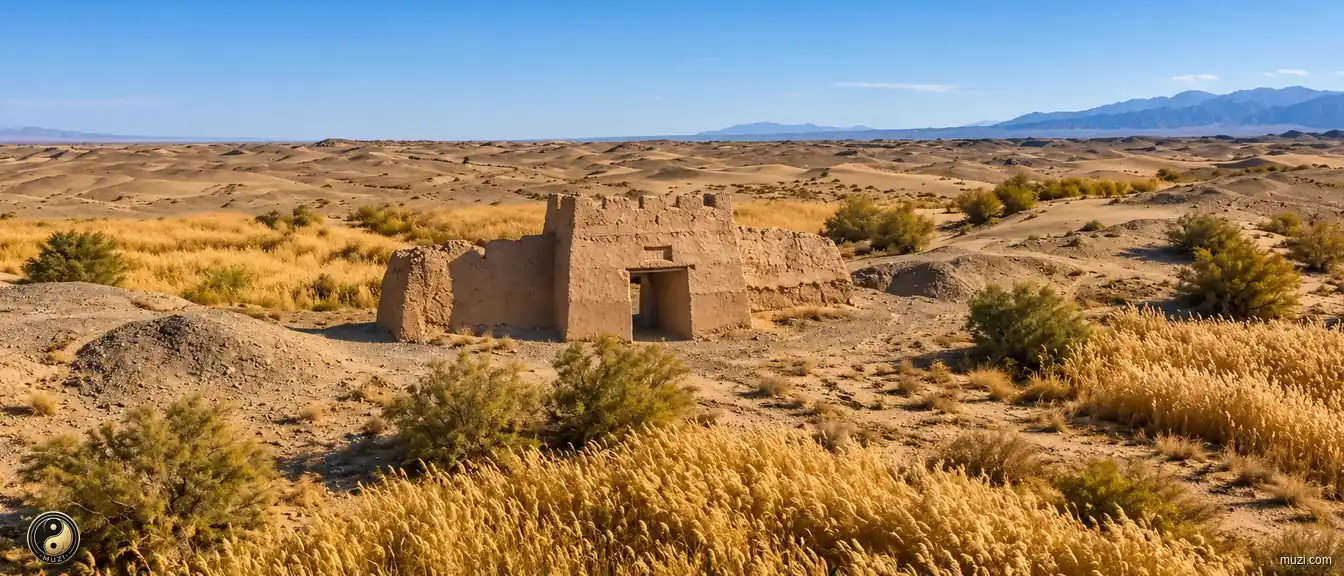
The Silk Road's western gateway — where the Han dynasty established the Protectorate of the Western Regions, the empire's westernmost terminal for exercising sovereignty over Inner Asia.
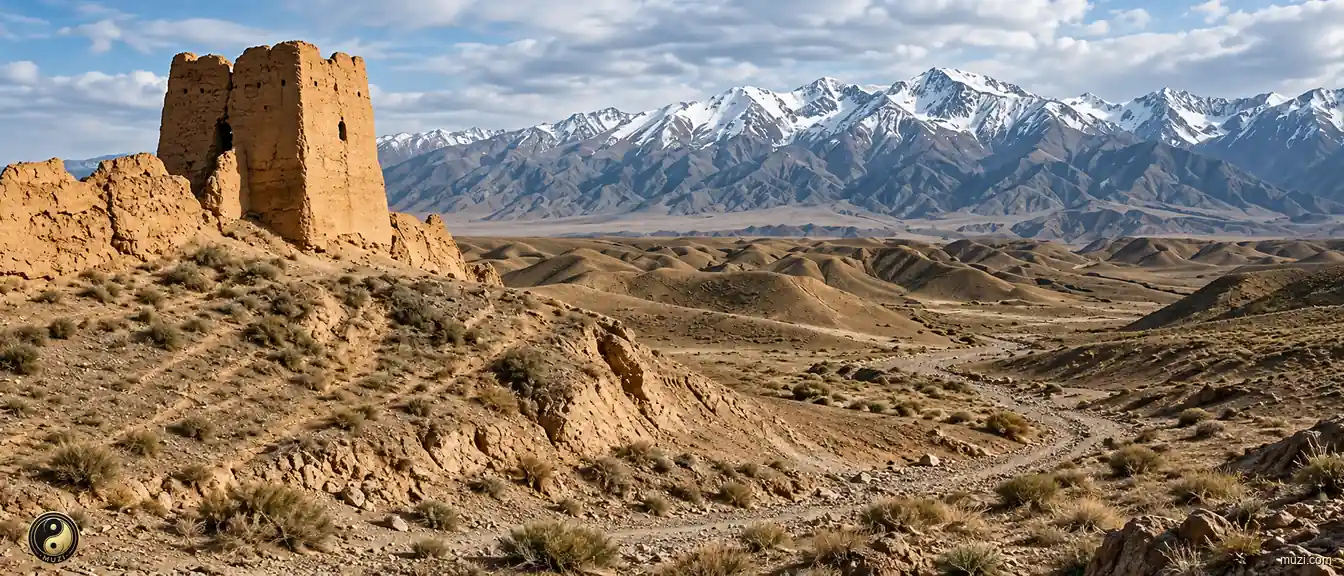
The narrow oasis belt pinched between the Qilian Mountains and the desert — the golden passage of the Silk Road, Chinese civilization's sole overland corridor into the heart of Eurasia.
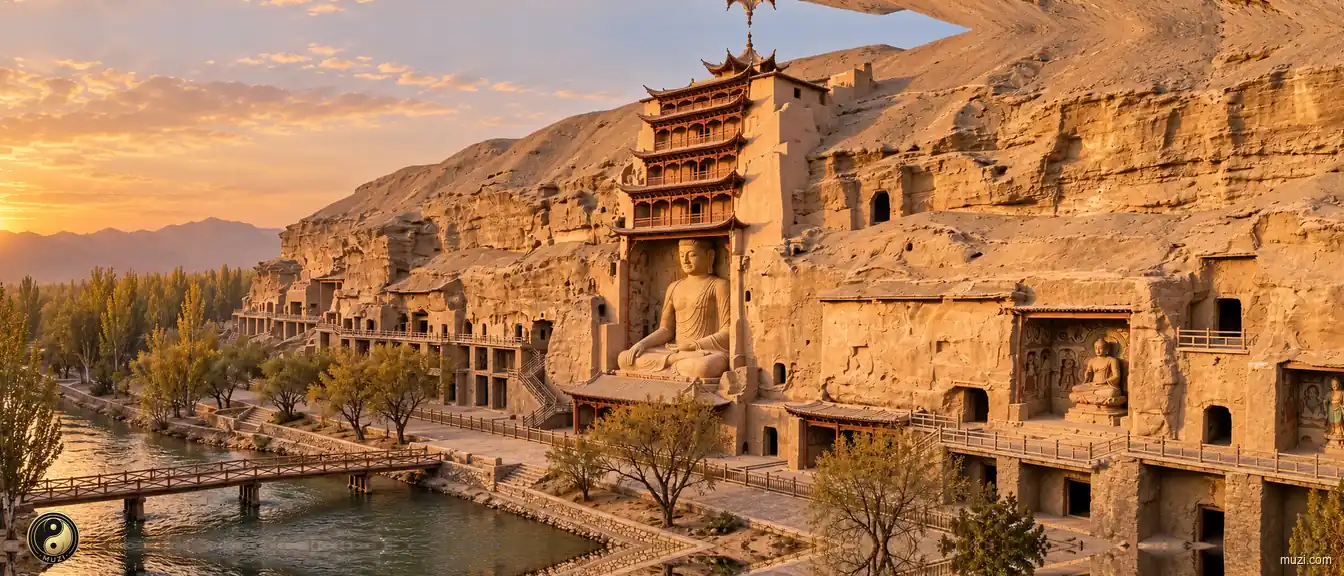
The Dunhuang Mogao Caves — a treasure-house of Buddhist art on the Silk Road, over seven hundred grottoes preserving forty-five thousand square meters of murals, a thousand-year three-dimensional art history.
Tianshui joins Fuxi and Silk Road heritage with the Maijishan Grottoes, ancient streets, and Hu's Residence.