



































 County-level
Su Zhou District
General Huo Qubings legend of pouring imperial wine into natural springs gave Jiuquan its name, anchored by the ancient Drum Tower in Suzhou.
 MUZIChinese Matrix
Jiuquan counts Dunhuang's Mogao Caves and Crescent Lake among world-famous sights, along with Guazhou's Yulin Grottoes and the Han-era Jiuquan spring.
For Jiuquan, the relationship between place and life becomes visible in “Jiuquan counts Dunhuang's Mogao Caves and Crescent Lake among world-famous sights, along with Guazhou's Yulin Grottoes and the Han-era Jiuquan spring.” This evidence connects landform, movement, settlement, and cultural expression instead of treating them as isolated details. The present profile of Jiuquan reflects environmental adaptation and local stewardship built up over an extended period rather than a short-lived change. This process explains how Jiuquan remains connected to its surrounding region while retaining a recognizable local character. That is why Jiuquan matters: local detail can illuminate environmental setting, social process, and cultural memory together.
County-level
General Huo Qubings legend of pouring imperial wine into natural springs gave Jiuquan its name, anchored by the ancient Drum Tower in Suzhou.
County-level
Golden desert poplars shimmer over mirrored oasis waters in Jinta, near Han-dynasty frontier watchposts along the ancient Ruoshui River.
County-level
The Yulin Grottoes house breathtaking Tang and Western Xia Buddhist murals, near the UNESCO World Heritage ruins of ancient Suoyang City in Guazhou.
County-level
The vast Mengke Glacier blankets high peaks in Subei, where the pristine wetlands of Yanchiwan shelter rare snow leopards and wild yaks.
County-level
Turquoise waters of Sugan Lake mirror the snow peaks of the Altun Mountains, accompanied by traditional Kazakh folk melodies in Aksay.
County-level
Bronze Age artifacts at Huoshaogou reflect ancient frontier civilizations in Yumen, surrounded by the dramatic red cliffs of Chijin Gorge.
County-level
World Heritage Mogao Caves house extraordinary millennia-old Buddhist murals in Dunhuang, complemented by Crescent Lake and the ancient Yumen Pass.
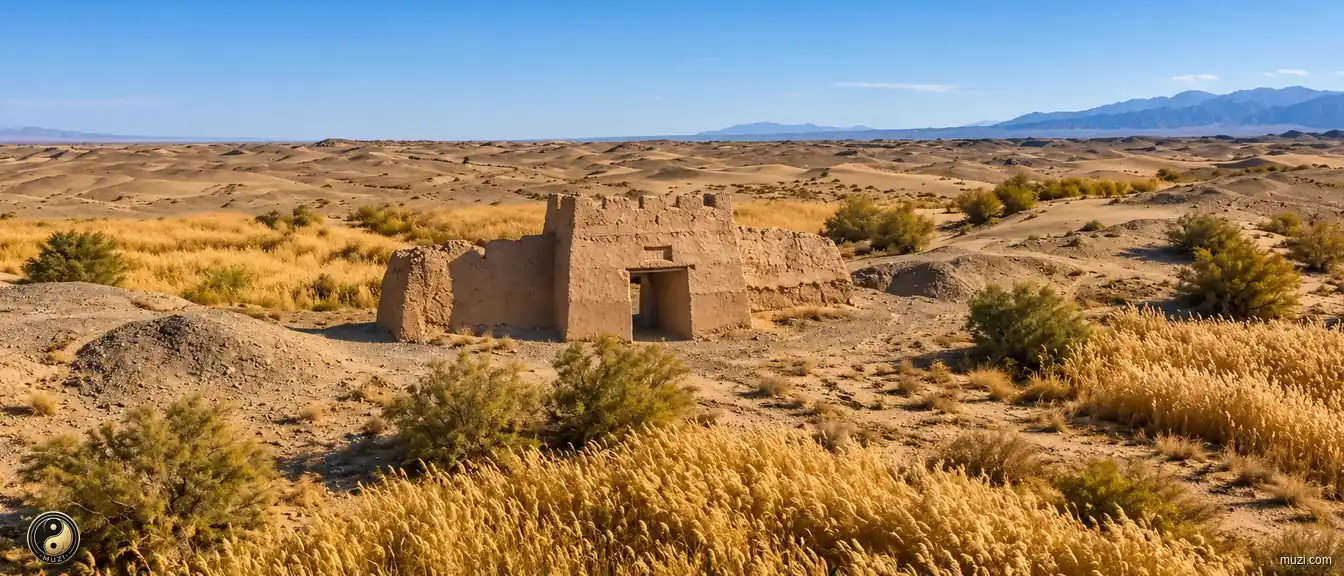
The Silk Road's western gateway — where the Han dynasty established the Protectorate of the Western Regions, the empire's westernmost terminal for exercising sovereignty over Inner Asia.
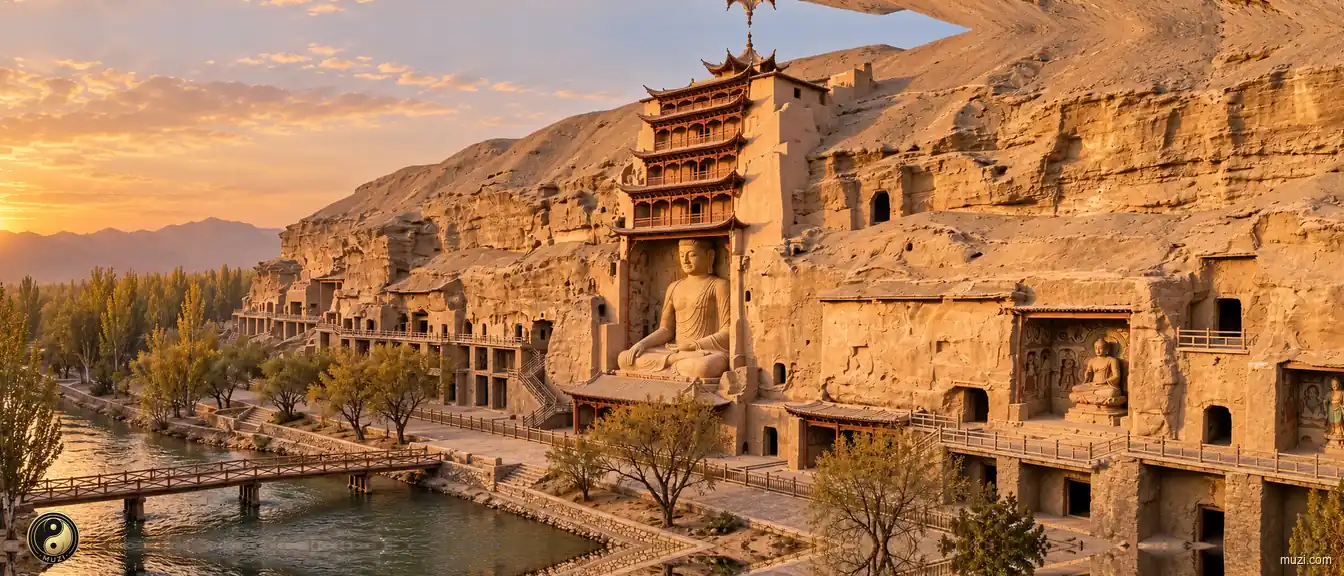
The Dunhuang Mogao Caves — a treasure-house of Buddhist art on the Silk Road, over seven hundred grottoes preserving forty-five thousand square meters of murals, a thousand-year three-dimensional art history.
Built of adobe and still largely intact, Hecang was a major supply depot where grain and fodder were gathered and forwarded to Han frontier garrisons.
View attraction
From this Jiuquan camp, Zuo Zongtang marshaled troops and supplies for the Qing campaign to retake Xinjiang, and his famed willows, praised in verse, spread from here.
View attractionI dare not hope to reach Jiuquan commandery; I only wish to enter the Jade Gate Pass alive
