


































 Prefecture-level
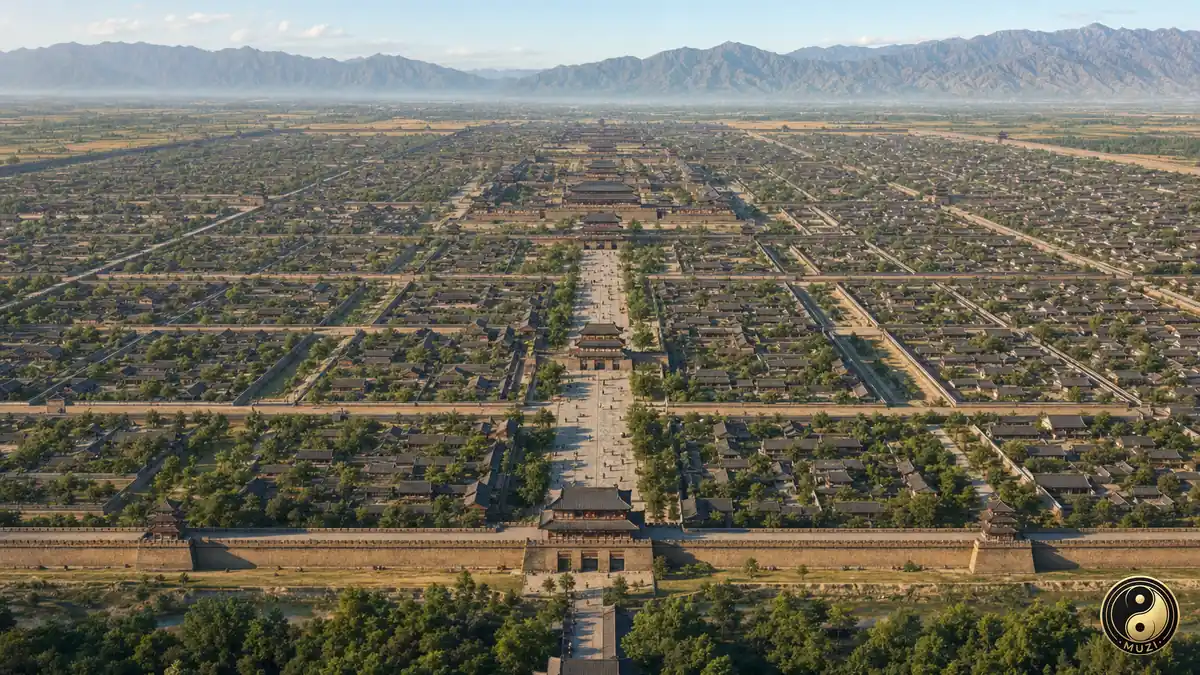
Xi'an
Xi'an, capital to thirteen dynasties, guards the Terracotta Army, the Ming city wall and the Big Wild Goose Pagoda of old Chang'an.
 MUZIChinese Matrix

Between the Yellow River and Qinling Mountains, the Guanzhong Plain anchors a province of ancient capitals and contrasting northern and southern terrain.
In regional terms, the clearest first clue to Shaanxi is “Between the Yellow River and Qinling Mountains, the Guanzhong Plain anchors a province of ancient capitals and contrasting northern and southern terrain.” Together, environmental, historical, and cultural elements give Shaanxi a profile that can be distinguished from nearby places. Continuing local life gave inherited spaces new uses and memories, allowing historical layers and contemporary activity to coexist. Today, the interaction between environment and society remains visible in landscape, urban texture, daily activity, and local memory. These details make Shaanxi a clear case of how a wider region is built from specific places and sustained lives.
Prefecture-level
Xi'an, capital to thirteen dynasties, guards the Terracotta Army, the Ming city wall and the Big Wild Goose Pagoda of old Chang'an.
 Prefecture-level
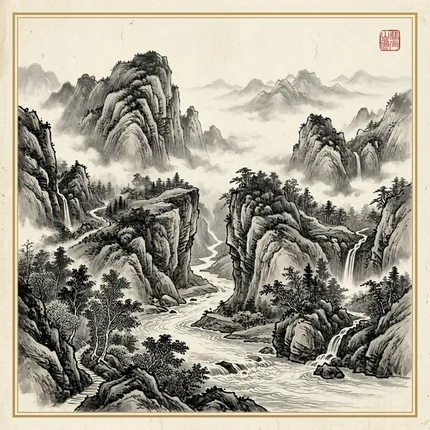
Tongchuan honours the physician Sun Simiao at Yaowang Mountain and keeps millennium-old ceramics traditions at Chenlu town and the Yaozhou kiln.
Prefecture-level
Baoji, legendary home of the Yan Emperor, holds Famen Temple and its finger relic and is renowned for bronzes such as the He zun.
 Prefecture-level
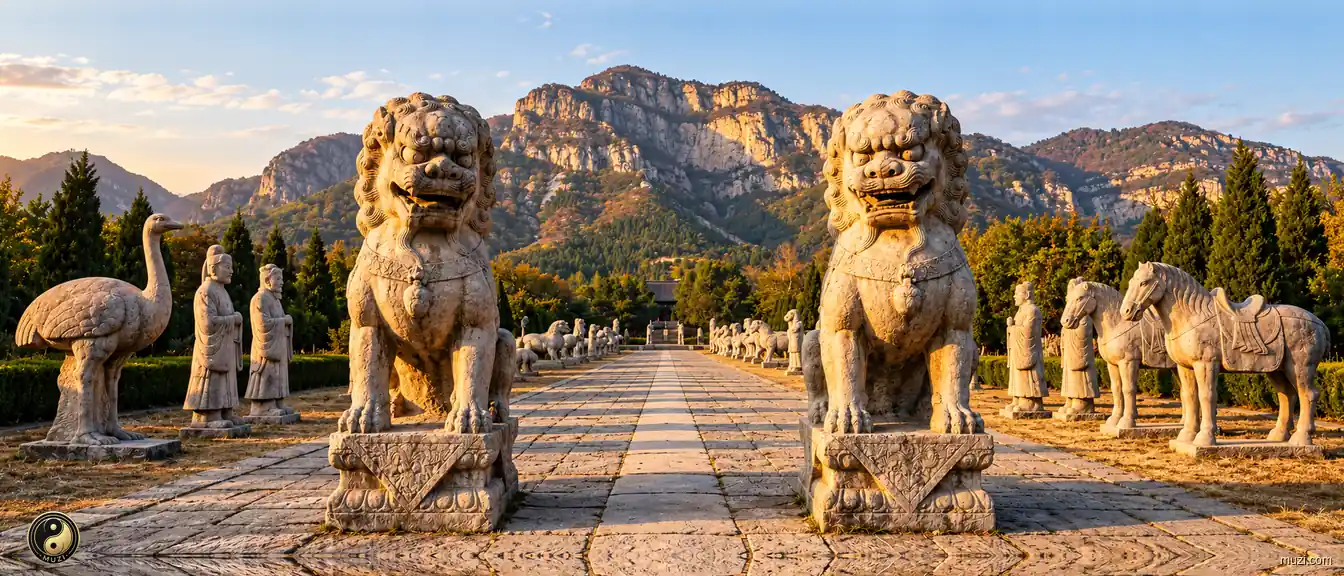
Xianyang, the first imperial Qin capital, spreads the Qianling, Maoling and Han Yangling mausoleums along the loess tablelands north of the Wei River.
 Prefecture-level
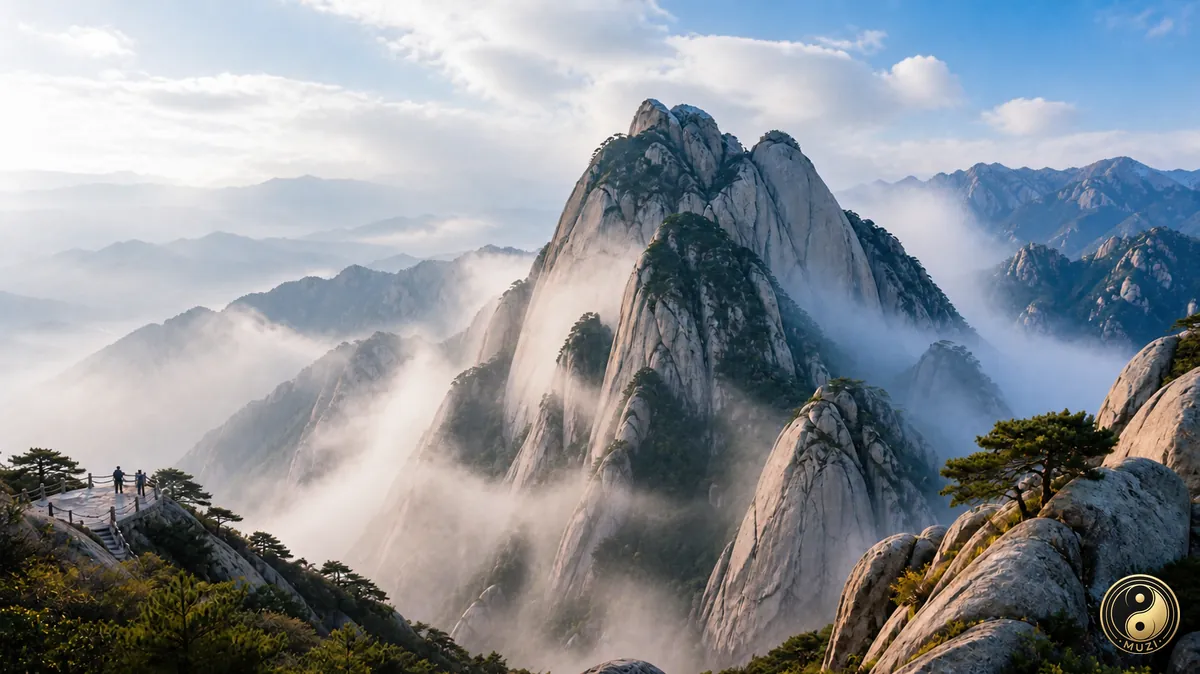
Weinan holds Mount Hua, the perilous Western Peak, and Hancheng with Sima Qian's shrine and the old village houses of Dangjiacun.
Prefecture-level
Yan'an has Pagoda Hill above the Yan River, the Mausoleum of the Yellow Emperor, Hukou Waterfall on the Yellow River and Ansai waist-drum dancing.
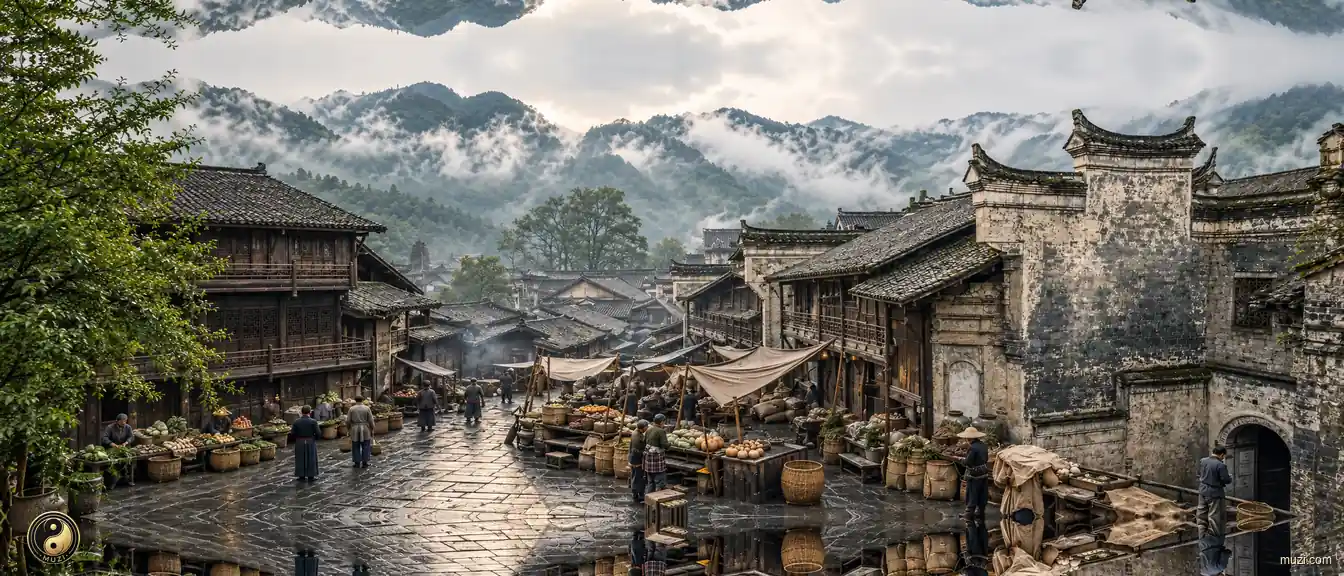 Prefecture-level
Hanzhong is a refuge of the crested ibis, keeps Han and Three Kingdoms sites such as Baijiangtan and Zhuge Liang's tomb, and blooms with rapeseed each spring.
Prefecture-level
Yulin keeps the Zhenbeitai fortress on the Ming Great Wall, the Tongwan city ruins and Hongjiannao lake beside the Mu Us sandy land.
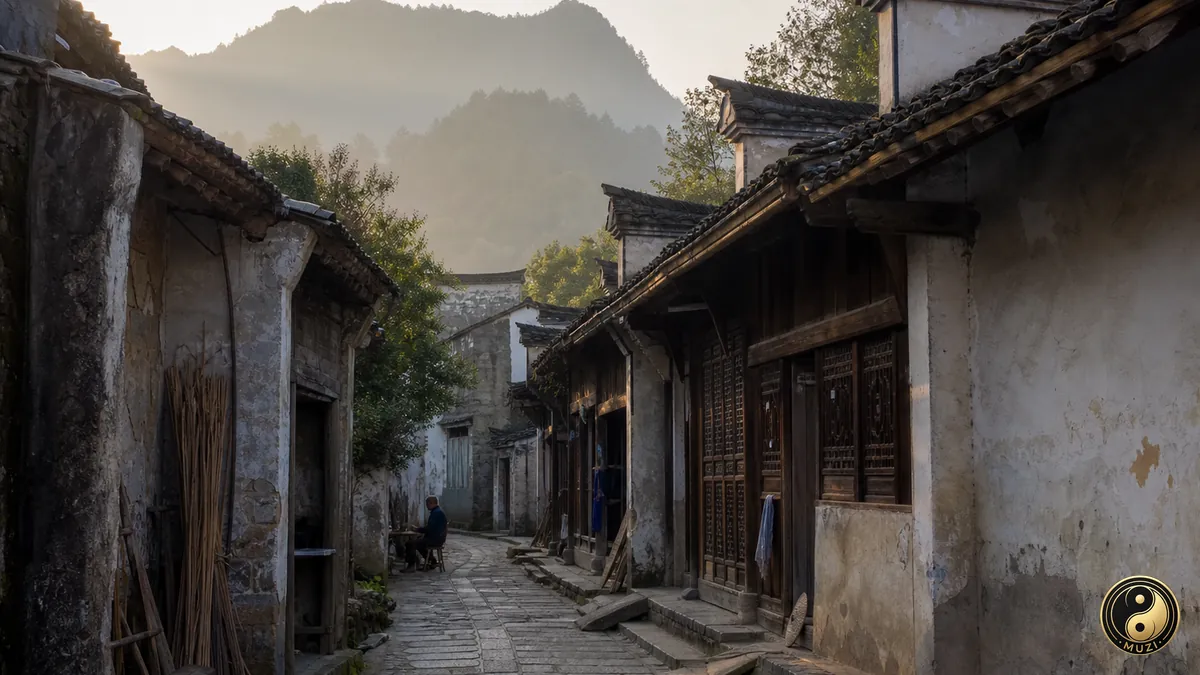 Prefecture-level
The Han River runs through Ankang, a city of Yinghu Lake and its islands, selenium-rich Ziyang tea and the river-ringed Taiji town of Xunyang.
Prefecture-level
Shangluo, retreat of the Four Hoary Hermits of Mount Shang, holds the Jinsi Grand Canyon and the old Manchuanguan town in the southeastern Qinling.
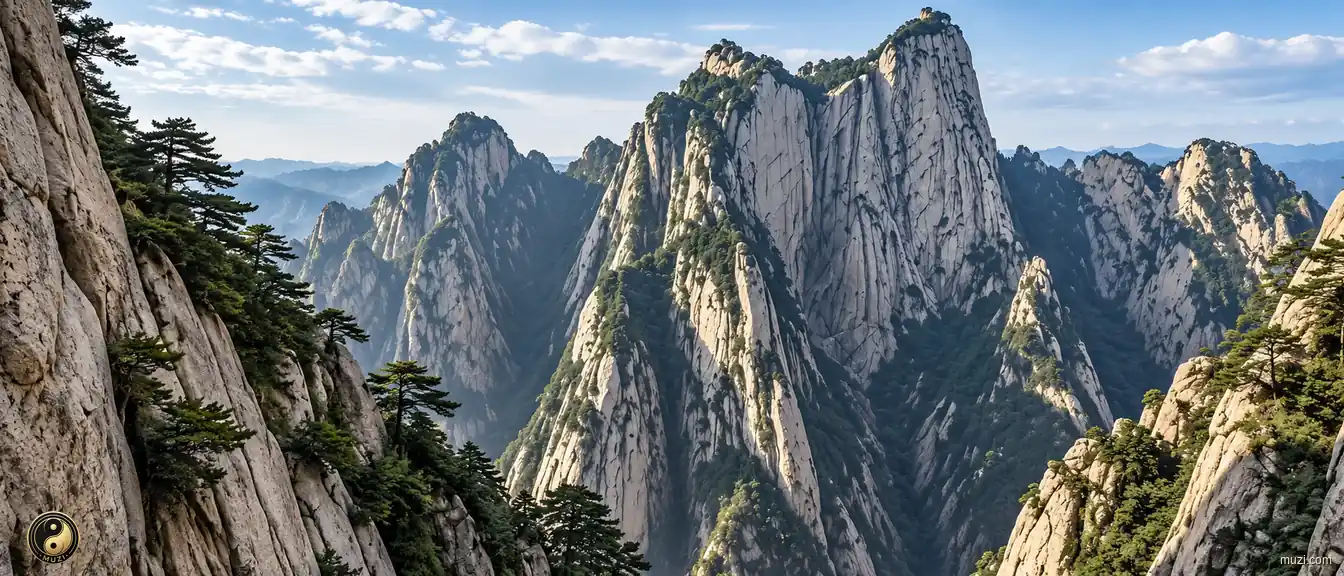
The most precipitous mountain under heaven — a single knife-edged ridge, one path up since antiquity, daring climbers to this day.
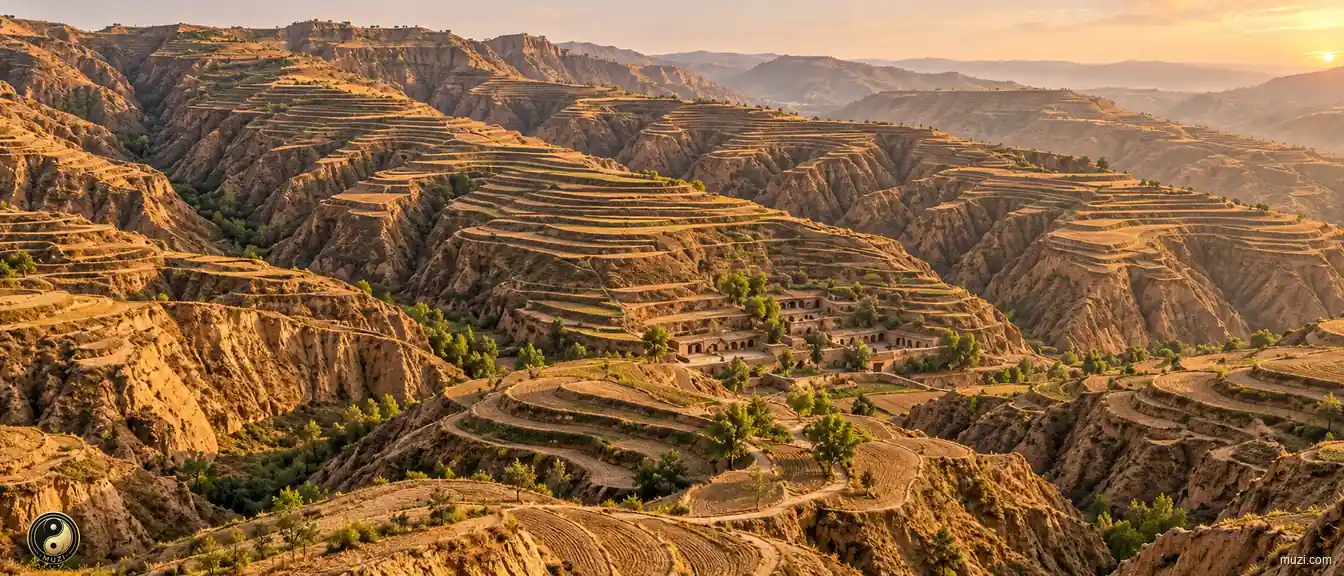
The Loess Plateau's windblown soils are fertile and workable, supporting early agrarian communities.
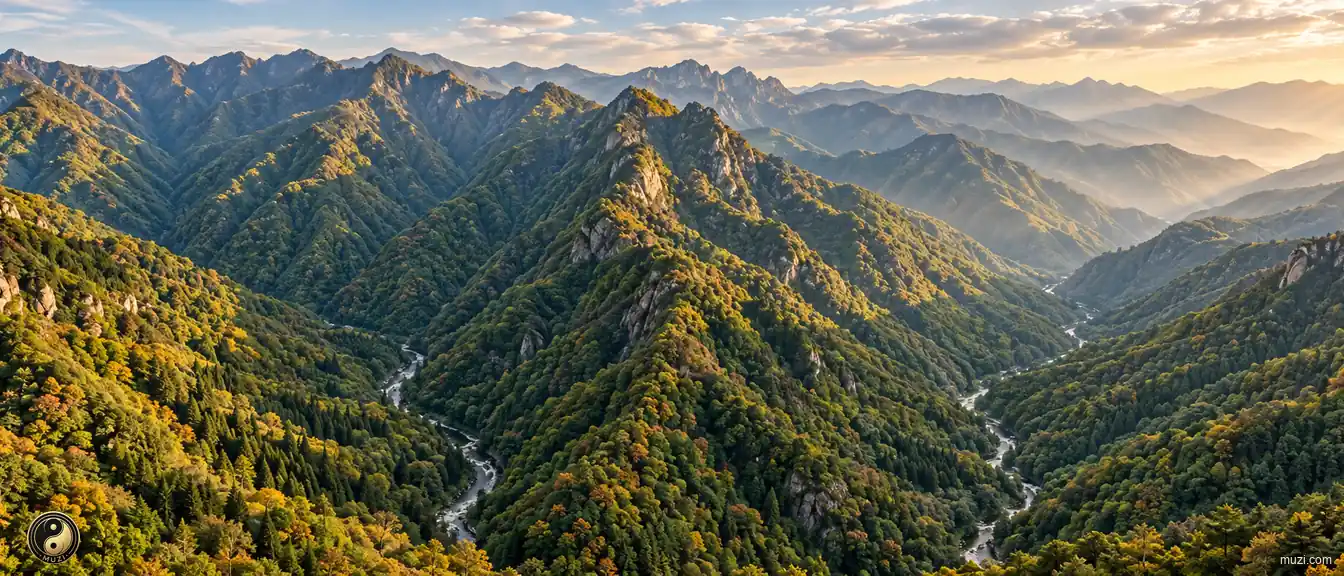
The Qinling runs east to west as a natural climate and species divide between northern and southern ecosystems, with a long role in Chinese civilization.
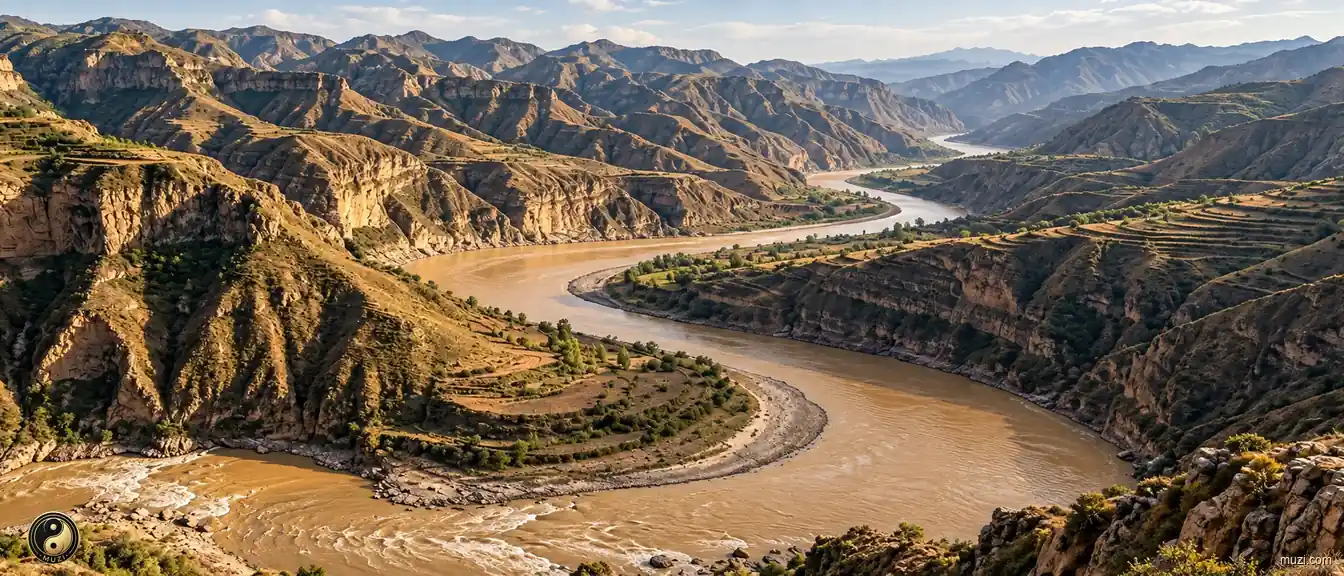
The Yellow River carries loess to the sea and remains a major river in the history of Chinese agrarian civilization.
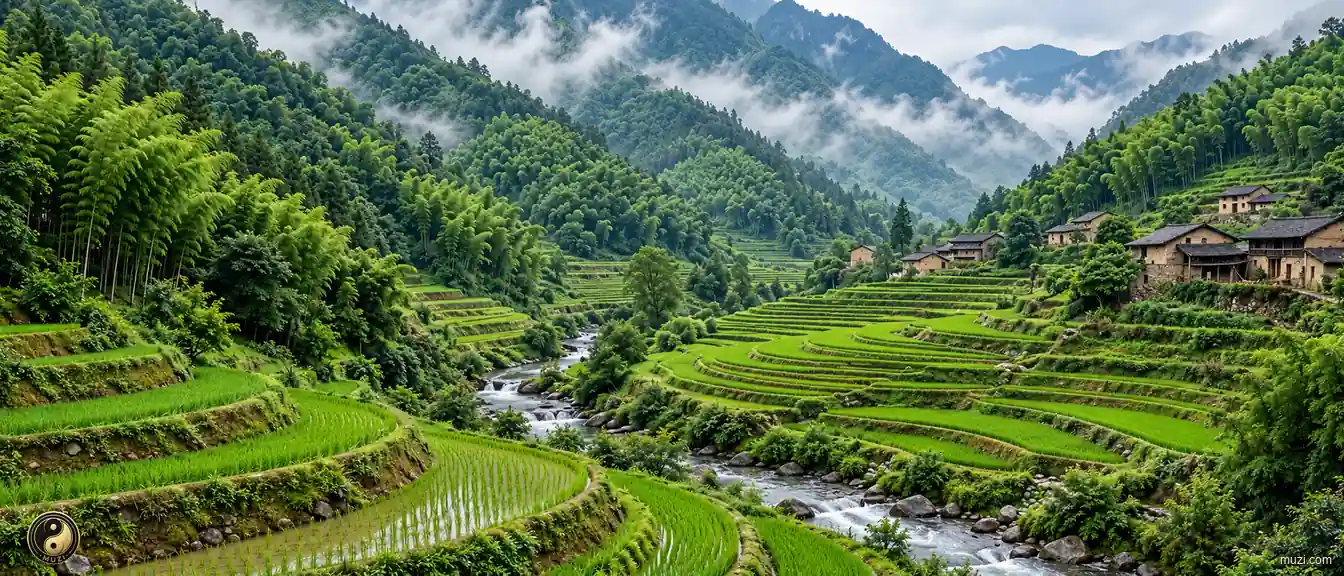
Terraced fields and streams weave a network on the southern slopes of Qinling — where the last wild crested ibis was rediscovered, scripting a miracle of species resurrection from the brink of extinction.
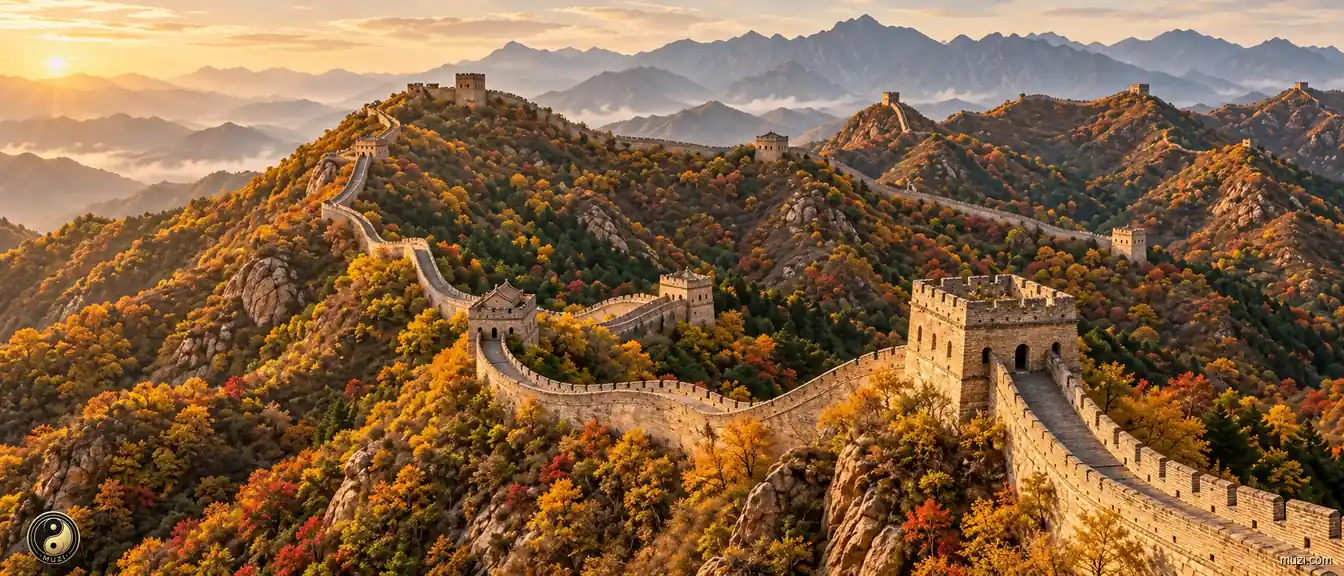
The longest military fortification in human history — winding ten thousand li along the northern ridges, guarding the boundary of agrarian civilization for two millennia.
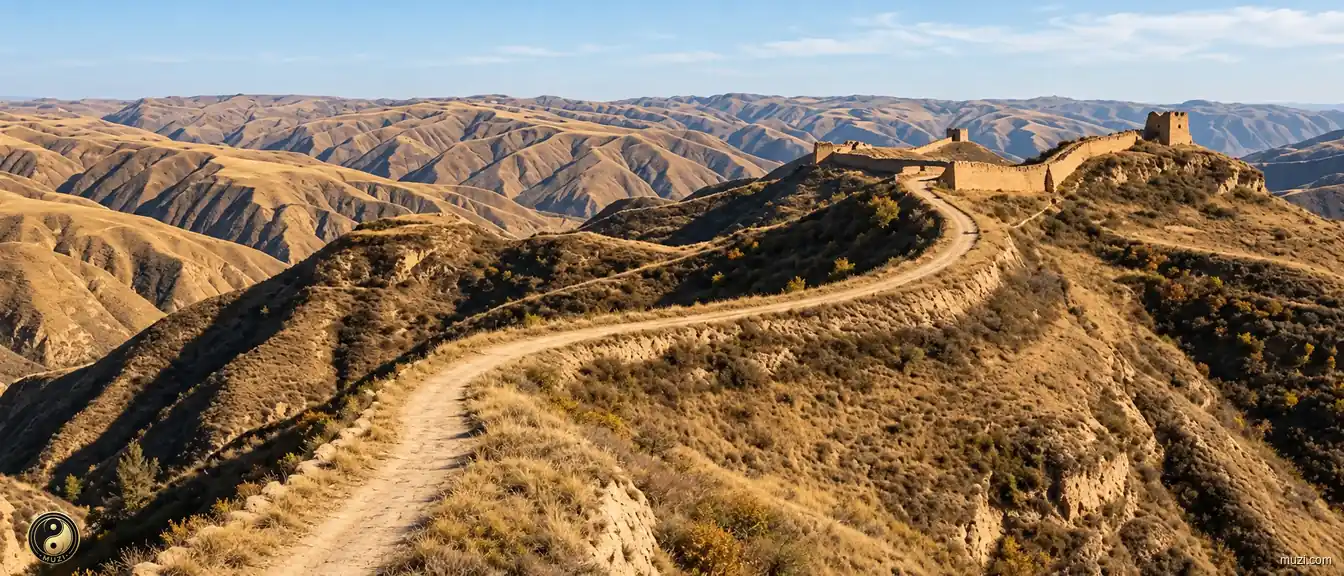
The ancient expressway built by Qin Shi Huang — a geometric military corridor stretching seven hundred kilometers straight along the loess ridge, enabling cavalry to reach the frontier in three days.
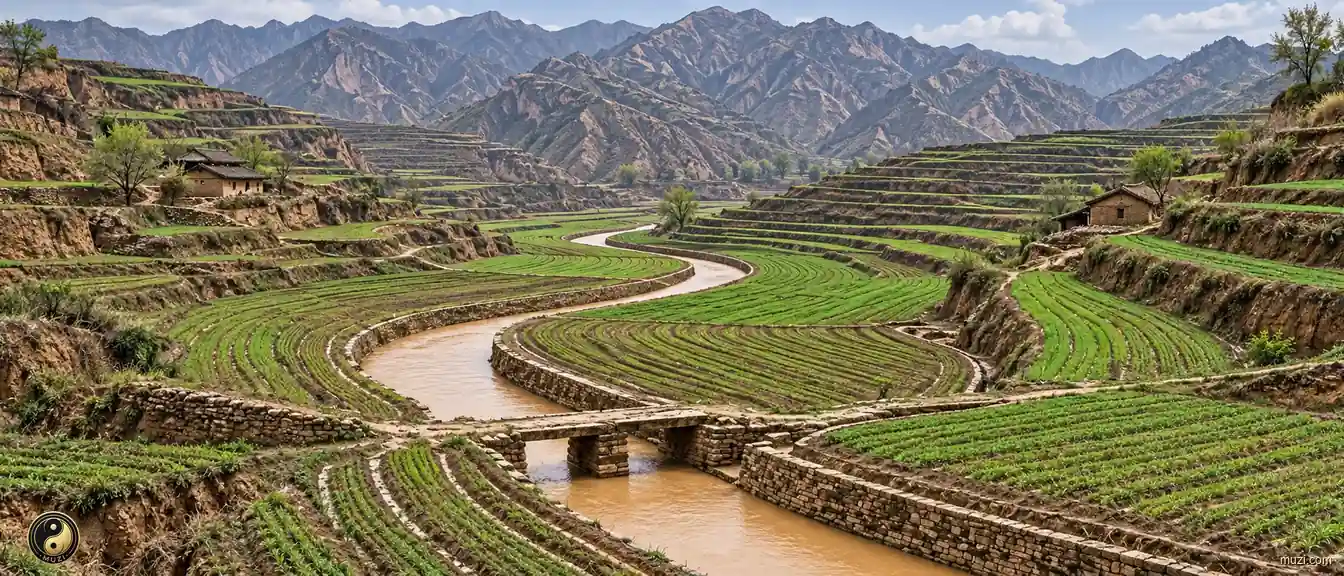
An irrigation canal that diverted silt-laden Jing River water to transform Guanzhong's saline-alkali land — a single engineering project that directly fueled Qin's war machine to conquer the six states.
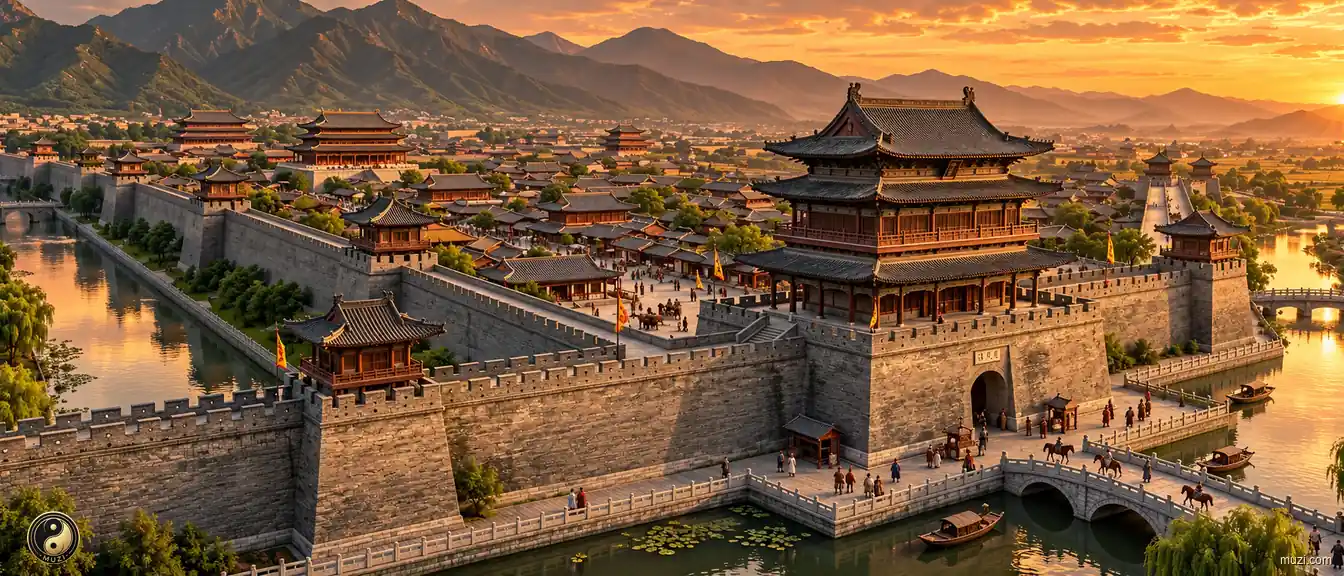
Sui-Tang Chang'an — one hundred and eight wards laid out like a chessboard grid, the largest and most orderly imperial capital planning masterpiece of the ancient world.
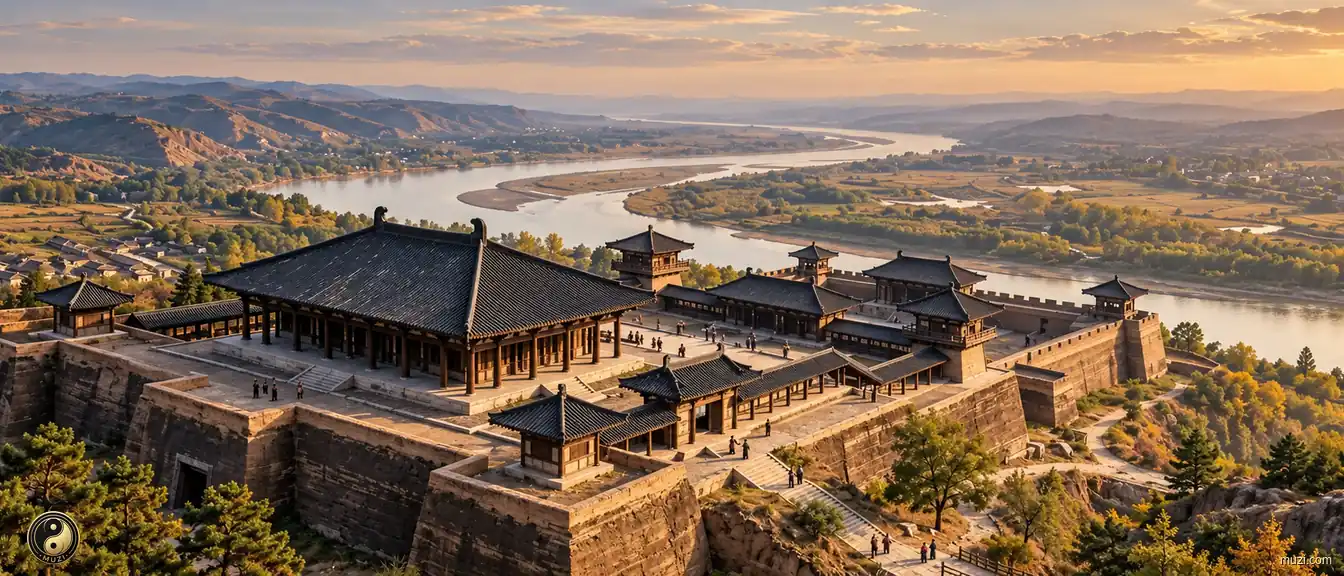
The Qin Xianyang Palace ruins — spanning the Wei River, mapping its separate halls onto the constellations, humanity's earliest super-stage for performing sovereignty through landscape geometry.
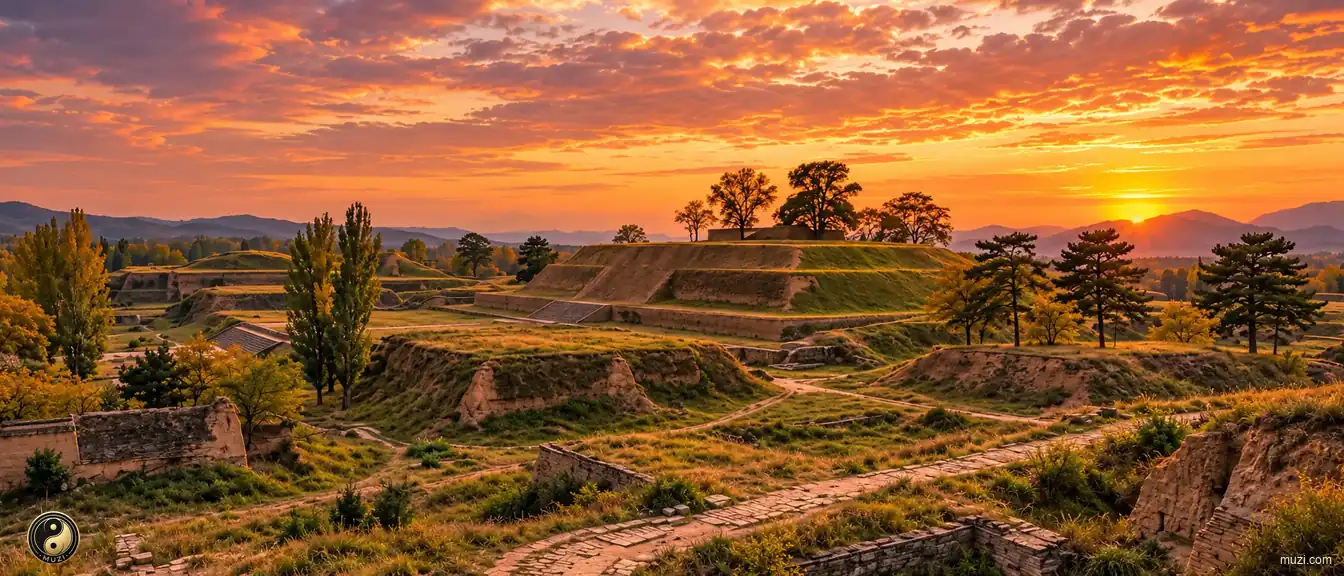
The Han Weiyang Palace ruins — a monumental palace built atop a colossal rammed-earth platform, using extreme vertical perspective to manufacture suffocating awe before imperial authority.
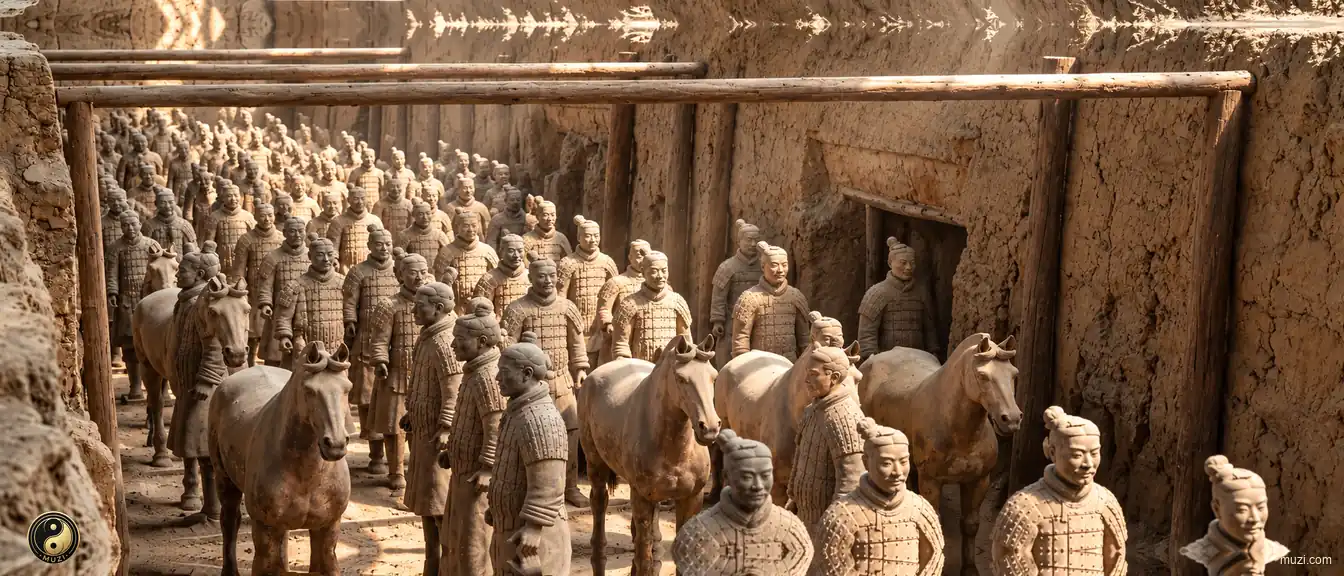
The Qin Shihuang Mausoleum — eight thousand terracotta warriors arrayed underground in full battle formation, the ultimate subterranean palace seeking to replicate supreme earthly sovereignty in the underworld.
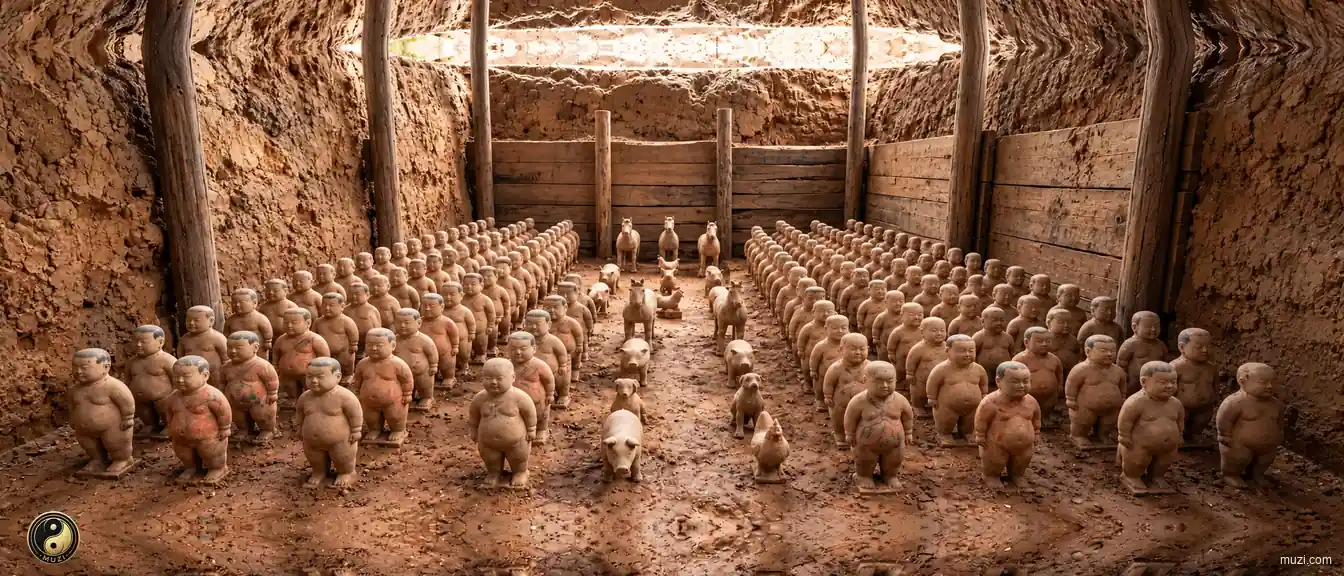
The Han Yangling Mausoleum — a vast collection of miniature pottery figurines and granary models entombed, locking state assets into an underground model, the foundational work of the Chinese imperial tomb system.
The Tang Qianling Mausoleum — using a natural double-peaked karst mountain as the tumulus, Wu Zetian's blank stele standing on the spirit way, a timeless masterpiece that lets posterity judge her merits and faults.
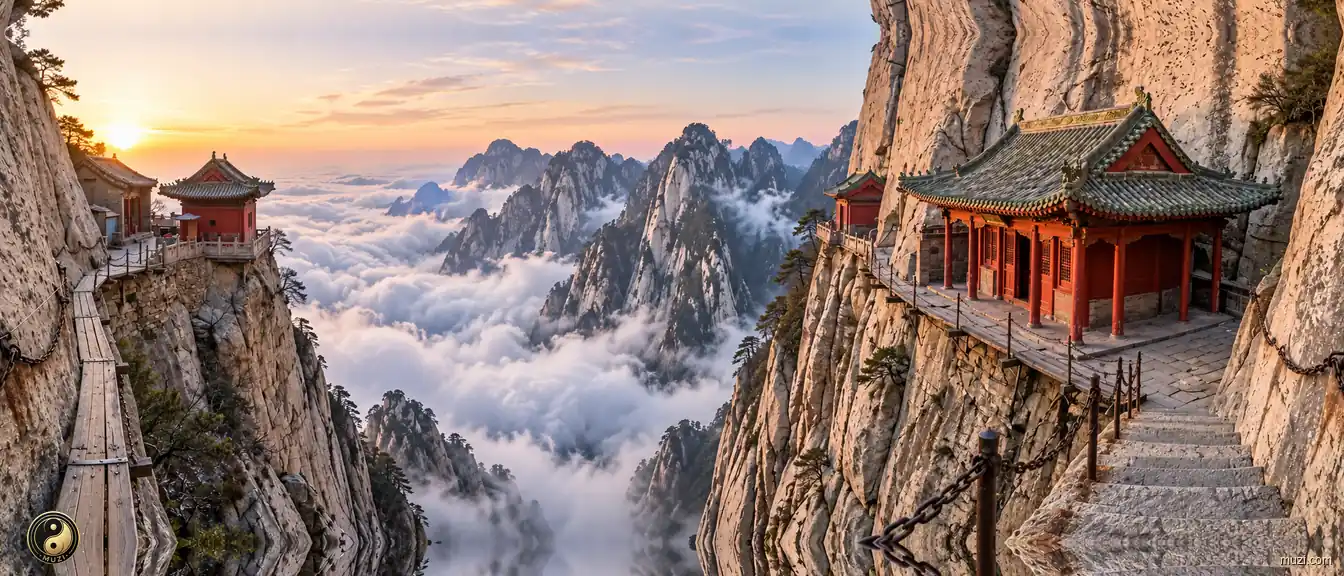
The Daoist hermitage chain clinging to Mount Hua's near-vertical cliffs — recluses compressing the bandwidth of life to its limit, a network of extreme spiritual practice pursuing absolute soul sovereignty against the most hostile gravity on Earth.
Where Shaanxi, Gansu and Sichuan meet — a town where three provinces converge; Wei Fuxuan's mansion and Huilongchang Old Street witness Republican-era border trade prosperity under a local 'warlord'.