



































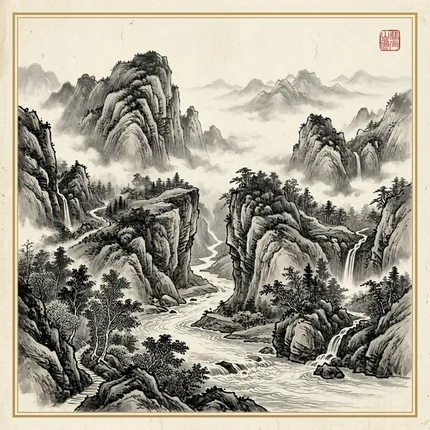
 County-level
Han Tai District
Ancient Hantai and the General-Appointing Altar of Han Xin preserve Han Dynasty founding history in Hantai, near calligraphic Shimen Inscriptions.
 MUZIChinese Matrix
Hanzhong is a refuge of the crested ibis, keeps Han and Three Kingdoms sites such as Baijiangtan and Zhuge Liang's tomb, and blooms with rapeseed each spring.
For Hanzhong, the relationship between place and life becomes visible in “Hanzhong is a refuge of the crested ibis, keeps Han and Three Kingdoms sites such as Baijiangtan and Zhuge Liang's tomb, and blooms with rapeseed each spring.” This evidence connects landform, movement, settlement, and cultural expression instead of treating them as isolated details. The present profile of Hanzhong reflects environmental adaptation and local stewardship built up over an extended period rather than a short-lived change. This process explains how Hanzhong remains connected to its surrounding region while retaining a recognizable local character. That is why Hanzhong matters: local detail can illuminate environmental setting, social process, and cultural memory together.
County-level
Ancient Hantai and the General-Appointing Altar of Han Xin preserve Han Dynasty founding history in Hantai, near calligraphic Shimen Inscriptions.
County-level
The Longgang Temple prehistoric site reveals ancient toolmaking in Nanzheng, surrounded by golden spring rapeseed seas in the Daba Mountains.
County-level
World Heritage Tomb of Zhang Qian honors the great Silk Road pioneer in Chenggu, famous for sweet golden mandarin orange harvests on Hanjiang plains.
County-level
Endangered crested ibises soar above wetlands in Yangxian, world haven for Qinling Four Treasures at Huayang Ancient Town.
County-level
Mount Wuzishan Taoist crags rise above a hundred thousand mu of organic tea terraces in Xixiang, famous for spiced dried beef delicacy.
County-level
Wuhou Shrine and the tomb of Zhuge Liang rest below Mount Dingjunshan in Mianxian, immortalizing Three Kingdoms strategic legend along Han River.
County-level
Pristine headwaters of the Hanjiang River emerge on Mount Bozhong in Ningqiang, home to the three-province border courtyards of Qingmuchuan.
County-level
Cliff inscriptions and grotto shrines at Lingyan Temple overlook Jialing River Gorge in Lueyang, famed for indigenous black-bone silky chicken.
County-level
Giant karst sinkholes of Zhenba Tiankeng Cluster plunge into subterranean chambers in Zhenba, echoing with traditional mountain folk songs.
County-level
Zhang Liang Temple honors the Han strategist amid ancient pines in Liuba, home to alpine karst sinkholes and meadows on Mount Ziboshan.
County-level
Dense bamboo forests in Foping support the highest wild giant panda population density in Qinling, leading eco-wildlife sanctuary.
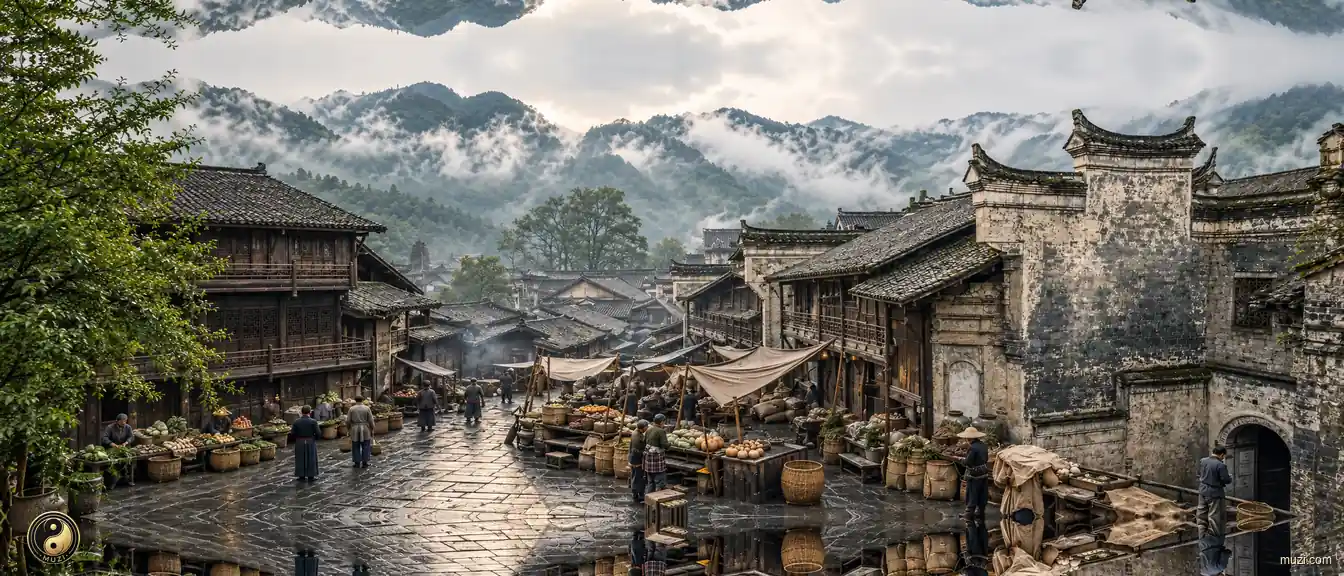
Where Shaanxi, Gansu and Sichuan meet — a town where three provinces converge; Wei Fuxuan's mansion and Huilongchang Old Street witness Republican-era border trade prosperity under a local 'warlord'.
Once the last refuge of the wild crested ibis, the bird called the jewel of the East, Yangxian is now a cradle for captive breeding and release.
View attraction
Foping holds one of the densest wild giant panda populations in the Qinling Mountains, and rare brown pandas have been sighted here several times.
View attraction
Farmers and crested ibises share these paddies, where chemical fertilisers and pesticides are banned across a showcase of organic farming culture.
View attraction
On the southern slopes of the Qinling, Zibaishan pairs karst sinkholes and caves with alpine meadows, a vital water-conserving area for the Han River basin.
View attractionI shall bend my body in devotion and exhaust my strength until death.
My orders from my king were for six hundred li of land at Shangyu; I have heard nothing of six li.
He kept Qian for more than ten years and gave him a wife, who bore him a son; but Qian held on to Han's staff of office and never lost it.
