






































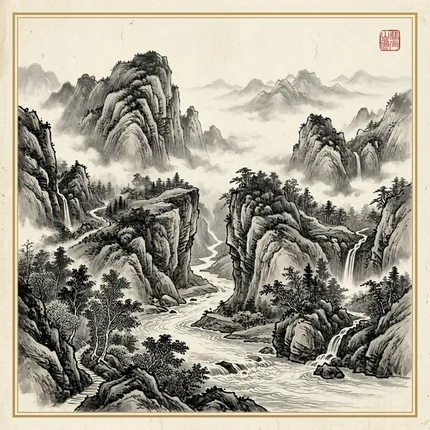
Yumen Pass Xiaofangpan City Gateway Site
Standing for centuries in the open Gobi, this earthen fort was a key Han dynasty checkpoint on the Silk Road toward the Western Regions.
View attraction MUZIChinese Matrix
World Heritage Mogao Caves house extraordinary millennia-old Buddhist murals in Dunhuang, complemented by Crescent Lake and the ancient Yumen Pass.
World Heritage Mogao Caves house extraordinary millennia-old Buddhist murals in Dunhuang, complemented by Crescent Lake and the ancient Yumen Pass.
Standing for centuries in the open Gobi, this earthen fort was a key Han dynasty checkpoint on the Silk Road toward the Western Regions.
View attraction
Layered from local reeds, red willow branches, sand and gravel, these Han ramparts survive in the desert as a living fossil of frontier building.
View attraction
Cave 96's nine-storey timber facade rises against the cliff of Mingsha Mountain, sheltering a 35.5-metre clay Maitreya, one of the largest indoor clay statues in the world.
View attraction
Originally a memorial chamber for the late-Tang monk Hongbian, the cave was found by Taoist Wang Yuanlu in 1900, sealed for centuries and holding over fifty thousand manuscripts and silk paintings.
View attraction
A fifteen-metre painted reclining Buddha from the High Tang depicts Shakyamuni entering nirvana, while the rear wall shows seventy-two disciples and foreign princes in mourning.
View attraction
Using dome-screen films and high-definition 3D scanning, this pioneering heritage digitization project preserves the desert cave art for future generations.
View attraction
About 60 km southwest of Dunhuang, the Han frontier pass south of Yumen guarded the southern Silk Road; its fort fell around 900, and Wang Wei's farewell poem made it a byword for parting.
View attractionI urge you to drain one more cup of wine: west of Yang Pass you will have no old friends.
Emperor Yuan gave him Wang Qiang, styled Zhaojun, a daughter of a good family from the rear palace.
Better to die going west than to live returning east!