
 Atlas
Atlas




























 Ngari
Ngari
A high-altitude frozen desert of extreme aridity — its absolute physical isolation gave birth to the mysterious Guge Kingdom and Zhangzhung civilization.
 Prefecture: Ngari Prefecture
 Province: Tibet
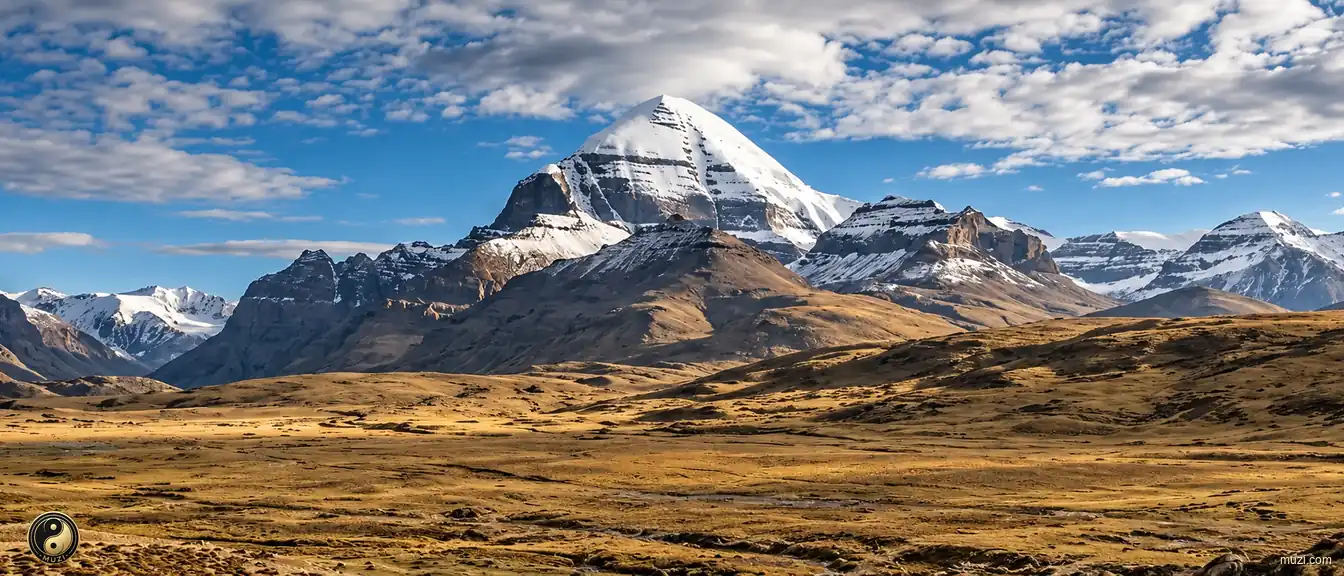
A snow-capped pyramidal mountain rises above Ngari's dry plateau, its dark rock bands overlooking ochre foothills and an open, treeless plain.
Vista3

- Mount Kailash
The sacred mountain (6638m) revered by four world religions as the spiritual center of the universe.
- Lake Manasarovar
One of the highest freshwater lakes in the world (4588m), paired with Mount Kailash as sacred water.
- Zanda Earth Forest Geopark
Vast clay-sand canyons carved over millennia, presenting surreal vistas of ancient earth palaces.
Archaeology1

- Guge Kingdom Ruins in Zanda
A dramatic cliffside fortress city holding rare Buddhist murals, the mysterious capital of Guge Kingdom.
Temple1

- Tholing Monastery
The oldest monastery in Western Tibet founded in 996 CE, cradle of the Later Diffusion of Tibetan Buddhism.
Northern and Southern1

- Khyunglung as a Zhangzhung Political Centerc. 2nd–7th century CE
Local historical material places a Zhangzhung political center at Khyunglung in the 2nd century and records its defeat by the Tibetan empire in the 7th century.
Tang1

- Kyide Nyimagon's Line Establishes GugeLate Tibetan imperial period to the tenth century, c. 900–980 CE
Around the tenth century, Tibetan royal descendant Kyide Nyimagon moved to Ngari, and his line established the Guge polity in Zanda.
Song2

- Atisha Arrives at Tholing MonasteryNorthern Song (1042 CE)
In 1042, Atisha reached Tholing at the invitation of Guge's rulers, translated texts with Rinchen Zangpo and Nagtso, and composed the Lamp for the Path to Enlightenment.
- Atisha Teaches at Tholing1042 CE
In 1042 CE, Atisha reached Tholing Monastery and worked with translators on Buddhist teaching and translation.
Ming1

- Ladakh Conquers the Guge Kingdomc. 1630 CE
Around 1630, Ladakhi forces captured Guge's royal citadel and its king, bringing the Guge polity to an end.