
 Atlas
Atlas























 Tibetan Plateau
The world's highest plateau, the Asian Water Tower and source of the Yangtze and Yellow Rivers, whose headwaters shape East Asian water systems.
 Province: Tibet
 Province: Qinghai
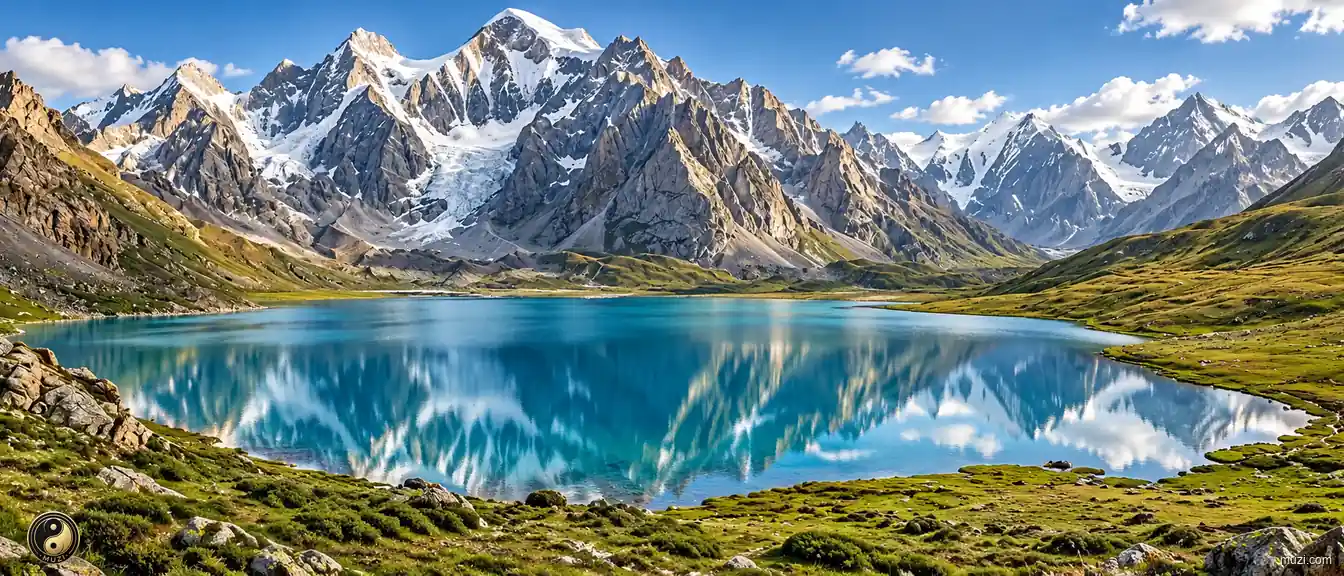
A turquoise lake on the Tibetan Plateau reflects a rugged snow-flecked mountain range, bordered by low alpine meadows and a rocky shoreline.
Natural Wonder3

- Amdo Cona Lake
One of the highest freshwater lakes in the world at 4,800m, mirrored along the Qinghai-Tibet Railway.
- Tuotuo River Source
Braided wetland headwaters of the Yangtze River fed by glacial melt beneath snow peaks.
- Changtang Nature Reserve
China's largest wild reserve, sanctuary for wild yaks, Tibetan wild asses, and pristine highland steppe.
Temple1

- Nyenchen Tanglha Viewpoint
The sacred mountain summit (7111m) dominating the Changtang plains, revered guardian deity in Tibetan tradition.
In its history3
- Songtsen Gampoc. 617–650 CE
Part of Tibetan Plateau's history: Princess Wencheng's Journey. Tibetan ruler, called Qizong Nongzan in the Tang histories, who pressed the Tang for a marriage alliance and received Princess Wencheng as his bride in 641
- Princess WenchengBirth unknown–680 CE
Part of Tibetan Plateau's history: Princess Wencheng's Journey. Tang imperial clanswoman married to the Tibetan ruler Songtsen Gampo in 641, who lived in Tibet for almost forty years until her death in 680
- Li Shimin598–649 CE
Part of Tibetan Plateau's history: Princess Wencheng's Journey. Second Tang emperor who as Prince of Qin defeated the rival regimes, seized the throne in the Xuanwu Gate coup, and reigned under the title Zhenguan
Tang2

- Princess Wencheng's Journey
Princess Wencheng married Songtsen Gampo in a Tang-Tibetan alliance that expanded exchanges of envoys, crafts, and texts between the courts.
- Princess Wencheng Travels to TibetTang Dynasty (641 CE)
In 641 Princess Wencheng married Songtsen Gampo, creating a concrete node in Tang-Tibetan court alliance and exchange.

Northern and Southern1

- Zhangzhung Civilization and Bon TraditionsAncient Zhangzhung period
Local histories associate ancient Zhangzhung with Ali in western Tibet and record traditions connecting it with Bon, writing, and plateau cultural exchange.