
 Atlas
Atlas



























 Eastern Qing Tombs
The largest imperial tomb complex inside the Great Wall — a Manchu-Han synthesis wrapping shamanic northern wildness and Confucian ritual order into the dynasty's underground ledger.
 Prefecture: Tangshan
 Province: Hebei
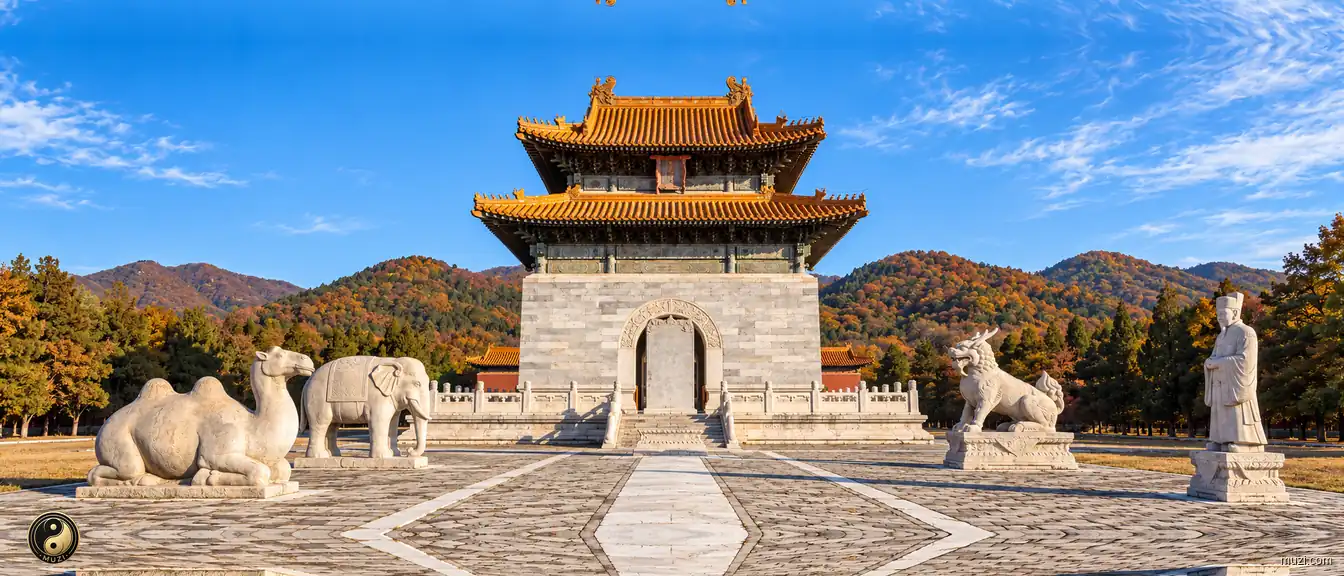
A golden-roofed Qing spirit tower rises above carved stone guardians along the autumn mountain approach.
Memorial4

- Qing Yuling Qianlong Emperor Underground Palace
Known as a treasure house of stone carving, Qianlong's underground palace has four stone doors covered with Sanskrit and Tibetan sutras and eight great bodhisattvas in high relief.
- Dingdongling Empress Dowager Cixi Gold Hall
All three halls of Cixi's tomb were built of precious huanghuali wood with gilded beams, and a carved stone ramp shows the phoenix above the dragon, a lavish break with convention.
- Qing Xiaoling Sacred Way & Grand Marble Arch
Five kilometres long, the main sacred way of the Qing Eastern Tombs passes a huge white-marble archway of five gates, six pillars and eleven roofs measuring 31.35 metres wide.
- Qing Jingling Kangxi Mausoleum & Stele Pavilion
The Kangxi Emperor rests here with four empresses, and the great stele pavilion with four cloud pillars holds a eulogy of his virtues composed by the Yongzheng Emperor.
Qing2

- Construction of Qianlong's Yuling Underground Palace1743–1773 CE
Construction of Yuling began in 1743 during Qianlong's reign and took about thirty years; its underground palace preserves Buddhist and decorative carvings.
- Dingdongling Rebuilt in the Guangxu EraGuangxu era (1875-1908)
In the Guangxu era, Cixi's Putuo Valley Dingdongling was comprehensively rebuilt as part of the Eastern Qing Tombs.
Modern1
- Eastern Qing Tombs Inscribed2000 CE
In 2000, the Eastern Qing Tombs in Hebei were inscribed as a component of the Imperial Tombs of the Ming and Qing Dynasties.