
 Atlas
Atlas





















 Sanxingdui Site
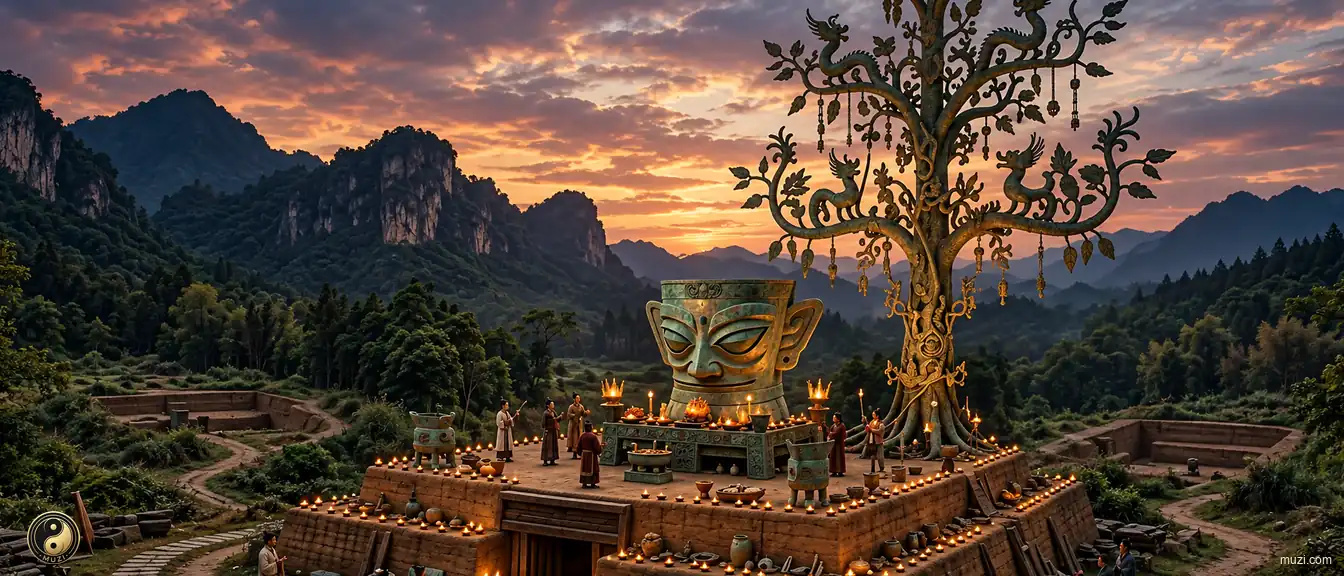
The Sanxingdui ruins — a bronze sacred tree and golden masks that stunned the world, a mysterious ancient Shu civilization center operating on a completely different ritual logic from the Yellow River basin.
 Prefecture: Deyang
 Province: Sichuan
Participants gather around Sanxingdui’s bronze mask altar beneath the branching sacred tree as twilight settles over the forested cliffs.
Archaeology3

- Sanxingdui Sacrificial Pits Excavation Site
Asleep for millennia before astonishing the world, these original pits yielded thousands of late Shang bronzes, gold masks, ivory and jade ritual objects.
- Bronze Mask & Gold Scepter Hall in Sanxingdui
Highlights include the bronze mask with protruding eyes and huge ears linked to the legendary Cancong, and a gold scepter engraved with fish, birds and arrows symbolizing royal power.
- Sanxingdui Ancient City Wall Ruins
Massive rammed-earth walls of the ancient Shu capital, over three thousand years old, testify to the diverse yet unified origins of Chinese civilization.
Civic Building1

- Bronze Figure & Divine Tree Hall in Sanxingdui
The 2.62-metre Bronze Standing Figure and the nearly four-metre Bronze Sacred Tree, unique masterpieces of the ancient Shu kingdom, reflect its worship of powers linking heaven and earth.
Shang1

- Sanxingdui Bronze Figure and Sacred-Tree Remainsc. 1201–1012 BCE
Sanxingdui ritual pits contain bronze standing figures, sacred-tree forms, and related objects; radiocarbon work places the relevant pit burials about 1201–1012 BCE, which is not identical to casting dates.