
 Atlas
Atlas





























 Mount Wutai
Mount Wutai, the bodhimanda of Manjusri — where Han, Tibetan, and Mongolian Buddhism converge, a vast ancient architectural complex built by successive dynasties through imperial patronage.
 Prefecture: Xinzhou
 Province: Shanxi
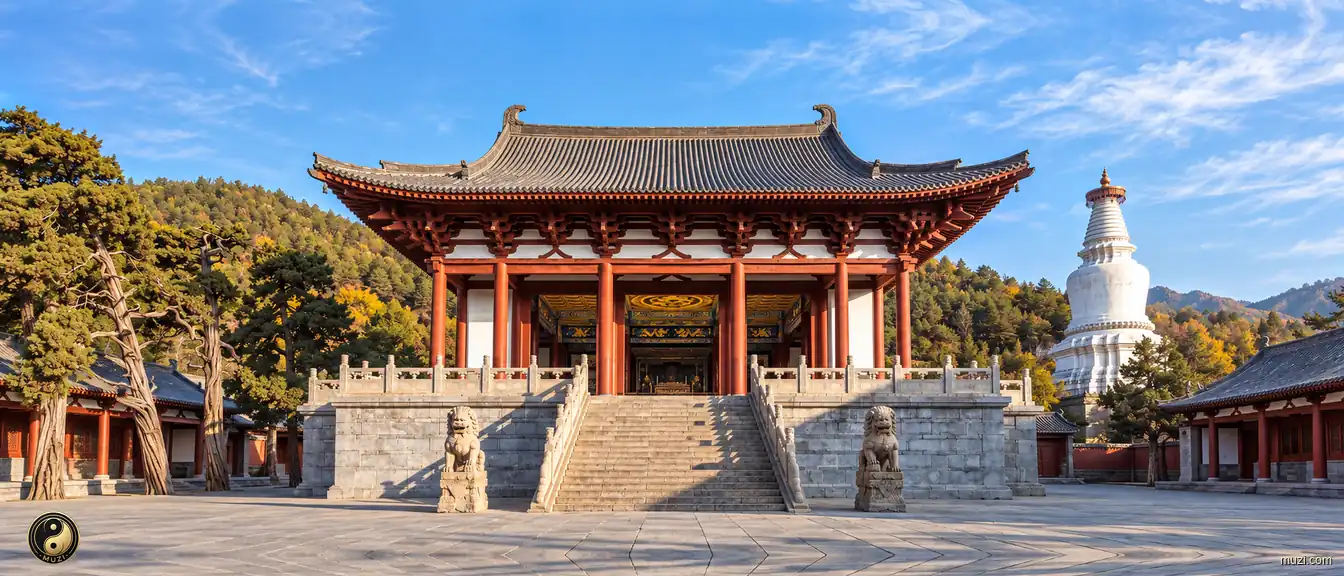
Xiantong Temple’s vermilion hall and white nine-ring pagoda rise above the stone stair and guardian lions.
Temple3

- Xiantong Temple Bronze Hall in Mount Wutai
Regarded as the first temple founded on Mount Wutai, Xiantong Temple has a Ming gilt-bronze hall cast from about fifty tonnes of copper and a beamless brick-vaulted hall.
- Pusading Imperial Tibetan Buddhist Temple in Wutai
Kangxi and Qianlong lodged at this temple on pilgrimages to Wutai, which has yellow glazed tiles, a nine-dragon stone carving and leads the mountain's Tibetan Buddhist temples.
- Shuxiang Temple Giant Manjushri Hall in Wutai
A nearly ten-metre Ming statue of Manjushri riding a green lion dominates the hall, surrounded by vivid hanging sculptures of five hundred arhats crossing the sea.
Tower1

- Tayuan Temple Great White Pagoda in Mount Wutai
The fifty-metre Nepalese-style Great White Pagoda, emblem of Mount Wutai, is said to enshrine relics of Shakyamuni and a lock of Manjushri's hair.
Han1

- Founding Tradition of Dafu Lingjiu Templec. 68 CE
Wutai's Dafu Lingjiu Temple, predecessor of Xiantong Temple, is traditionally traced to the Eastern Han Yongping era; legendary details are not treated as established fact.
Qing1

- Pusading Rebuilt in the Kangxi EraKangxi era (1661-1722)
During the Kangxi era, Pusading at Mount Wutai was rebuilt in imperial style with yellow glazed tiles and became an imperial Qing temple.
Modern1
- Mount Wutai Inscribed as World Heritage2009 CE
In 2009, Mount Wutai was inscribed for its Buddhist monasteries, pilgrimage tradition, and long interaction between sacred architecture and mountain landscape.