
 Atlas
Atlas





























 Longmen Grottoes
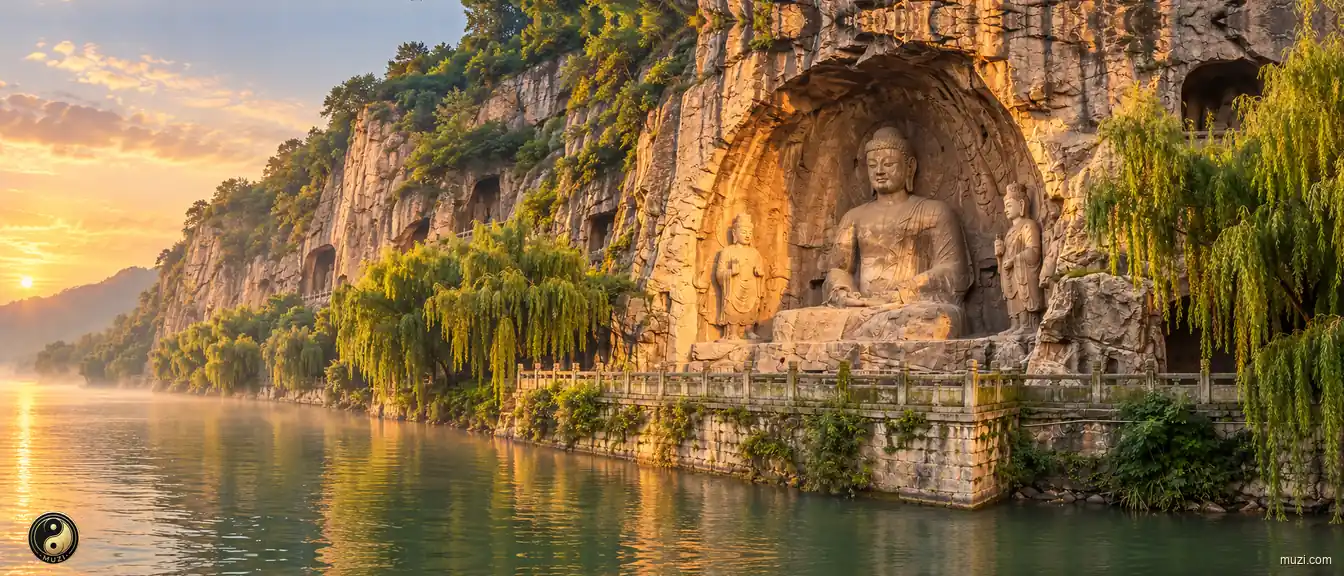
Longmen's Fengxian Temple — the Vairocana Buddha seated serenely above the Yi River, the eternal solidification of Wu Zetian's countenance and the supreme confidence of the High Tang.
 Prefecture: Luoyang
 Province: Henan
Longmen’s colossal Vairocana and attendant Buddhas overlook the willow-lined river from their limestone sanctuary.
Temple1

- Longmen Colossal Vairocana Buddha
Partly funded by Wu Zetian's gift of twenty thousand strings of cash from her cosmetics allowance, this 17.14-metre Tang Buddha wears a serene, compassionate smile and is a masterpiece of Eastern sculpture.
Vista3

- Guyang Cave in Longmen Grottoes
The earliest cave at Longmen, Guyang Cave holds nineteen of the famous Northern Wei inscriptions whose bold, square script defines the Wei stele style of calligraphy.
- Ten Thousand Buddha Cave & Apsaras in Longmen
Created under Gaozong and Wu Zetian, the cave's north and south walls carry fifteen thousand small Buddhas and graceful celestial musicians playing pipa and flute.
- Binyang Central Cave in Longmen Grottoes
Twenty-four years in the making, the cave's central Buddha wears loose Han-style robes with wide sashes, reflecting the sinicization reforms of the Xianbei court.
In its history1
- Emperor Xiaowen of Northern Wei467–499 CE
Part of Longmen Grottoes's history: Emperor Xiaowen's Reforms. Northern Wei emperor who carried out the equal-field and three-elders reforms, moved the capital to Luoyang and had the Xianbei elite take Chinese surnames, dress and speech
Northern and Southern2

- Emperor Xiaowen's Reforms
Emperor Xiaowen moved Northern Wei's capital to Luoyang and promoted Chinese surnames, dress, and language among the ruling elite.
- Northern Wei Carves Longmen's Guyangdong493–495 CE
Around Emperor Xiaowen's 493 CE move to Luoyang, carving began at Longmen; Guyangdong was opened around 495.

Tang1

- Construction of Longmen's Fengxian Vairocana Niche672–675 CE
The Fengxian Vairocana niche at Longmen was carved under Emperor Gaozong; late in the work, in 672, Empress Wu gave 20,000 strings of cash from her cosmetics allowance, and it was completed in 675.
Modern1
- Longmen Grottoes Inscribed as World Heritage2000 CE
In 2000, the Longmen Grottoes were inscribed for the creativity of their stone carvings and their importance in the cultural development of East Asia.