
 Atlas
Atlas
























 Mount Jiuhua
Mount Jiuhua, the bodhimanda of Kshitigarbha, is known for its temples and traditions of preserving monks' bodily relics.
 Prefecture: Chizhou
 Province: Anhui
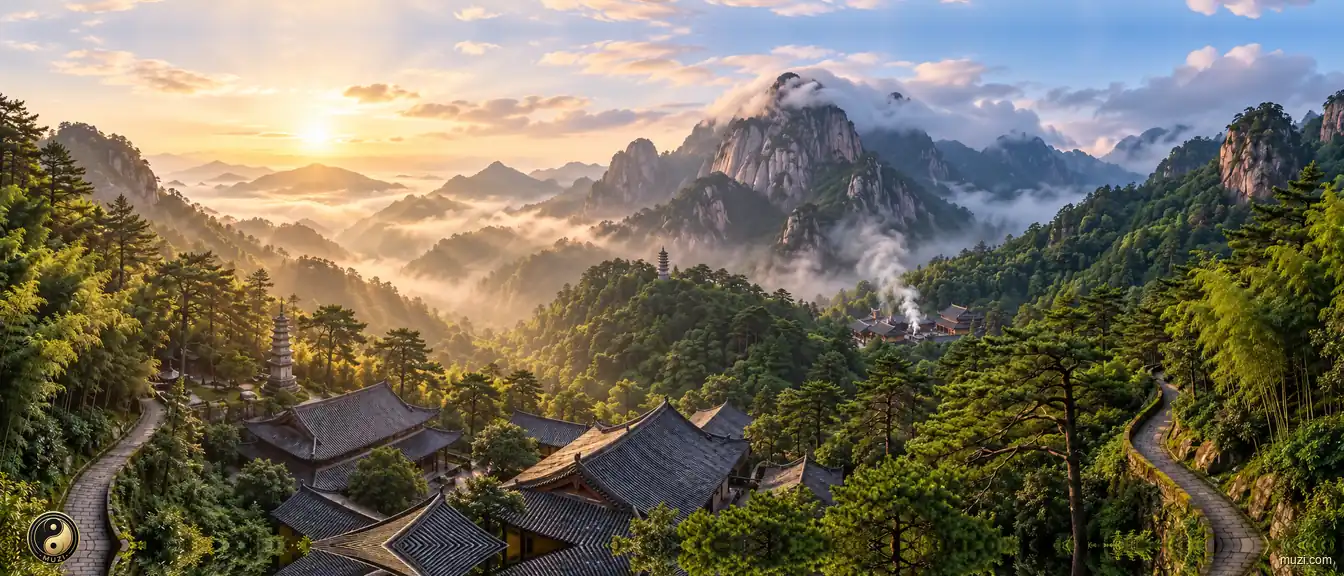
Pagodas and dark monastery roofs emerge from Jiuhua’s misty pine valley beneath granite peaks.
Temple4

- Baisuigong Temple in Mount Jiuhua
Clinging to the cliff of Chaxiao Peak, this five-storey fortress-like hall enshrines the preserved body of Wuxia, a Ming monk who copied the Avatamsaka Sutra in blood and reputedly lived to 126.
- Huacheng Temple in Mount Jiuhua
Kim Gyo-gak, a Silla prince, came to practise here in the Kaiyuan era, and after his body remained incorrupt following death he was revered as a manifestation of Ksitigarbha.
- Zhiyuan Temple in Mount Jiuhua
Standing first at the entrance to Jiuhua Street, Zhiyuan Temple is a palace-style complex of carved and painted timber, with a thousand-Buddha hall hosting grand Buddhist ceremonies.
- Tiantai Peak Dizang Temple in Mount Jiuhua
The 1,306-metre Tiantai summit lives up to the saying that Jiuhua is unseen until you reach it, with views from Pengri Pavilion over ninety-nine peaks, seas of cloud and a narrow gorge.
Tang1

- Kim Gyo-gak Enters Mount JiuhuaLate Kaiyuan era, c. 741 CE
Jiuhua tradition holds that the Silla monk Kim Gyo-gak entered the mountain near the end of the Kaiyuan era and became associated with Jiuhua's Dizang Buddhist center.
Ming1

- Haiyu Wuxia Dies at Jiuhua1623 CE
The Ming monk Haiyu (Wuxia) came to Jiuhua during the Wanli era, spent more than twenty years copying the 81-volume Huayan scripture, and died in 1623.