





 County-level
Chang An District
Dongyuan Ancient City was a stronghold of the Zhongshan state; its Qin and Han successors anchor Chang'an's heritage beside the Hutuo River.
 MUZIChinese Matrix
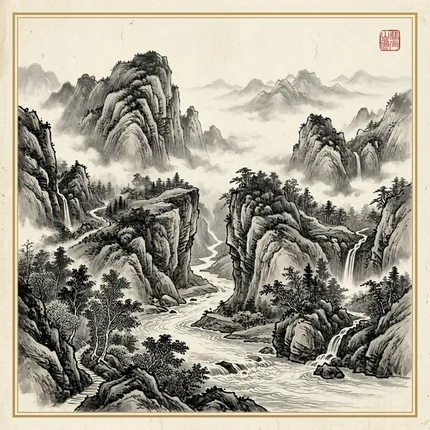
Hebei’s capital lies between the eastern Taihang foothills and the North China Plain, serving as a provincial political, commercial, and transport center.
For Shijiazhuang, the relationship between place and life becomes visible in “Hebei’s capital lies between the eastern Taihang foothills and the North China Plain, serving as a provincial political, commercial, and transport center.” This evidence connects landform, movement, settlement, and cultural expression instead of treating them as isolated details. The present profile of Shijiazhuang reflects environmental adaptation and local stewardship built up over an extended period rather than a short-lived change. This process explains how Shijiazhuang remains connected to its surrounding region while retaining a recognizable local character. That is why Shijiazhuang matters: local detail can illuminate environmental setting, social process, and cultural memory together.
County-level
Dongyuan Ancient City was a stronghold of the Zhongshan state; its Qin and Han successors anchor Chang'an's heritage beside the Hutuo River.
County-level
Qiaoxi once lay between Zhongshan and Zhao and later belonged to Shiyi; the sounds of Xiumen wind music preserve the southern old city's local memory.
County-level
Facing the Taihang Mountains and resting along the Hutuo River, Xinhua's foothills and riverbanks shape the northwestern edge of Shijiazhuang.
County-level
Qingliang Mountain and Jiazhuang Old Town preserve an ancient scholar tree, traditional dwellings, and folk traces that lend the Taihang valley an older character.
County-level
Named for Yuhua Road, meaning prosperity and splendor, the district carries local handcraft traditions through miniature monkey figures and tiger-head clothing.
County-level
Gaocheng was first established as a county in the Western Han and later hosted Lianzhou; palace lanterns and smoked-meat traditions enliven its ancient lineage.
County-level
Long known as Huolu, Luquan carries its mountain heritage through Fenglong Mountain, Baodu Stronghold, and old villages along the eastern Taihang foothills.
County-level
Named for the fief of Jin minister Luan Shu, Luancheng preserves Luanwutai, Su Weidao's tomb, and the ancestral tradition of the Three Su.
County-level
The ancient Jingxing Pass crosses the Taihang Mountains, where the Battle of the Backwater, historic villages, and Lahua dance layer a millennium of frontier memory.
County-level
Longxing Temple, Kaiyuan Temple, the city wall, and four ancient pagodas make Zhengding's Buddhist architecture and prefectural plan legible across the centuries.
County-level
At Xingtang, the Taihang foothills ease into the North China Plain, forming a landscape of low mountains, hills, and cultivated flats.
County-level
Lingshou once held the capital of the Zhongshan state and became a county in 206 BCE, preserving that ancient kingdom's imprint east of the Taihang.
County-level
Long known as Fengcheng, Gaoyi is remembered as the place where Liu Xiu ascended the throne, binding the county to early Han history.
County-level
Shenze was already a county in Han times; its Ming-era Zhenwu Temple and Confucian Temple preserve the ritual landscape of an old county town.
County-level
Zanhuang County was founded in 596 and named for Mount Zanhuang, binding the mountain and county across more than fourteen centuries.
County-level
The name Wuji has endured since the reign of Wu Zetian, while Wuji paper-cutting carries local visual traditions into the present.
County-level
Zhongshan's royal city and tombs lie across Pingshan, where ritual vessels, chariot fittings, and gold-and-silver inlays reveal the ancient kingdom's material world.
County-level
Yuanshi took its name from Prince Yuan's fief in the Zhao state and later served as the seat of Hengshan Commandery under the Western Han.
County-level
Zhaozhou Bridge, Yongtong Bridge, and the Dharani pillar stand across ancient Zhaozhou, setting Sui-Tang bridgecraft beside a lasting tradition of stone carving.
County-level
The Ming market of Xinji grew from several villages and later changed its written first character; its old title, Zhili's foremost market, recalls an early trading center.
County-level
The hometown of Tang statesman Wei Zheng is also celebrated for Jinzhou pears, joining a scholarly legacy with the memory of a northern fruit-growing region.
County-level
Fuxi Terrace and Xinle's Confucian Temple preserve traditions of ancestral worship and classical learning, while the Sha River carries the city's plainland watercourse.
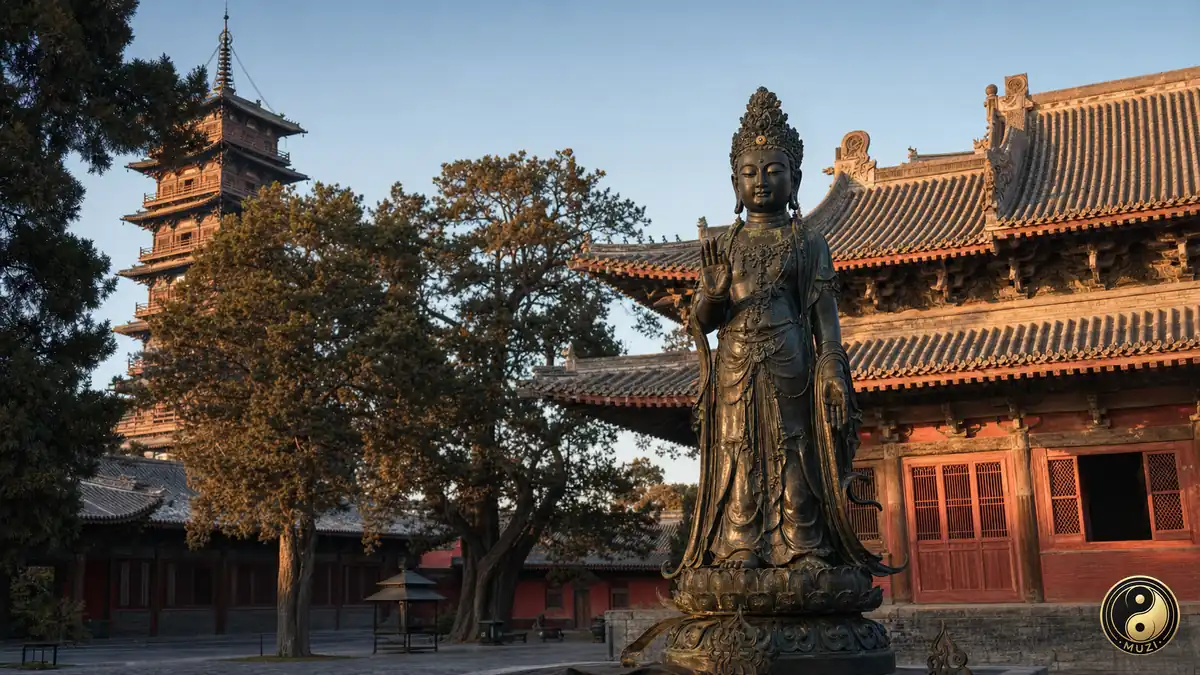
Zhengding preserves an ancient Buddhist landscape, Longxing Temple's cast-bronze Guanyin, Linji Temple heritage, and a Dream of the Red Chamber film set.