





 County-level
Yu Shu City
Stately Gyegu Monastery rises above the valley, where Princess Wencheng Temple and the Jiana Mani Stone Mound mark the ancient Tang-Tibet road.
 MUZIChinese Matrix
In Yushu Tibetan Autonomous Prefecture, wetland habitats and waterside routines reveal a deeper local trajectory.
For Yushu, the relationship between place and life becomes visible in “Wetland habitats and waterside routines reveal a deeper local trajectory.” This evidence connects landform, movement, settlement, and cultural expression instead of treating them as isolated details. The present profile of Yushu reflects environmental adaptation and local stewardship built up over an extended period rather than a short-lived change. This process explains how Yushu remains connected to its surrounding region while retaining a recognizable local character. That is why Yushu matters: local detail can illuminate environmental setting, social process, and cultural memory together.
County-level
Stately Gyegu Monastery rises above the valley, where Princess Wencheng Temple and the Jiana Mani Stone Mound mark the ancient Tang-Tibet road.
County-level
Glacial streams from Mount Guozongmucha give birth to the Lancang River, carving deep gorges that shelter rare snow leopards.
County-level
Sacred peaks of Mount Gaduojuewu overlook the cliffside rock art and ancient stone villages bordering the winding Tongtian River.
County-level
Wilderness sweeps across Hoh Xil, where melting glaciers from Geladandong Peak form the headwaters of the Yangtze River.
County-level
Historic salt pans along the Zhaqu River nourished centuries of trade across the ancient kingdom of Nangqen and its caravan trails.
County-level
Bubbling spring basins in the Yoguzonglie depression nourish the very first streams of the Yellow River beneath rugged glacial ridges.
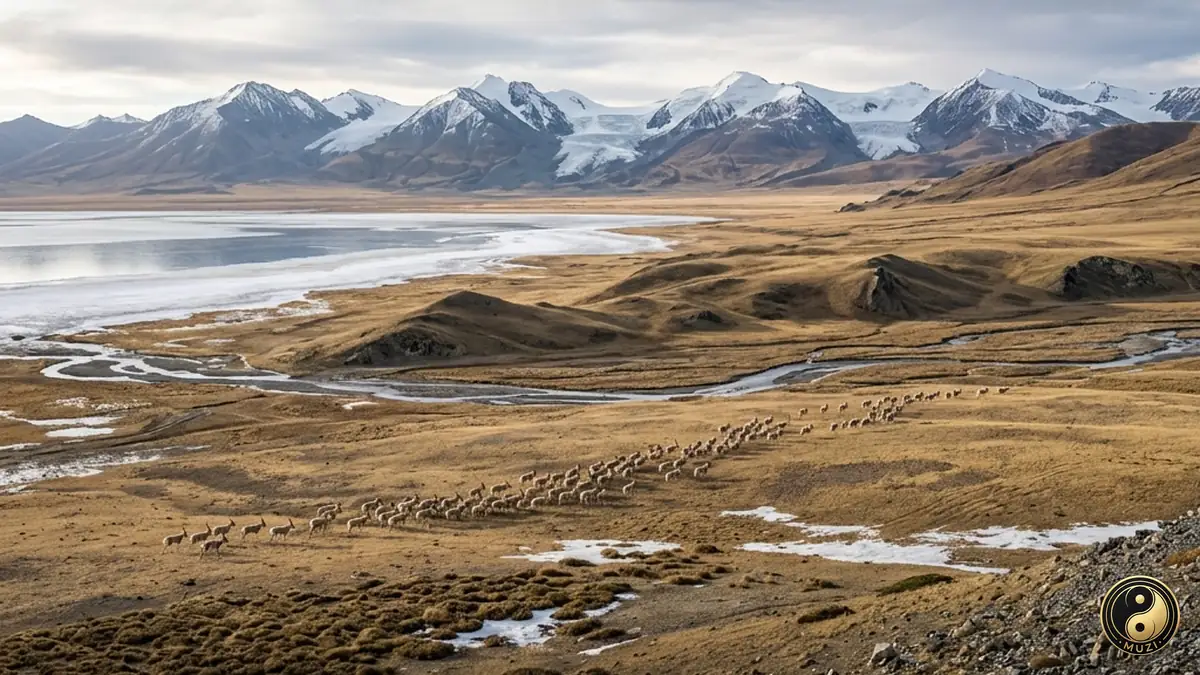
The uninhabited zone of the Third Pole — where Tibetan antelope stage their spectacular annual migration in one of the least-touched wildernesses on Earth.