
 Atlas
Atlas Jingdezhen
 Yangzhou
 Wuzhen
 Suzhou
 Pingyao Ancient City
 Fenghuang Ancient Town
 Hongcun
 Xitang
 Langzhong Ancient City
 Shaxi Ancient Town
 Lijiang Ancient Town
 Kaiping Diaolou
 Jiufen
 Wudianshi
 Foshan
 Tunxi Old Street
 Zhouzhuang
 Xidi
Xidi Nanxun Ancient Town
 Dali Ancient City
 Huizhou Ancient City
 Zhenyuan Ancient City
 Zhujiajiao Ancient Town
 Wuyuan Ancient Town
 Huangyao Ancient Town
 Heshun Ancient Town
 Shuhe Ancient Town
 Ciqikou Ancient Town
 Mudu Ancient Town
 Luzhi Ancient Town
 Anchang Ancient Town
 Jinxi Ancient Town
 Furong Ancient Town
 Qingyan Ancient Town
 Yunshuiyao Ancient Town
 Gongtan Ancient Town
 Chikan Ancient Town
 Luodai Ancient Town
 Qiandeng Ancient Town
 Cicheng Ancient Town
 Qikou Ancient Town
 Hongjiang Ancient Commercial City
 Yaoli Ancient Town
 Qiantong Ancient Town
 Nianbadu Ancient Town
 Sanhe Ancient Town
 Zhangzhou Ancient City
 Guandu Ancient Town
 Lukang Old Street
 Tamsui Old Street
 Anping Old Street
 Huanglongxi Ancient Town
 Pingle Ancient Town
 Zhoucun Ancient Commercial City
 Taierzhuang Ancient City
 Qingzhou Ancient City
 Zhuxian Town
 Sheqi Ancient Town
 Zhengding Ancient City
 Shanhaiguan Ancient City
 Yangliuqing Ancient Town
 Tianshui Ancient City
 Jingzhou Ancient City
 Qingmuchuan Ancient Town












 Historic CitiesJingdezhenYangzhouWuzhenSuzhouPingyao Ancient CityFenghuang Ancient TownHongcunXitangLangzhong Ancient CityShaxi Ancient TownLijiang Ancient TownKaiping DiaolouJiufenWudianshiFoshanTunxi Old StreetZhouzhuangXidiNanxun Ancient TownDali Ancient CityHuizhou Ancient CityZhenyuan Ancient CityZhujiajiao Ancient TownWuyuan Ancient TownHuangyao Ancient TownHeshun Ancient TownShuhe Ancient TownCiqikou Ancient TownMudu Ancient TownLuzhi Ancient TownAnchang Ancient TownJinxi Ancient TownFurong Ancient TownQingyan Ancient TownYunshuiyao Ancient TownGongtan Ancient TownChikan Ancient TownLuodai Ancient TownQiandeng Ancient TownCicheng Ancient TownQikou Ancient TownHongjiang Ancient Commercial CityYaoli Ancient TownQiantong Ancient TownNianbadu Ancient TownSanhe Ancient TownZhangzhou Ancient CityGuandu Ancient TownLukang Old StreetTamsui Old StreetAnping Old StreetHuanglongxi Ancient TownPingle Ancient TownZhoucun Ancient Commercial CityTaierzhuang Ancient CityQingzhou Ancient CityZhuxian TownSheqi Ancient TownZhengding Ancient CityShanhaiguan Ancient CityYangliuqing Ancient TownTianshui Ancient CityJingzhou Ancient CityQingmuchuan Ancient Town
Pingyao Ancient City
Pingyao is one of the best-preserved Ming-Qing walled cities, with Shanxi merchant finance and inland silver routes embedded in its urban fabric.
 Prefecture: Jinzhong
 Province: Shanxi
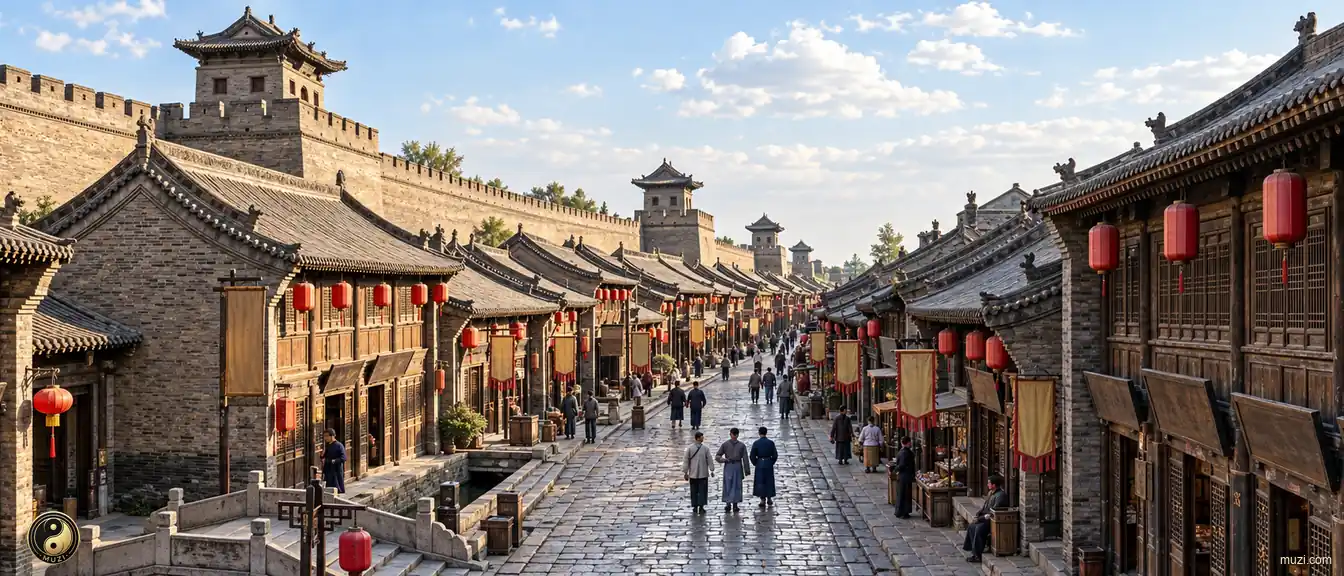
Residents and visitors walk Pingyao’s stone lane beneath grey watchtowers, past wooden shops glowing with red lanterns.
Gate & Wall1

- Pingyao Ancient City Wall & Market Tower
Encircling Pingyao, one of China's best-preserved Ming brick-and-stone walls bristles with barbicans, watchtowers and battlements laid out in a turtle-shaped plan.
Civic Building2

- Rishengchang Draft Bank in Pingyao
Founded by Shanxi merchant Lei Lutai, Rishengchang was China's first firm dedicated to remittances and led the nation's finance for more than a century.
- Pingyao Ancient County Yamen Complex
Laid out with strict order, Pingyao's yamen is among the largest and most complete county-level government compounds surviving from imperial China.
Temple1

- Pingyao Qingxuguan Taoist Temple
First built under Emperor Gaozong of the Tang, this grand Taoist temple features a Yuan hanging-beam structure in its Dragon and Tiger Hall and fine murals.
Zhou1

- Yin Jifu and the Pingyao WallKing Xuan's reign, c. 827–823 BCE
A local gazetteer tradition places Yin Jifu's troops at ancient Pingyao after the Xianyun campaign and credits them with expanding the wall.
Qing1

- Lei Lütai Helps Found Rishengchang1823 CE
In 1823 the Pingyao Xiyucheng pigment firm was converted into Rishengchang, an important early milestone in China's draft-bank finance.
Modern1
- Ancient Ping Yao Inscribed1997 CE
In 1997, Ping Yao was inscribed for its exceptionally preserved Ming–Qing urban fabric and its social, economic, and religious record.