
 Atlas
Atlas Jingdezhen
 Yangzhou
 Wuzhen
 Suzhou
 Pingyao Ancient City
 Fenghuang Ancient Town
 Hongcun
 Xitang
 Langzhong Ancient City
 Shaxi Ancient Town
 Lijiang Ancient Town
 Kaiping Diaolou
 Jiufen
 Wudianshi
 Foshan
 Tunxi Old Street
 Zhouzhuang
 Xidi
Xidi Nanxun Ancient Town
 Dali Ancient City
 Huizhou Ancient City
 Zhenyuan Ancient City
 Zhujiajiao Ancient Town
 Wuyuan Ancient Town
 Huangyao Ancient Town
 Heshun Ancient Town
 Shuhe Ancient Town
 Ciqikou Ancient Town
 Mudu Ancient Town
 Luzhi Ancient Town
 Anchang Ancient Town
 Jinxi Ancient Town
 Furong Ancient Town
 Qingyan Ancient Town
 Yunshuiyao Ancient Town
 Gongtan Ancient Town
 Chikan Ancient Town
 Luodai Ancient Town
 Qiandeng Ancient Town
 Cicheng Ancient Town
 Qikou Ancient Town
 Hongjiang Ancient Commercial City
 Yaoli Ancient Town
 Qiantong Ancient Town
 Nianbadu Ancient Town
 Sanhe Ancient Town
 Zhangzhou Ancient City
 Guandu Ancient Town
 Lukang Old Street
 Tamsui Old Street
 Anping Old Street
 Huanglongxi Ancient Town
 Pingle Ancient Town
 Zhoucun Ancient Commercial City
 Taierzhuang Ancient City
 Qingzhou Ancient City
 Zhuxian Town
 Sheqi Ancient Town
 Zhengding Ancient City
 Shanhaiguan Ancient City
 Yangliuqing Ancient Town
 Tianshui Ancient City
 Jingzhou Ancient City
 Qingmuchuan Ancient Town












 Historic CitiesJingdezhenYangzhouWuzhenSuzhouPingyao Ancient CityFenghuang Ancient TownHongcunXitangLangzhong Ancient CityShaxi Ancient TownLijiang Ancient TownKaiping DiaolouJiufenWudianshiFoshanTunxi Old StreetZhouzhuangXidiNanxun Ancient TownDali Ancient CityHuizhou Ancient CityZhenyuan Ancient CityZhujiajiao Ancient TownWuyuan Ancient TownHuangyao Ancient TownHeshun Ancient TownShuhe Ancient TownCiqikou Ancient TownMudu Ancient TownLuzhi Ancient TownAnchang Ancient TownJinxi Ancient TownFurong Ancient TownQingyan Ancient TownYunshuiyao Ancient TownGongtan Ancient TownChikan Ancient TownLuodai Ancient TownQiandeng Ancient TownCicheng Ancient TownQikou Ancient TownHongjiang Ancient Commercial CityYaoli Ancient TownQiantong Ancient TownNianbadu Ancient TownSanhe Ancient TownZhangzhou Ancient CityGuandu Ancient TownLukang Old StreetTamsui Old StreetAnping Old StreetHuanglongxi Ancient TownPingle Ancient TownZhoucun Ancient Commercial CityTaierzhuang Ancient CityQingzhou Ancient CityZhuxian TownSheqi Ancient TownZhengding Ancient CityShanhaiguan Ancient CityYangliuqing Ancient TownTianshui Ancient CityJingzhou Ancient CityQingmuchuan Ancient Town
Wudianshi
A dense lineage-based red-brick settlement on the southern Fujian coast — swallowtail ridges and brick-in-stone craftsmanship, witnessing the wealth and faith of Minnan clans on the Maritime Silk Road diaspora.
 Prefecture: Quanzhou
 Province: Fujian
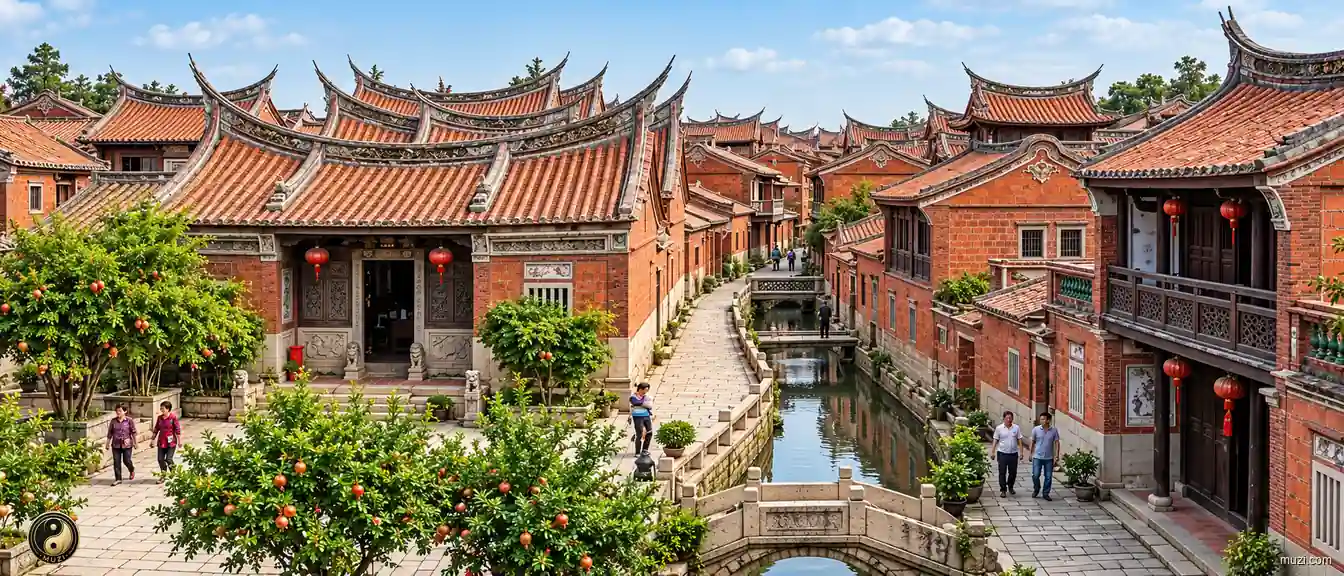
Residents walk beside Wudianshi’s canal through red-brick courtyards, where swallowtail roofs and pomegranate trees line the lanes.
Temple2

- Wudianshi Cai Clan Ancestral Shrine
As the founding home of the Jinjiang Cai clan, this shrine keeps a well-preserved Ming palace-style mansion and a plaque bestowed by the emperor.
- Zhuang Clan Ancestral Hall in Wudianshi
Honoring the Zhuang brothers, including anti-pirate hero Zhuang Yongbin, who passed the imperial exams, this clan temple features a finely carved Ming stone archway.
Residence1

- Red Brick Court Mansions in Wudianshi
Walls of mixed brick and stone, red tiles, soaring swallowtail ridges and fine wood, stone and brick carving make these homes model southern Fujian dwellings.
Memorial1

- Wanshi Tianhou Temple in Wudianshi
Deep within the district stands a Mazu temple that protected merchants sailing abroad, together with an old shrine to the Song-era Xuantian god.
Ming1

- Zhuang Yongbin Residence Built in 15401540 CE
Jinjiang municipal records date Zhuang Yongbin's residence to 1540 and identify it as a representative Ming-era southern Fujian building.
Tang1

- Wudianshi Emerges in QingyangTang Kaiyuan era
Local historical tradition says that during the Tang Kaiyuan era, the Qingyang Cai lineage opened five food shops beside the road, giving rise to Wudianshi.