
 Atlas
Atlas Jingdezhen
 Yangzhou
 Wuzhen
 Suzhou
 Pingyao Ancient City
 Fenghuang Ancient Town
 Hongcun
 Xitang
 Langzhong Ancient City
 Shaxi Ancient Town
 Lijiang Ancient Town
 Kaiping Diaolou
 Jiufen
 Wudianshi
 Foshan
 Tunxi Old Street
 Zhouzhuang
 Xidi
Xidi Nanxun Ancient Town
 Dali Ancient City
 Huizhou Ancient City
 Zhenyuan Ancient City
 Zhujiajiao Ancient Town
 Wuyuan Ancient Town
 Huangyao Ancient Town
 Heshun Ancient Town
 Shuhe Ancient Town
 Ciqikou Ancient Town
 Mudu Ancient Town
 Luzhi Ancient Town
 Anchang Ancient Town
 Jinxi Ancient Town
 Furong Ancient Town
 Qingyan Ancient Town
 Yunshuiyao Ancient Town
 Gongtan Ancient Town
 Chikan Ancient Town
 Luodai Ancient Town
 Qiandeng Ancient Town
 Cicheng Ancient Town
 Qikou Ancient Town
 Hongjiang Ancient Commercial City
 Yaoli Ancient Town
 Qiantong Ancient Town
 Nianbadu Ancient Town
 Sanhe Ancient Town
 Zhangzhou Ancient City
 Guandu Ancient Town
 Lukang Old Street
 Tamsui Old Street
 Anping Old Street
 Huanglongxi Ancient Town
 Pingle Ancient Town
 Zhoucun Ancient Commercial City
 Taierzhuang Ancient City
 Qingzhou Ancient City
 Zhuxian Town
 Sheqi Ancient Town
 Zhengding Ancient City
 Shanhaiguan Ancient City
 Yangliuqing Ancient Town
 Tianshui Ancient City
 Jingzhou Ancient City
 Qingmuchuan Ancient Town












 Historical Villages & TownsJingdezhenYangzhouWuzhenSuzhouPingyao Ancient CityFenghuang Ancient TownHongcunXitangLangzhong Ancient CityShaxi Ancient TownLijiang Ancient TownKaiping DiaolouJiufenWudianshiFoshanTunxi Old StreetZhouzhuangXidiNanxun Ancient TownDali Ancient CityHuizhou Ancient CityZhenyuan Ancient CityZhujiajiao Ancient TownWuyuan Ancient TownHuangyao Ancient TownHeshun Ancient TownShuhe Ancient TownCiqikou Ancient TownMudu Ancient TownLuzhi Ancient TownAnchang Ancient TownJinxi Ancient TownFurong Ancient TownQingyan Ancient TownYunshuiyao Ancient TownGongtan Ancient TownChikan Ancient TownLuodai Ancient TownQiandeng Ancient TownCicheng Ancient TownQikou Ancient TownHongjiang Ancient Commercial CityYaoli Ancient TownQiantong Ancient TownNianbadu Ancient TownSanhe Ancient TownZhangzhou Ancient CityGuandu Ancient TownLukang Old StreetTamsui Old StreetAnping Old StreetHuanglongxi Ancient TownPingle Ancient TownZhoucun Ancient Commercial CityTaierzhuang Ancient CityQingzhou Ancient CityZhuxian TownSheqi Ancient TownZhengding Ancient CityShanhaiguan Ancient CityYangliuqing Ancient TownTianshui Ancient CityJingzhou Ancient CityQingmuchuan Ancient Town
Hongcun
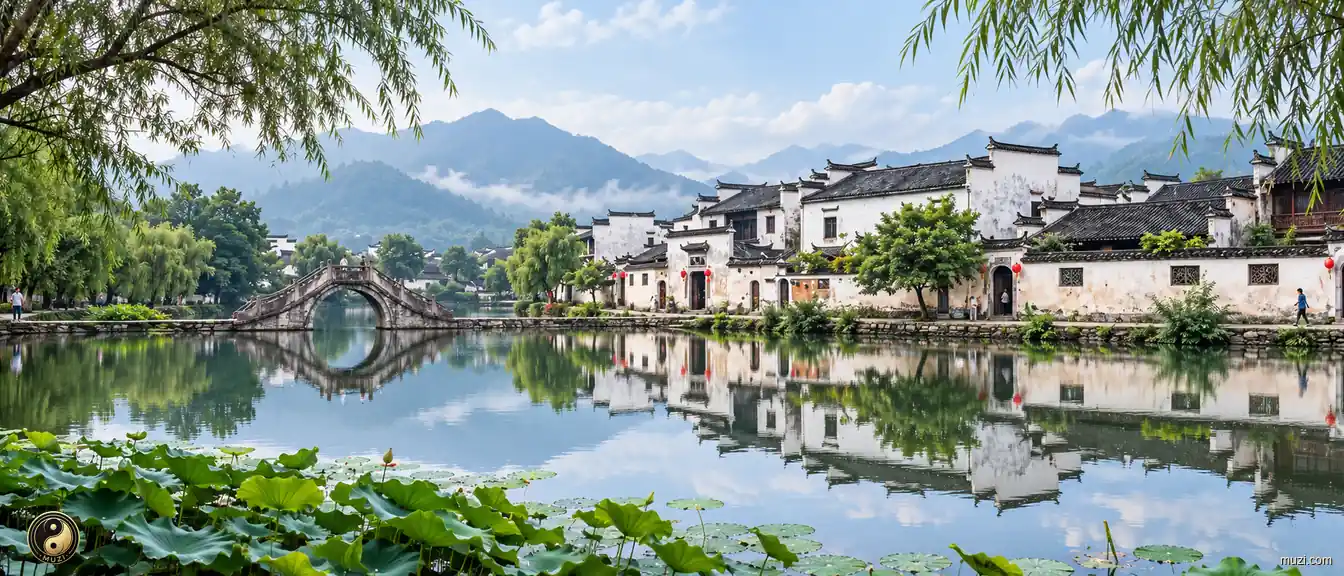
Hongcun's ox-shaped layout, Moon Pond, and water channels turn gravity-fed planning into a distinctive Huizhou village landscape.
 Prefecture: Huangshan
 Province: Anhui
Hongcun residents and visitors pass beside Moon Pond, where white Huizhou houses and red lanterns reflect in the water.
Temple1

- Hongcun Moon Marsh & Wang Clan Ancestral Hall
Curved like a half moon, this man-made pond forms the village's ox stomach, mirroring white walls, black tiles, horse-head gables and a Ming ancestral hall.
Civic Building1

- Hongcun South Lake & Nanhu Academy
Wide and mirror-like, South Lake forms the ox belly of Hongcun, crossed by a painted bridge and fronted by an academy known for its scholarly tradition.
Residence2

- Chengzhitang Folk Imperial Palace in Hongcun
Late-Qing salt merchant Wang Dinggui built this Huizhou mansion, with gilded beams and an exquisite carving of a hundred children celebrating the Lantern Festival.
- Shurentang & Taoyuanju Folk Houses in Hongcun
Dedicated to cultivating virtue, these homes preserve fine Huizhou brick carvings, including a gate tower showing a hundred birds paying homage to the phoenix.
Qing1

- Chengzhitang Is Built in Hongcun, 18551855 CE
In 1855, the Chengzhitang residence of Hongcun salt merchant Wang Dinggui was completed and became part of Hongcun's surviving Qing-era architecture.
Modern1
- Xidi and Hongcun Inscribed2000 CE
In 2000, Xidi and Hongcun were inscribed for their exceptionally preserved traditional settlements, street plans, water systems, and Huizhou residences.
Ming1

- Hongcun Waterworks Built in Yongle EraMing Yongle era
During the Ming Yongle era, Hongcun residents brought water into the village and built channels and Moon Pond as the first phase of its planned water system.