
 Atlas
 Jingdezhen
 Yangzhou
 Wuzhen
 Suzhou
 Pingyao Ancient City
 Fenghuang Ancient Town
 Hongcun
 Xitang
 Langzhong Ancient City
 Shaxi Ancient Town
 Lijiang Ancient Town
 Kaiping Diaolou
 Jiufen
 Wudianshi
 Foshan
 Tunxi Old Street
 Zhouzhuang
 Xidi
 Nanxun Ancient Town
 Dali Ancient City
 Huizhou Ancient City
 Zhenyuan Ancient City
 Zhujiajiao Ancient Town
 Wuyuan Ancient Town
 Huangyao Ancient Town
 Heshun Ancient Town
 Shuhe Ancient Town
 Ciqikou Ancient Town
 Mudu Ancient Town
 Luzhi Ancient Town
 Anchang Ancient Town
 Jinxi Ancient Town
 Furong Ancient Town
 Qingyan Ancient Town
 Yunshuiyao Ancient Town
 Gongtan Ancient Town
 Chikan Ancient Town
 Luodai Ancient Town
 Qiandeng Ancient Town
 Cicheng Ancient Town
 Qikou Ancient Town
 Hongjiang Ancient Commercial City
 Yaoli Ancient Town
 Qiantong Ancient Town
 Nianbadu Ancient Town
 Sanhe Ancient Town
 Zhangzhou Ancient City
 Guandu Ancient Town
 Lukang Old Street
 Tamsui Old Street
 Anping Old Street
 Huanglongxi Ancient Town
 Pingle Ancient Town
 Zhoucun Ancient Commercial City
 Taierzhuang Ancient City
 Qingzhou Ancient City
 Zhuxian Town
 Sheqi Ancient Town
 Zhengding Ancient City
 Shanhaiguan Ancient City
 Yangliuqing Ancient Town
 Tianshui Ancient City
 Jingzhou Ancient City
 Qingmuchuan Ancient Town













Yangliuqing Ancient Town
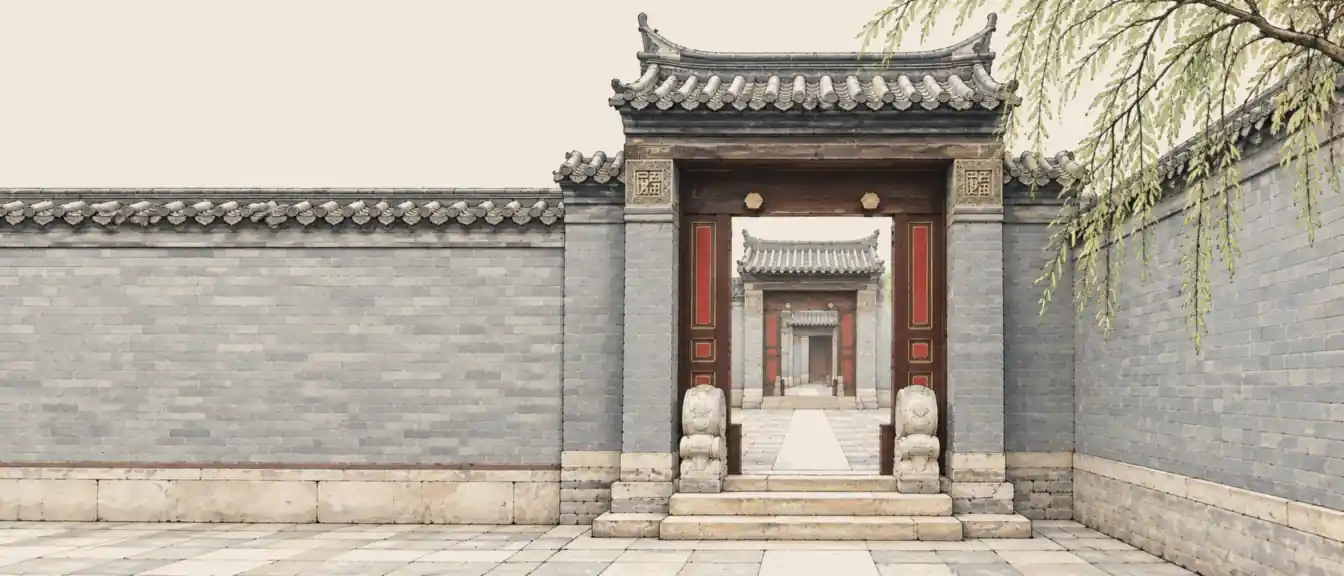
Hometown of China's woodblock New Year prints; northern folk-custom town nourished by the Grand Canal; Shi Family Mansion and opera stage showcase Tianjin merchant refinement.
 Prefecture: Xiqing
 Province: Tianjin
High grey-brick walls surround a gatehouse whose red door leaves are flanked by a pair of stone lions, with another gate visible inside and willow branches hanging at upper right.
Residence1

- Shijia Grand Courtyard in Yangliuqing
The residence of Shi Yuanshi, fourth son of Shi Wancheng, one of Tianjin's Eight Great Families; building began in 1875 and ended in 1877, and in 2006 it was listed as a national key heritage site.
Civic Building1

- Yangliuqing Woodblock New Year Painting Museum
Ranked foremost among China's four great woodblock New Year print traditions, Yangliuqing prints combine block printing and hand painting, as in the famous Surplus Year after Year.
Tower1

- Wenchang Pavilion & Puliang Pagoda in Yangliuqing
Built in the Wanli era of the Ming, this octagonal double-eaved pavilion is a landmark of the scholarly culture that flourished along the Grand Canal.
Temple1

- Yangliuqing Grand Canal Historic Riverfront
Where the Grand Canal flows through town, the old wharf where Emperor Qianlong stopped on his southern tours sits among historic shops of grey brick and tile.
Ming1

- Yangliuqing New Year Prints EmergeMing Chongzhen era (c. 1640 CE)
Yangliuqing prints emerged in the Ming Chongzhen era, combining woodblock overprinting with hand coloring and reaching markets across northern China.
Qing1

- Zunmei Hall Is Built in Yangliuqing1875 CE
In the early Guangxu era, the Shi family—one of Tianjin's Eight Great Families—expanded Zunmei Hall in Yangliuqing, forming the core of the surviving Shi Family Courtyard.