
 Atlas
Atlas Jingdezhen
 Yangzhou
 Wuzhen
 Suzhou
 Pingyao Ancient City
 Fenghuang Ancient Town
 Hongcun
 Xitang
 Langzhong Ancient City
 Shaxi Ancient Town
 Lijiang Ancient Town
 Kaiping Diaolou
 Jiufen
 Wudianshi
 Foshan
 Tunxi Old Street
 Zhouzhuang
 Xidi
Xidi Nanxun Ancient Town
 Dali Ancient City
 Huizhou Ancient City
 Zhenyuan Ancient City
 Zhujiajiao Ancient Town
 Wuyuan Ancient Town
 Huangyao Ancient Town
 Heshun Ancient Town
 Shuhe Ancient Town
 Ciqikou Ancient Town
 Mudu Ancient Town
 Luzhi Ancient Town
 Anchang Ancient Town
 Jinxi Ancient Town
 Furong Ancient Town
 Qingyan Ancient Town
 Yunshuiyao Ancient Town
 Gongtan Ancient Town
 Chikan Ancient Town
 Luodai Ancient Town
 Qiandeng Ancient Town
 Cicheng Ancient Town
 Qikou Ancient Town
 Hongjiang Ancient Commercial City
 Yaoli Ancient Town
 Qiantong Ancient Town
 Nianbadu Ancient Town
 Sanhe Ancient Town
 Zhangzhou Ancient City
 Guandu Ancient Town
 Lukang Old Street
 Tamsui Old Street
 Anping Old Street
 Huanglongxi Ancient Town
 Pingle Ancient Town
 Zhoucun Ancient Commercial City
 Taierzhuang Ancient City
 Qingzhou Ancient City
 Zhuxian Town
 Sheqi Ancient Town
 Zhengding Ancient City
 Shanhaiguan Ancient City
 Yangliuqing Ancient Town
 Tianshui Ancient City
 Jingzhou Ancient City
 Qingmuchuan Ancient Town












 JingdezhenYangzhouWuzhenSuzhouPingyao Ancient CityFenghuang Ancient TownHongcunXitangLangzhong Ancient CityShaxi Ancient TownLijiang Ancient TownKaiping DiaolouJiufenWudianshiFoshanTunxi Old StreetZhouzhuangXidiNanxun Ancient TownDali Ancient CityHuizhou Ancient CityZhenyuan Ancient CityZhujiajiao Ancient TownWuyuan Ancient TownHuangyao Ancient TownHeshun Ancient TownShuhe Ancient TownCiqikou Ancient TownMudu Ancient TownLuzhi Ancient TownAnchang Ancient TownJinxi Ancient TownFurong Ancient TownQingyan Ancient TownYunshuiyao Ancient TownGongtan Ancient TownChikan Ancient TownLuodai Ancient TownQiandeng Ancient TownCicheng Ancient TownQikou Ancient TownHongjiang Ancient Commercial CityYaoli Ancient TownQiantong Ancient TownNianbadu Ancient TownSanhe Ancient TownZhangzhou Ancient CityGuandu Ancient TownLukang Old StreetTamsui Old StreetAnping Old StreetHuanglongxi Ancient TownPingle Ancient TownZhoucun Ancient Commercial CityTaierzhuang Ancient CityQingzhou Ancient CityZhuxian TownSheqi Ancient TownZhengding Ancient CityShanhaiguan Ancient CityYangliuqing Ancient TownTianshui Ancient CityJingzhou Ancient CityQingmuchuan Ancient Town
Shuhe Ancient Town
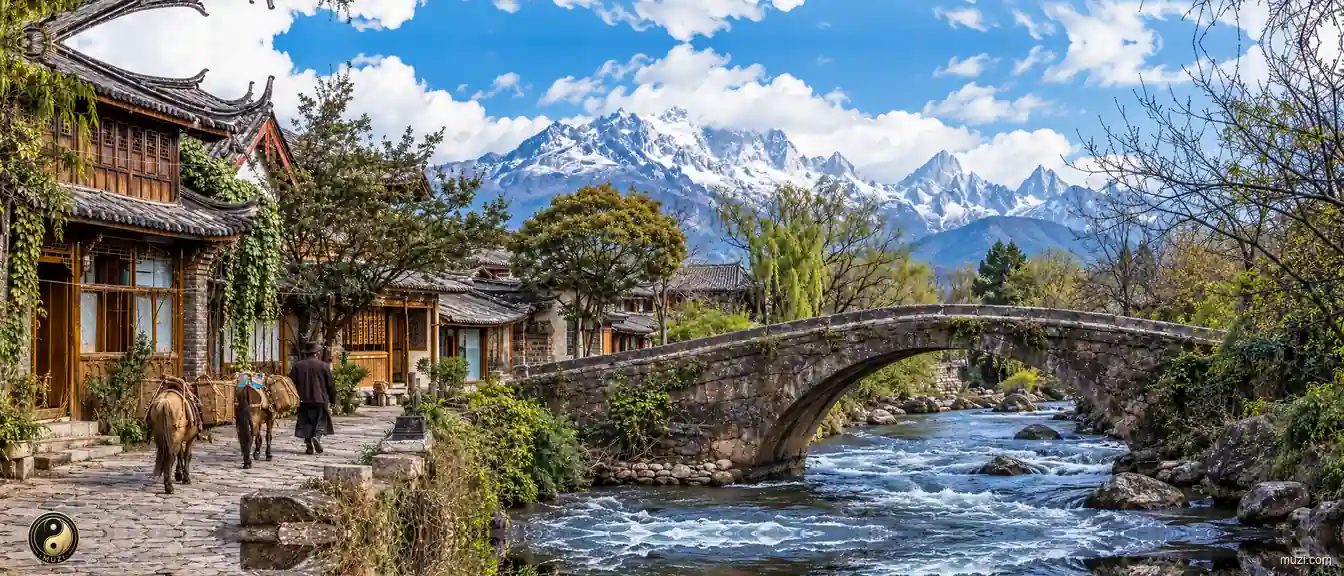
Best-preserved caravan stop on the Ancient Tea Horse Road; Qinglong Bridge and Naxi houses retain the rustic charm of horse-caravan days.
A Naxi villager leads two basket-laden pack animals along Shuhe’s stone lane toward the arch bridge and snowy mountain.
Bridge1

- Qinglong Bridge in Shuhe
Built at the height of the Mu chieftains' power, Qinglong Bridge is counted among the largest old stone bridges on the Lijiang plain, its worn slabs still marked by caravan hooves.
Temple1

- Jiuding Dragon Pool & Sansheng Palace in Shuhe
Shuhe's clear spring rises at Jiuding Dragon Pool, where waterweeds sway in transparent water beside Sansheng Palace, dedicated to Sun Bin, patron of leatherworkers.
Civic Building1

- Ancient Tea Horse Road Museum in Shuhe
Devoted to the history and culture of the Ancient Tea Horse Road, this museum was among the first of its kind in China and displays fine Ming-dynasty murals.
Gate & Wall1

- Sifang Tingyin Square in Shuhe
Naxi people gather at Sifang Tingyin Square for traditional circle dancing, while willows and flowing water make it a relaxed spot to enjoy the town's slow pace.
Ming2

- Shuhe Dajue Palace Built c. 1567Ming Longqing era (c. 1567 CE)
Built in the Ming Longqing era, Shuhe's Dajue Palace preserves six murals using Han and Tibetan techniques.
- Qinglong Bridge Built in Shuhe1573–1620 CE
Shuhe's Qinglong Bridge was built during the Wanli period (1573–1620) and remains a Ming stone bridge beside the old Sifang Street.