
 Atlas
Atlas Jingdezhen
 Yangzhou
 Wuzhen
 Suzhou
 Pingyao Ancient City
 Fenghuang Ancient Town
 Hongcun
 Xitang
 Langzhong Ancient City
 Shaxi Ancient Town
 Lijiang Ancient Town
 Kaiping Diaolou
 Jiufen
 Wudianshi
 Foshan
 Tunxi Old Street
 Zhouzhuang
 Xidi
Xidi Nanxun Ancient Town
 Dali Ancient City
 Huizhou Ancient City
 Zhenyuan Ancient City
 Zhujiajiao Ancient Town
 Wuyuan Ancient Town
 Huangyao Ancient Town
 Heshun Ancient Town
 Shuhe Ancient Town
 Ciqikou Ancient Town
 Mudu Ancient Town
 Luzhi Ancient Town
 Anchang Ancient Town
 Jinxi Ancient Town
 Furong Ancient Town
 Qingyan Ancient Town
 Yunshuiyao Ancient Town
 Gongtan Ancient Town
 Chikan Ancient Town
 Luodai Ancient Town
 Qiandeng Ancient Town
 Cicheng Ancient Town
 Qikou Ancient Town
 Hongjiang Ancient Commercial City
 Yaoli Ancient Town
 Qiantong Ancient Town
 Nianbadu Ancient Town
 Sanhe Ancient Town
 Zhangzhou Ancient City
 Guandu Ancient Town
 Lukang Old Street
 Tamsui Old Street
 Anping Old Street
 Huanglongxi Ancient Town
 Pingle Ancient Town
 Zhoucun Ancient Commercial City
 Taierzhuang Ancient City
 Qingzhou Ancient City
 Zhuxian Town
 Sheqi Ancient Town
 Zhengding Ancient City
 Shanhaiguan Ancient City
 Yangliuqing Ancient Town
 Tianshui Ancient City
 Jingzhou Ancient City
 Qingmuchuan Ancient Town












 Historic CitiesJingdezhenYangzhouWuzhenSuzhouPingyao Ancient CityFenghuang Ancient TownHongcunXitangLangzhong Ancient CityShaxi Ancient TownLijiang Ancient TownKaiping DiaolouJiufenWudianshiFoshanTunxi Old StreetZhouzhuangXidiNanxun Ancient TownDali Ancient CityHuizhou Ancient CityZhenyuan Ancient CityZhujiajiao Ancient TownWuyuan Ancient TownHuangyao Ancient TownHeshun Ancient TownShuhe Ancient TownCiqikou Ancient TownMudu Ancient TownLuzhi Ancient TownAnchang Ancient TownJinxi Ancient TownFurong Ancient TownQingyan Ancient TownYunshuiyao Ancient TownGongtan Ancient TownChikan Ancient TownLuodai Ancient TownQiandeng Ancient TownCicheng Ancient TownQikou Ancient TownHongjiang Ancient Commercial CityYaoli Ancient TownQiantong Ancient TownNianbadu Ancient TownSanhe Ancient TownZhangzhou Ancient CityGuandu Ancient TownLukang Old StreetTamsui Old StreetAnping Old StreetHuanglongxi Ancient TownPingle Ancient TownZhoucun Ancient Commercial CityTaierzhuang Ancient CityQingzhou Ancient CityZhuxian TownSheqi Ancient TownZhengding Ancient CityShanhaiguan Ancient CityYangliuqing Ancient TownTianshui Ancient CityJingzhou Ancient CityQingmuchuan Ancient Town
Foshan
The heavy-industry town of the Ming-Qing era — a dense cluster of private iron-smelting, casting, and textile workshops, the most famous civilian industrial antenna of medieval China powering ironware exports to Southeast Asia.
 Prefecture: Foshan
 Province: Guangdong
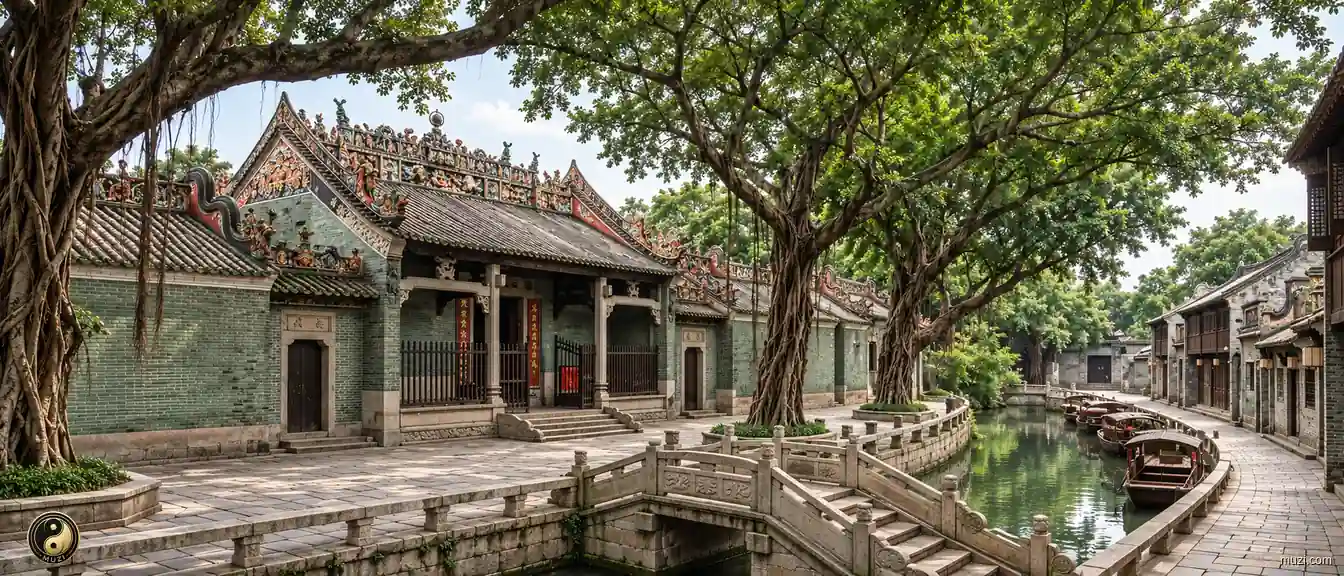
Foshan’s green-brick Zumiao temple rests beneath ancient banyans, with traditional boats along the quiet canal.
Civic Building1

- Foshan Ancestral Temple & Wanfu Stage
A showcase of Lingnan carving and sculpture, the temple holds one of the oldest timber opera stages in South China and a hall honoring martial arts masters.
Gate & Wall1

- Foshan Donghuali Historic District
Donghuali is one of China's most complete Qing districts of official and merchant mansions, where wok-ear gabled houses meet water lanes and bluestone paths.
Gardens1

- Foshan Liangyuan Garden
Created by Liang family uncles and nephews in the Qing, this water-town garden is famed for its streams, unusual rocks, calligraphy rubbings and carved wooden screens.
Infrastructure1

- Shiwan Ancient Nanfeng Kiln in Foshan
Fired since the Zhengde reign of the Ming with flames that have never gone out in over five centuries, this kiln is a living antique of Chinese ceramics.
Ming3

- Foshan Ancestral Temple Rebuilt in 13721372 CE
After its destruction at the end of the Yuan, Foshan Ancestral Temple was rebuilt in 1372 and later expanded into a major Lingnan historic complex.
- Nanfeng Ancient Kiln Begins Firing1506–1521 CE
Built during the Ming Zhengde era, Shiwan's Nanfeng Ancient Kiln has continued as a wood-fired dragon kiln for more than five centuries.
- Foshan Ironmaking and Ceramics FlourishMing–Qing period
Ming–Qing Foshan became a major manufacturing center as ironmaking and Shiwan ceramics expanded into regional and overseas markets.