 Atlas
Atlas Jingdezhen
 Yangzhou
 Wuzhen
 Suzhou
 Pingyao Ancient City
 Fenghuang Ancient Town
 Hongcun
 Xitang
 Langzhong Ancient City
 Shaxi Ancient Town
 Lijiang Ancient Town
 Kaiping Diaolou
 Jiufen
 Wudianshi
 Foshan
 Tunxi Old Street
 Zhouzhuang
 Xidi
Xidi Nanxun Ancient Town
 Dali Ancient City
 Huizhou Ancient City
 Zhenyuan Ancient City
 Zhujiajiao Ancient Town
 Wuyuan Ancient Town
 Huangyao Ancient Town
 Heshun Ancient Town
 Shuhe Ancient Town
 Ciqikou Ancient Town
 Mudu Ancient Town
 Luzhi Ancient Town
 Anchang Ancient Town
 Jinxi Ancient Town
 Furong Ancient Town
 Qingyan Ancient Town
 Yunshuiyao Ancient Town
 Gongtan Ancient Town
 Chikan Ancient Town
 Luodai Ancient Town
 Qiandeng Ancient Town
 Cicheng Ancient Town
 Qikou Ancient Town
 Hongjiang Ancient Commercial City
 Yaoli Ancient Town
 Qiantong Ancient Town
 Nianbadu Ancient Town
 Sanhe Ancient Town
 Zhangzhou Ancient City
 Guandu Ancient Town
 Lukang Old Street
 Tamsui Old Street
 Anping Old Street
 Huanglongxi Ancient Town
 Pingle Ancient Town
 Zhoucun Ancient Commercial City
 Taierzhuang Ancient City
 Qingzhou Ancient City
 Zhuxian Town
 Sheqi Ancient Town
 Zhengding Ancient City
 Shanhaiguan Ancient City
 Yangliuqing Ancient Town
 Tianshui Ancient City
 Jingzhou Ancient City
 Qingmuchuan Ancient Town












 Historic CitiesJingdezhenYangzhouWuzhenSuzhouPingyao Ancient CityFenghuang Ancient TownHongcunXitangLangzhong Ancient CityShaxi Ancient TownLijiang Ancient TownKaiping DiaolouJiufenWudianshiFoshanTunxi Old StreetZhouzhuangXidiNanxun Ancient TownDali Ancient CityHuizhou Ancient CityZhenyuan Ancient CityZhujiajiao Ancient TownWuyuan Ancient TownHuangyao Ancient TownHeshun Ancient TownShuhe Ancient TownCiqikou Ancient TownMudu Ancient TownLuzhi Ancient TownAnchang Ancient TownJinxi Ancient TownFurong Ancient TownQingyan Ancient TownYunshuiyao Ancient TownGongtan Ancient TownChikan Ancient TownLuodai Ancient TownQiandeng Ancient TownCicheng Ancient TownQikou Ancient TownHongjiang Ancient Commercial CityYaoli Ancient TownQiantong Ancient TownNianbadu Ancient TownSanhe Ancient TownZhangzhou Ancient CityGuandu Ancient TownLukang Old StreetTamsui Old StreetAnping Old StreetHuanglongxi Ancient TownPingle Ancient TownZhoucun Ancient Commercial CityTaierzhuang Ancient CityQingzhou Ancient CityZhuxian TownSheqi Ancient TownZhengding Ancient CityShanhaiguan Ancient CityYangliuqing Ancient TownTianshui Ancient CityJingzhou Ancient CityQingmuchuan Ancient Town
Yangzhou
The wealth crossroads where the Grand Canal meets the Yangtze — the center of the imperial salt monopoly, birthing Yangzhou's extravagant salt-merchant culture and aesthetics.
 Prefecture: Yangzhou
 Province: Jiangsu
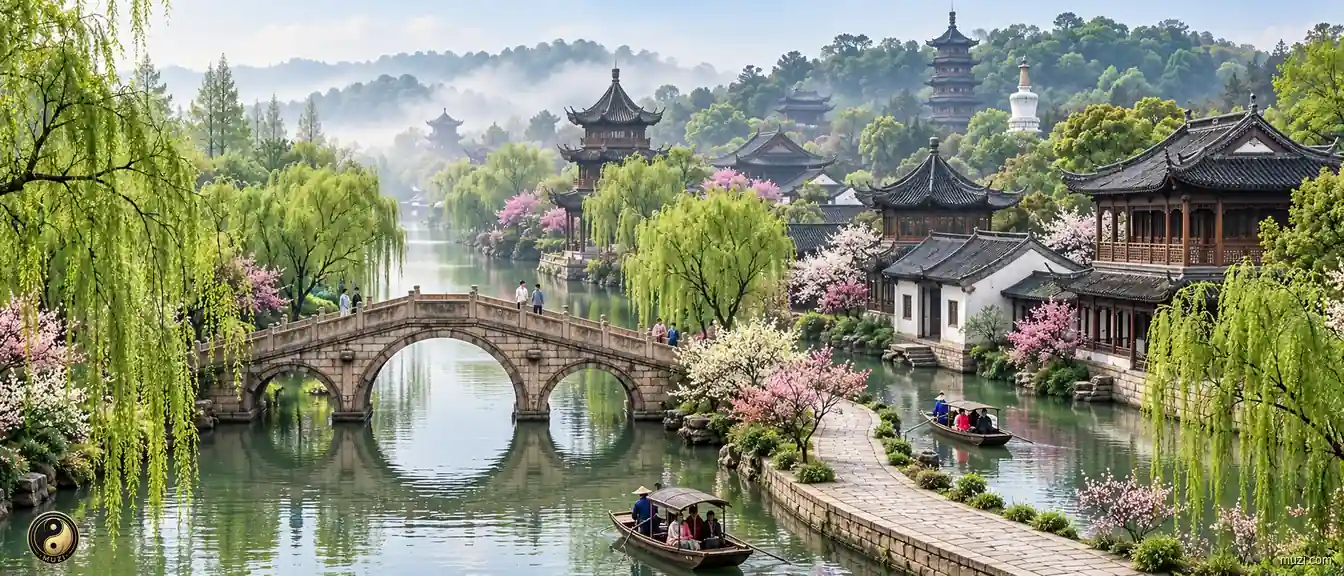
Visitors cross Yangzhou’s stone arch bridge above a willow-lined canal, with wooden pagodas rising through spring mist.
Gardens2
- Geyuan Garden in Yangzhou
Often listed among China's four great gardens, this salt merchant's private retreat is renowned for rockeries that evoke spring, summer, autumn and winter.
- Heyuan Garden (Jixiao Mountain Villa)
Often hailed as the finest late-Qing garden, Heyuan blends Chinese and Western styles, with a double-deck walkway likened to an early flyover and a stage set on water.
Gate & Wall1
- Dongguan Street Historic Block in Yangzhou
Merchants have thronged this lively street beside the Grand Canal for a millennium, and today it is lined with salt merchants' mansions and heritage brands like Xiefuchun.
Temple1

- Daming Temple Qiling Pagoda & Jianzhen Hall
Founded in the Liu Song period of the Southern Dynasties, Daming Temple is where the Tang monk Jianzhen presided before sailing to Japan to spread the Vinaya school.
In its history2
- Yang Guang569–618 CE
Part of Yangzhou's history: Building of Eastern Luoyang. Second Sui emperor, Yangdi, who built the eastern capital at Luoyang and the Grand Canal, failed in three wars against Goguryeo, and was strangled in a mutiny at Jiangdu
- Jianzhen688–763 CE
Part of Yangzhou's history: Jianzhen's Eastward Voyages. Tang Vinaya master from Yangzhou who reached Japan on his sixth attempt in 753, blind by then, and founded the Toshodaiji in Nara
Sui2

- Building of Eastern Luoyang
Emperor Yang built the eastern capital at Luoyang with palaces, wards, markets, and canals linking the Sui realm north and south.
- Sui Yangdi Opens the Grand Canal605–618 CE
Between 605 and 618, Sui Yangdi ordered work on the Tongji, Yongji, Han, and Jiangnan canals and made several visits to Jiangdu.

Tang3

- Jianzhen's Eastward Voyages
After five failed crossings, Jianzhen reached Japan, established Buddhist ordination, and transmitted Tang medicine, architecture, and arts at Nara.
- Jianzhen Reaches Japan753 CE
After five failed crossings, Jianzhen set sail a sixth time in 753, landed at Satsuma in Japan early in 754, and then transmitted Buddhist ordination at Todaiji in the capital.
- Du Mu's Twenty-Four Bridges Linec. 835–839 CE
During his late-Tang service in regional offices, Du Mu was closely associated with Yangzhou; his poem to Han Chuo preserved the famous Twenty-Four Bridges line as a later cultural image of the city.