
 Atlas
Atlas Jingdezhen
 Yangzhou
 Wuzhen
 Suzhou
 Pingyao Ancient City
 Fenghuang Ancient Town
 Hongcun
 Xitang
 Langzhong Ancient City
 Shaxi Ancient Town
 Lijiang Ancient Town
 Kaiping Diaolou
 Jiufen
 Wudianshi
 Foshan
 Tunxi Old Street
 Zhouzhuang
 Xidi
Xidi Nanxun Ancient Town
 Dali Ancient City
 Huizhou Ancient City
 Zhenyuan Ancient City
 Zhujiajiao Ancient Town
 Wuyuan Ancient Town
 Huangyao Ancient Town
 Heshun Ancient Town
 Shuhe Ancient Town
 Ciqikou Ancient Town
 Mudu Ancient Town
 Luzhi Ancient Town
 Anchang Ancient Town
 Jinxi Ancient Town
 Furong Ancient Town
 Qingyan Ancient Town
 Yunshuiyao Ancient Town
 Gongtan Ancient Town
 Chikan Ancient Town
 Luodai Ancient Town
 Qiandeng Ancient Town
 Cicheng Ancient Town
 Qikou Ancient Town
 Hongjiang Ancient Commercial City
 Yaoli Ancient Town
 Qiantong Ancient Town
 Nianbadu Ancient Town
 Sanhe Ancient Town
 Zhangzhou Ancient City
 Guandu Ancient Town
 Lukang Old Street
 Tamsui Old Street
 Anping Old Street
 Huanglongxi Ancient Town
 Pingle Ancient Town
 Zhoucun Ancient Commercial City
 Taierzhuang Ancient City
 Qingzhou Ancient City
 Zhuxian Town
 Sheqi Ancient Town
 Zhengding Ancient City
 Shanhaiguan Ancient City
 Yangliuqing Ancient Town
 Tianshui Ancient City
 Jingzhou Ancient City
 Qingmuchuan Ancient Town












 JingdezhenYangzhouWuzhenSuzhouPingyao Ancient CityFenghuang Ancient TownHongcunXitangLangzhong Ancient CityShaxi Ancient TownLijiang Ancient TownKaiping DiaolouJiufenWudianshiFoshanTunxi Old StreetZhouzhuangXidiNanxun Ancient TownDali Ancient CityHuizhou Ancient CityZhenyuan Ancient CityZhujiajiao Ancient TownWuyuan Ancient TownHuangyao Ancient TownHeshun Ancient TownShuhe Ancient TownCiqikou Ancient TownMudu Ancient TownLuzhi Ancient TownAnchang Ancient TownJinxi Ancient TownFurong Ancient TownQingyan Ancient TownYunshuiyao Ancient TownGongtan Ancient TownChikan Ancient TownLuodai Ancient TownQiandeng Ancient TownCicheng Ancient TownQikou Ancient TownHongjiang Ancient Commercial CityYaoli Ancient TownQiantong Ancient TownNianbadu Ancient TownSanhe Ancient TownZhangzhou Ancient CityGuandu Ancient TownLukang Old StreetTamsui Old StreetAnping Old StreetHuanglongxi Ancient TownPingle Ancient TownZhoucun Ancient Commercial CityTaierzhuang Ancient CityQingzhou Ancient CityZhuxian TownSheqi Ancient TownZhengding Ancient CityShanhaiguan Ancient CityYangliuqing Ancient TownTianshui Ancient CityJingzhou Ancient CityQingmuchuan Ancient Town
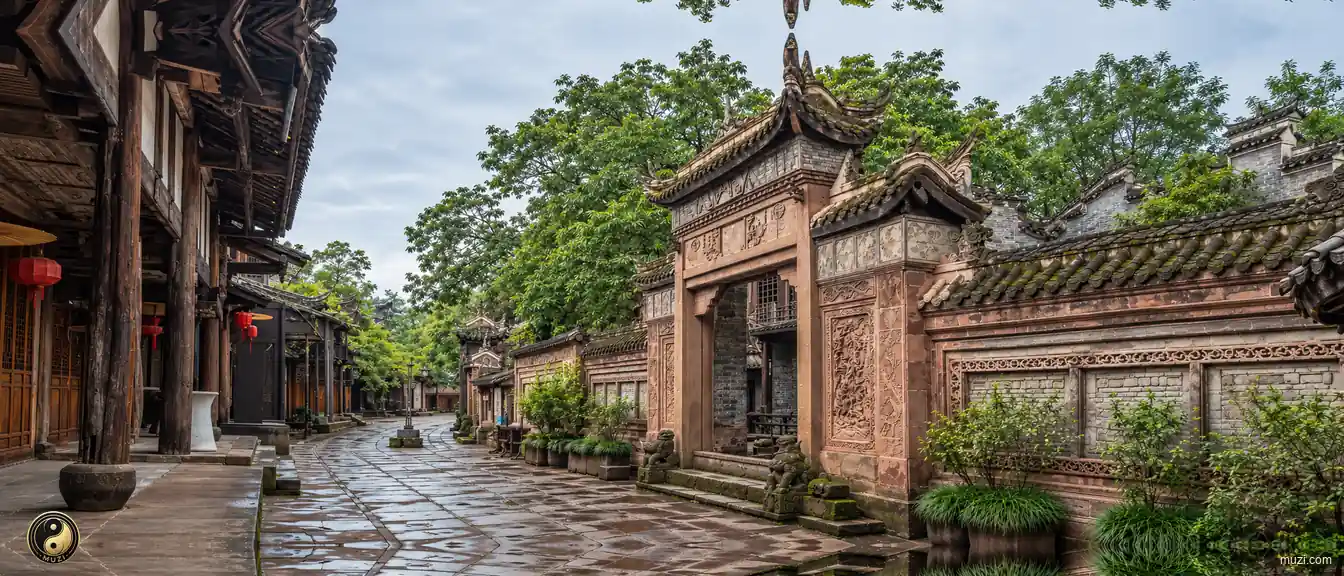
Luodai Ancient Town
Luodai's Hakka guildhalls, foodways, and community traditions anchor a cultural town west of Chengdu.
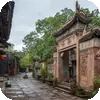
Luodai’s carved Hakka guildhall gateway rises beside a quiet stone lane lined with dark timber shopfronts.
Civic Building4

- Guangdong Guild Hall in Luodai
Hakka migrants to Sichuan built this hall in 1746, and its towering fire walls and skilled wood and stone carving make it one of China's largest Hakka guild halls.
- Jiangxi Guild Hall in Luodai
Jiangxi migrants raised this hall in the Qianlong era, notable for its beamless opera-stage ceiling and fine woodcarving in the Ji'an style.
- Boke Mansion Western Hakka Museum in Luodai
Modeled at full scale on a Yongding tulou in Fujian, this four-story ring-shaped building tells how Hakka families moved west during the Huguang-to-Sichuan migration.
- Huguang & Chuanbei Guild Halls in Luodai
With four guild halls standing side by side, Luodai is hailed as the first Hakka town of western China, known for its water dragon festival and heritage liangfen noodles.
In its history4
- Zhang Xianzhong1606 CE–1647 CE
Part of Luodai Ancient Town's history: Huguang Fills Sichuan. Late Ming rebel leader from Yan'an who founded the Daxi regime at Chengdu in 1644 and was shot dead by Qing troops at Fenghuang Mountain in Xichong
- Zhang DediBirth year unknown; entered office 1652, died 1683
Part of Luodai Ancient Town's history: Huguang Fills Sichuan. Early Qing Han Banner official who twice governed Sichuan under Kangxi and asked the court to recruit settlers to reclaim the province's empty land, rewarding officials by the number they brought in.
- Kangxi Emperor1654 CE–1722 CE
Part of Luodai Ancient Town's history: Huguang Fills Sichuan. Qing emperor of the Kangxi reign who put down the Three Feudatories, annexed Taiwan, signed the Treaty of Nerchinsk with Russia and led campaigns against Galdan
- Yongzheng Emperor1678 CE–1735 CE
Part of Luodai Ancient Town's history: Huguang Fills Sichuan. Fifth Qing emperor, of the Yongzheng reign, who merged the poll tax into the land tax, replaced native chieftains with appointed officials, and created the Grand Council
Qing2

- Huguang Fills Sichuan
After the wars of the Ming-Qing transition emptied Sichuan, the Qing state drew settlers from Huguang and other provinces with registration and permanent land title, reshaping the province's people and customs over more than a century.
- Luodai's Guangdong Guild Hall Founded1746 CE
In 1746 Hakka settlers from Guangdong pooled funds at Luodai to build their native-place hall, the Nanhua Palace, today's Guangdong Guild Hall.

Ming1

- Luodai's Four Guild HallsMing–Qing period
Luodai preserves four guild halls and other Ming–Qing Hakka buildings, documenting immigrant settlement and cultural continuity in Sichuan.
Three Kingdoms1

- Three Kingdoms Luodai Naming LegendThree Kingdoms period
A Luodai local legend says Liu Shan dropped a jade belt into a well, after which the name Luodai evolved phonetically from ‘fallen belt’.