
 Atlas
Atlas Jingdezhen
 Yangzhou
 Wuzhen
 Suzhou
 Pingyao Ancient City
 Fenghuang Ancient Town
 Hongcun
 Xitang
 Langzhong Ancient City
 Shaxi Ancient Town
 Lijiang Ancient Town
 Kaiping Diaolou
 Jiufen
 Wudianshi
 Foshan
 Tunxi Old Street
 Zhouzhuang
 Xidi
Xidi Nanxun Ancient Town
 Dali Ancient City
 Huizhou Ancient City
 Zhenyuan Ancient City
 Zhujiajiao Ancient Town
 Wuyuan Ancient Town
 Huangyao Ancient Town
 Heshun Ancient Town
 Shuhe Ancient Town
 Ciqikou Ancient Town
 Mudu Ancient Town
 Luzhi Ancient Town
 Anchang Ancient Town
 Jinxi Ancient Town
 Furong Ancient Town
 Qingyan Ancient Town
 Yunshuiyao Ancient Town
 Gongtan Ancient Town
 Chikan Ancient Town
 Luodai Ancient Town
 Qiandeng Ancient Town
 Cicheng Ancient Town
 Qikou Ancient Town
 Hongjiang Ancient Commercial City
 Yaoli Ancient Town
 Qiantong Ancient Town
 Nianbadu Ancient Town
 Sanhe Ancient Town
 Zhangzhou Ancient City
 Guandu Ancient Town
 Lukang Old Street
 Tamsui Old Street
 Anping Old Street
 Huanglongxi Ancient Town
 Pingle Ancient Town
 Zhoucun Ancient Commercial City
 Taierzhuang Ancient City
 Qingzhou Ancient City
 Zhuxian Town
 Sheqi Ancient Town
 Zhengding Ancient City
 Shanhaiguan Ancient City
 Yangliuqing Ancient Town
 Tianshui Ancient City
 Jingzhou Ancient City
 Qingmuchuan Ancient Town












 Historical Villages & TownsJingdezhenYangzhouWuzhenSuzhouPingyao Ancient CityFenghuang Ancient TownHongcunXitangLangzhong Ancient CityShaxi Ancient TownLijiang Ancient TownKaiping DiaolouJiufenWudianshiFoshanTunxi Old StreetZhouzhuangXidiNanxun Ancient TownDali Ancient CityHuizhou Ancient CityZhenyuan Ancient CityZhujiajiao Ancient TownWuyuan Ancient TownHuangyao Ancient TownHeshun Ancient TownShuhe Ancient TownCiqikou Ancient TownMudu Ancient TownLuzhi Ancient TownAnchang Ancient TownJinxi Ancient TownFurong Ancient TownQingyan Ancient TownYunshuiyao Ancient TownGongtan Ancient TownChikan Ancient TownLuodai Ancient TownQiandeng Ancient TownCicheng Ancient TownQikou Ancient TownHongjiang Ancient Commercial CityYaoli Ancient TownQiantong Ancient TownNianbadu Ancient TownSanhe Ancient TownZhangzhou Ancient CityGuandu Ancient TownLukang Old StreetTamsui Old StreetAnping Old StreetHuanglongxi Ancient TownPingle Ancient TownZhoucun Ancient Commercial CityTaierzhuang Ancient CityQingzhou Ancient CityZhuxian TownSheqi Ancient TownZhengding Ancient CityShanhaiguan Ancient CityYangliuqing Ancient TownTianshui Ancient CityJingzhou Ancient CityQingmuchuan Ancient Town
Shaxi Ancient Town
The only surviving market town on the Tea Horse Road — a dense plaza unit of red-earth fortress, ancient stage, and horse inns, a high-altitude international trade router carved by muleteers' flesh and blood.
 Prefecture: Dali
 Province: Yunnan
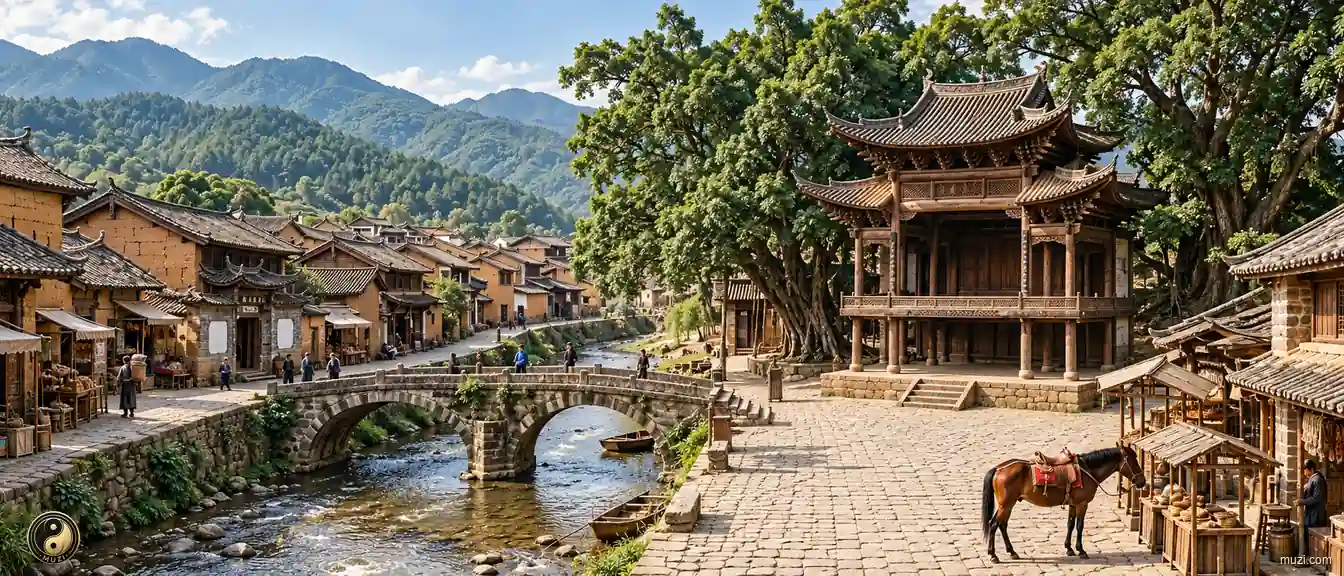
A horse waits beside Shaxi’s market stalls as townspeople gather near the wooden stage and Yujin Bridge.
Temple1

- Shaxi Sideng Street Ancient Stage & Xingjiao Temple
A rare surviving market square on the Tea Horse Road, Sideng Street pairs a Ming esoteric Buddhist temple of the Bai people with an old Kuixing opera stage.
Bridge1

- Shaxi Yujin Bridge on Heihui River
Hooves of caravan horses wore deep grooves into this Qing stone bridge, the vital crossing of the Heihui River into and out of Shaxi.
Residence1

- Ouyang Mansion Bai Horse Caravan Courtyard
A leading caravan chief of Shaxi built this compound, a top example of Bai homes with three wings and a screen wall, and four courtyards with five patios.
Sculpture1

- Mount Aofeng Azhali Buddhist Grottoes
Carved under the Nanzhao and Dali kingdoms in the Tang and Song eras, these grottoes hold Azhali Buddhist royal figures and esoteric stone art.
Tang1

- Shaxi Becomes a Tea-Horse Market750–900 CE
From the Tang–Song period, Shaxi developed as an important caravan market and exchange node through the tea-horse route and nearby salt wells.
Ming1

- Construction Begins on Shaxi Xingjiao Temple1415 CE
Xingjiao Temple at Shaxi, Jianchuan, was founded in 1415; its surviving halls and murals painted in 1417 preserve Ming-era Bai religious art.