


































 County-level
Wen Feng District
Unique inverted umbrella-shaped brick tiers at Wenfeng Pagoda overlook restored Ming-Qing courtyard residences along Cangxiang Street in Wenfeng.
 MUZIChinese Matrix
Anyang holds Yinxu, the Shang capital where oracle bones were unearthed, and Linzhou's Red Flag Canal, cut through Taihang cliffs to carry the Zhang River.
For Anyang, the relationship between place and life becomes visible in “Anyang holds Yinxu, the Shang capital where oracle bones were unearthed, and Linzhou's Red Flag Canal, cut through Taihang cliffs to carry the Zhang River.” This evidence connects landform, movement, settlement, and cultural expression instead of treating them as isolated details. The present profile of Anyang reflects environmental adaptation and local stewardship built up over an extended period rather than a short-lived change. This process explains how Anyang remains connected to its surrounding region while retaining a recognizable local character. That is why Anyang matters: local detail can illuminate environmental setting, social process, and cultural memory together.
County-level
Unique inverted umbrella-shaped brick tiers at Wenfeng Pagoda overlook restored Ming-Qing courtyard residences along Cangxiang Street in Wenfeng.
County-level
Ornate timber carvings decorate the Zhangde Chenghuang Temple in Beiguan, nestled beside weeping willow banks along the Huan River.
County-level
Oracle bone script inscriptions and bronze treasures at Yinxu 5A UNESCO World Heritage establish Yindu as the late Shang Dynasty royal capital.
County-level
Clear wetland springs flow through Longquan Wetland Park in Long'an, bordered by lush forested ridges of Mount Mahuangshan.
County-level
The grand subterranean tomb of Three Kingdoms warlord Cao Cao at Gaoling Museum stands in Anyang County near Baolian Lake.
County-level
Homeland of heroic Song dynasty general Yue Fei, Tangyin preserves the Bagua maze at Youli Castle where King Wen wrote the I Ching.
County-level
Fragrant tender Daokou Roast Chicken is prepared with centuries-old master broth in Huaxian along ancient Grand Canal grain wharves.
County-level
Sacred burial mounds of prehistoric rulers Emperor Zhuanxu and Emperor Ku rise in Neihuang amidst sweet blooming ancient jujube orchards.
County-level
Hand-hewn cliffside water conduits of Red Flag Canal 5A and precipitous granite bluffs at Mount Taihang Grand Canyon 5A distinguish Linzhou.
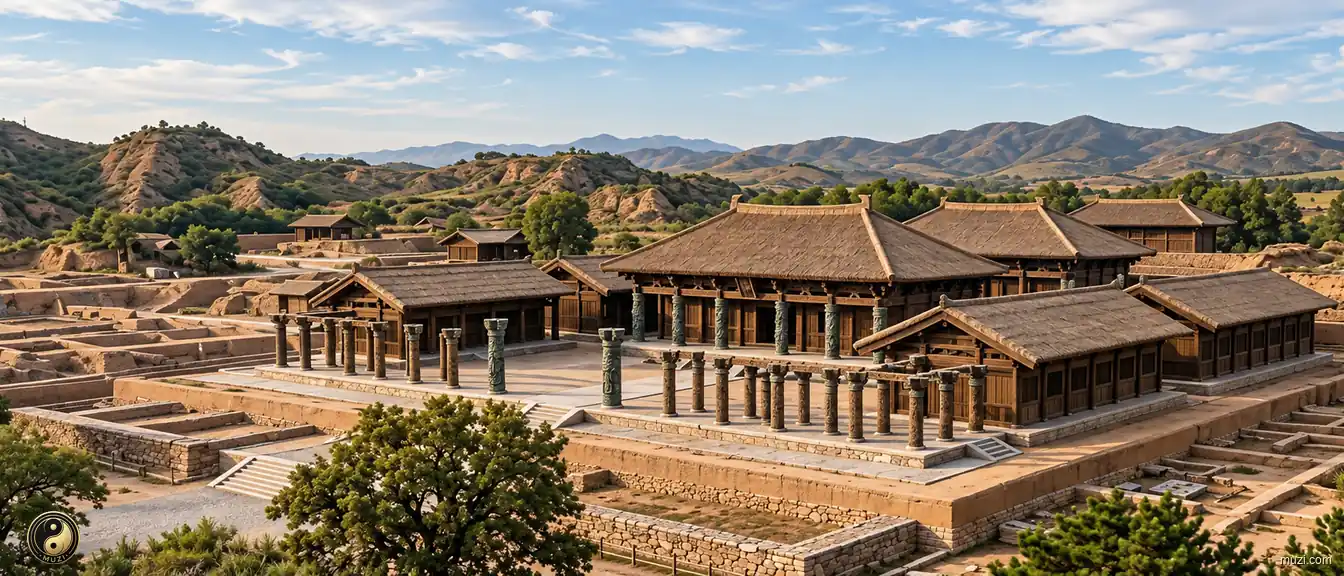
The ruins of Yin at Anyang — where oracle bones were unearthed, the Shang ancestral temples and bronze foundries, the dawn of Chinese written history and the pinnacle of the Bronze Age.
Like a net held by its main cord, there is order and no confusion
His reign was short and the calamity he suffered most profound; when one looks into its causes, it is truly to be mourned!
The prince boldly asked to go.
