






































 County-level
Se Ni District
Vibrant August equestrian festivals celebrate nomadic traditions across the vast steppes of Sernyi, anchored by the golden roofs of historic Xiaodeng Temple.
 MUZIChinese Matrix
The vast Changtang grasslands surround Nagqu, whose summer horse-racing festival is famous, and Siling Co is now the largest lake in Tibet.
In regional terms, the clearest first clue to Nagqu is “The vast Changtang grasslands surround Nagqu, whose summer horse-racing festival is famous, and Siling Co is now the largest lake in Tibet.” Together, environmental, historical, and cultural elements give Nagqu a profile that can be distinguished from nearby places. Continuing local life gave inherited spaces new uses and memories, allowing historical layers and contemporary activity to coexist. Today, the interaction between environment and society remains visible in landscape, urban texture, daily activity, and local memory. These details make Nagqu a clear case of how a wider region is built from specific places and sustained lives.
County-level
Vibrant August equestrian festivals celebrate nomadic traditions across the vast steppes of Sernyi, anchored by the golden roofs of historic Xiaodeng Temple.
County-level
High-altitude wetlands at Maidika shelter rare migratory waterfowl in Lhari, framed by primeval alpine forests in the secluded Zhongyu Gorge.
County-level
Pyramidal glaciated peaks of Mount Sapu mirror over emerald glacier lakes in Biru, famed for the skull wall at Dodoka Monastery and prized cordyceps.
County-level
Therapeutic mineral springs steam across the high steppes of Nyerong, where nomadic herds of black yaks graze freely across Bulong alpine pastures.
County-level
Tanggula Pass marks the soaring gateway across the Tibetan Plateau in Amdo, shadowed by the icy Geladandong peak and roaming herds of chiru antelopes.
County-level
Vast turquoise waters of Lake Serling-tso stretch to the horizon in Xainza, creating vital wetland nesting sanctuaries for black-necked cranes.
County-level
Zandan Monastery crowns a rocky hilltop reminiscent of the Potala Palace in Sogxian, overlooking the rushing waters of the Sog River gorge.
County-level
The dramatic natural stone arch of Shengxiang Tianmen rises over northern Lake Namtso in Baingoin, bordered by the azure waters of Lake Bamucuo.
County-level
Historic Dazong castle ramparts recall ancient tribal fortifications across Baqen, where geothermal hot springs steam beside traditional yak pastures.
County-level
Sacred sapphire waters of Lake Dangra Yumtso embrace Mount Dago in Nyima, harboring ancient Zhangzhung citadel ruins at Qiongzong.
County-level
The colossal Purog Kangri Ice Field blankets the polar horizons of Shuanghu, where pristine salt lakes shelter herds of wild yaks and Tibetan antelopes.
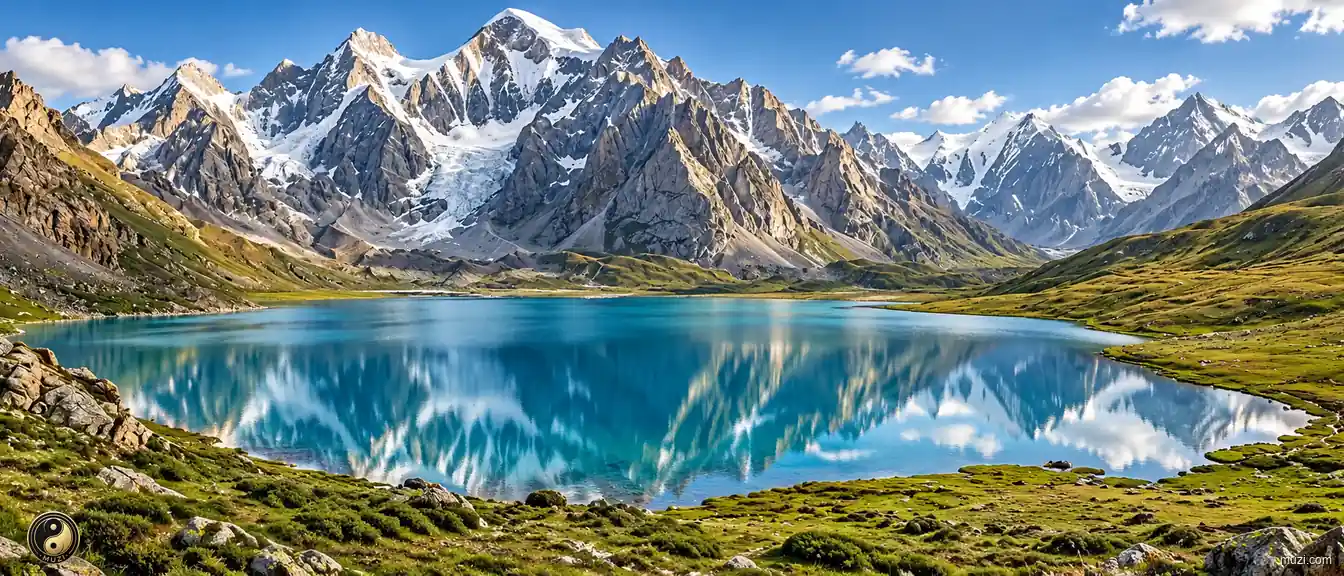
The world's highest plateau, the Asian Water Tower and source of the Yangtze and Yellow Rivers, whose headwaters shape East Asian water systems.
The sacred mountain summit (7111m) dominating the Changtang plains, revered guardian deity in Tibetan tradition.
View attraction