Beijing Central Axis
A north–south urban axis through Beijing's historic heart, uniting 15 heritage components and a capital-planning tradition rooted in the Yuan founding of Dadu.
Dongcheng is readily recognized through river valleys and inherited local memory.
The regional profile of Dongcheng begins with the concrete evidence “Dongcheng is readily recognized through river valleys and inherited local memory.” The clue links spatial form with everyday experience, giving the regional idea a concrete setting and human scale. Long-term change preserved, adjusted, and transmitted these relationships, showing how environmental influence and community action worked together. These interactions provide a factual basis for understanding the connections, distinctions, and continuities between Dongcheng and nearby places. Its significance lies in connecting regional geography, historical continuity, and cultural difference through checkable local evidence about Dongcheng.

A north–south urban axis through Beijing's historic heart, uniting 15 heritage components and a capital-planning tradition rooted in the Yuan founding of Dadu.
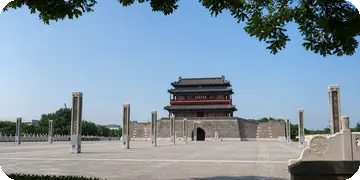
The reconstructed Ming outer-city gate marks the southern start of the Central Axis.
View attraction
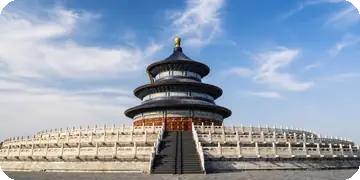
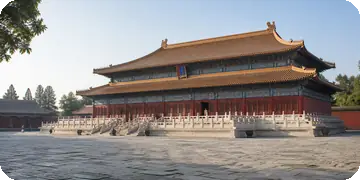
The Ming imperial sacrificial complex, renewed in the Qing, anchors the southern ceremonial sequence.
View attraction
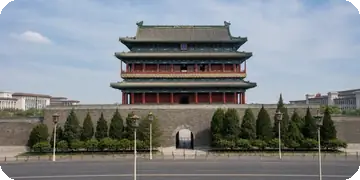
The southern city gate connects the Central Axis with Beijing's civic and commercial spaces.
View attraction
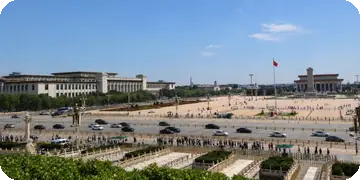
The square and its buildings show the Central Axis changing from an imperial ceremonial space into a modern national civic space.
View attraction
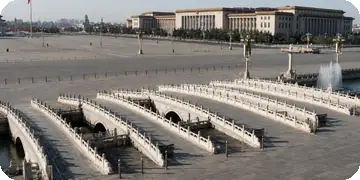
The bridge and watercourse organize the ceremonial forecourt of Tiananmen as a key transition in the axis sequence.
View attraction
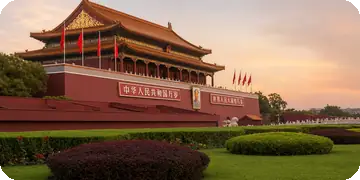
Tiananmen is a national ceremonial and civic landmark on Beijing's Central Axis.
View attraction
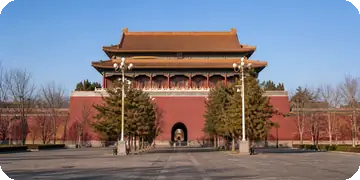
The gate connects Tiananmen with the Forbidden City within the ceremonial progression of the imperial precinct.
View attraction
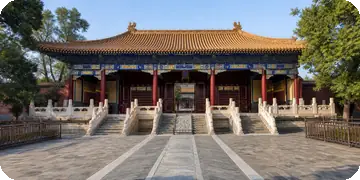
The temple preserves Ming–Qing imperial ancestral rites and later became a public cultural space.
View attraction
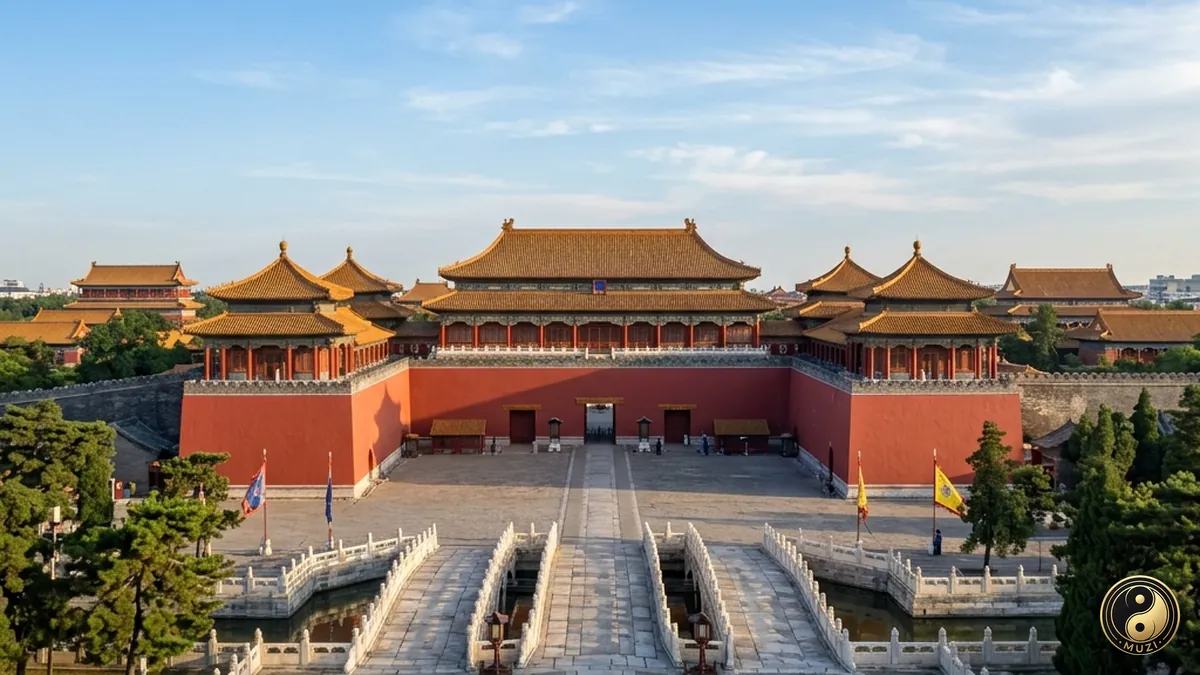
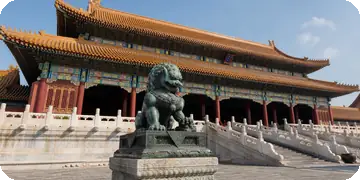
The former imperial palace preserves the ordered palace-city sequence at the heart of the northern axis.
View attraction
The artificial hill closes the palace-city landscape to the north and strengthens the axis's elevated view and balance.
View attraction
The bridge spans the Old Yu River and records the Yuan formation of Dadu's water system and northern axis.
View attraction
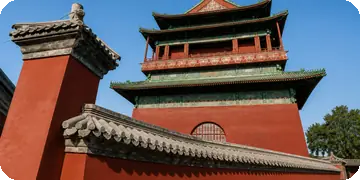
The paired towers mark the northern end of the axis and continue the city's historic timekeeping order.
View attraction