Ming Tombs
The thirteen Ming imperial tombs — perfectly following the arc of the Tianshou Mountains, a grand mausoleum matrix using the natural peaks as cemetery walls, the ultimate underground political landscape.
forest resources and cold-climate life give Changping a recognizable regional character.
Within the regional setting of Beijing, the spatial identity of Changping is first captured by this local fact: “Forest resources and cold-climate life give Changping a recognizable regional character.” It points to an observable local combination in which the setting of Changping is shaped by both environment and lived practice. Historical development brought natural conditions and human activity into repeated negotiation, leaving traces in settlement, routes, and memory. Specific places and continuing lives turn a broad regional relationship into experience that can be observed and checked. The meaning of Changping rests in specific places and continuing life, not only in its name or formal classification.

The thirteen Ming imperial tombs — perfectly following the arc of the Tianshou Mountains, a grand mausoleum matrix using the natural peaks as cemetery walls, the ultimate underground political landscape.
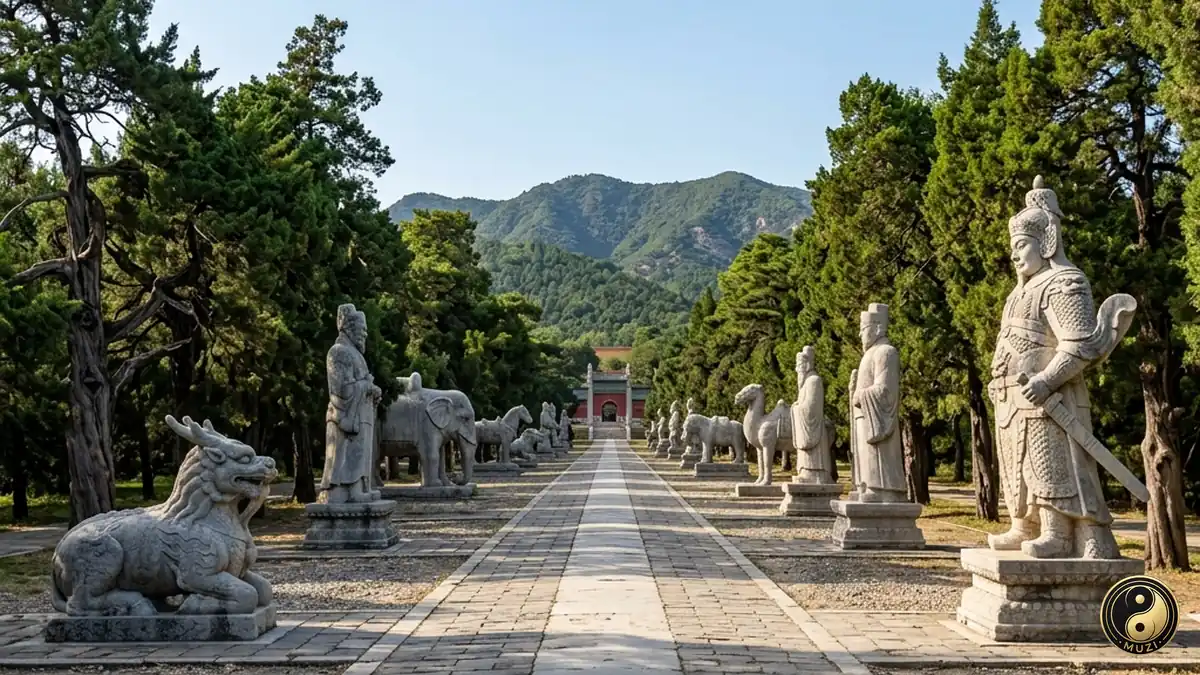
A grand seven-kilometer imperial ceremonial axis lined with eighteen pairs of stone figures and beasts leading into the Ming Tombs.
View attraction
Built in 1540, a monumental marble archway with five bays and eleven roofs, one of China's largest and earliest surviving stone arches.
View attraction
The primary southern gateway of the Ming Tombs Sacred Way, featuring three arched portals and imperial dismounting steles.
View attraction
Imperial stele pavilion housing the monumental eulogy stele for Emperor Yongle atop a colossal Bixi tortoise, flanked by four Huabiao pillars.
View attraction
The head mausoleum of Emperor Yongle and Empress Xu, featuring the majestic Nanmu-pillared Ling'en Hall.
View attraction
The tomb of Emperor Wanli and two empresses, the only Ming imperial tomb whose Underground Palace was systematically excavated.
View attraction
The tomb of Emperor Longqing, the first systematically restored Ming mausoleum displaying the complete architectural layout.
View attraction
A stately seven-arch Ming stone bridge spanning the northern river along the Sacred Way axis toward Changling.
View attraction